 Barky
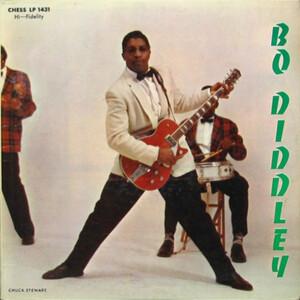
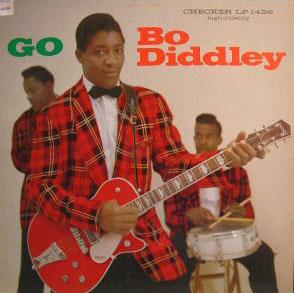
BarkyI have plenty of latter-day #BoDiddley songs in my collection (1996’s 𝘈 𝘔𝘢𝘯 𝘈𝘮𝘰𝘯𝘨𝘴𝘵 𝘔𝘦𝘯 is one of my favorites), but I never sat down to listen to his earliest work. His first two albums, 𝗕𝗼 𝗗𝗶𝗱𝗱𝗹𝗲𝘆 and 𝗚𝗼 𝗕𝗼 𝗗𝗶𝗱𝗱𝗹𝗲𝘆, are jointly listed on the Rolling Stone Top 500 Albums list at #216, and after a few listens, I am convinced this guy co-invented rock and roll. #music (cont)
Nowadays, Bo is either known as one of many old-time Chicago blues guitarists, or for his 1990s Nike commercials with Bo Jackson (“You don’t know Diddley!”), but he was so much more. He took mid-century blues and re-engineered it for the teenyboppers. This stuff is uptempo and fun and accessible and danceable. It’s also risqué, even subversive, but not glaringly so, likely keeping it on the radio whilst allowing teenagers to snicker behind their parents’ backs. (cont)
It’s glaringly obvious these songs were the precursor to the first era of rock and roll from the mid-50s to the mid-60s. All those songs you might have heard on the 𝘈𝘮𝘦𝘳𝘪𝘤𝘢𝘯 𝘎𝘳𝘢𝘧𝘪𝘵𝘵𝘪 soundtrack owe their very soul to the Bo Diddley singles that ended up on these albums. He even joined in on the early surf music trend with a later album, 𝘚𝘶𝘳𝘧𝘪𝘯’ 𝘸𝘪𝘵𝘩 𝘉𝘰 𝘋𝘪𝘥𝘥𝘭𝘦𝘺. On top of all that, he wrote almost all of his own songs (under his childhood name, Ellas McDaniel), a rarity for the time. (cont)
The man had an amazing life. Inspired by a performance by John Lee Hooker, Bo formed his first band (the Langley Avenue Jive Cats, can’t get much better than that). He played with a slew of renowned backing musicians, including the great Otis Spann on harmonica. In 1963, he toured with the Everly Brothers and Little Richard and a little-known group of musicians called the Rolling Stones. He included very talented women in his band, even as lead guitarists (another distinct rarity). (cont)
He persuaded the Moonglows to hire a new singer named Marvin Gaye. He toured with the Grateful Dead. His music is featured in 1972’s 𝘍𝘳𝘪𝘵𝘻 𝘵𝘩𝘦 𝘊𝘢𝘵. He opened for The Clash, played Live Aid, and was inducted in the Rock & Roll Hall of Fame, the Rockabilly Hall of Fame, and the Blues Hall of Fame. He was awarded a Lifetime Achievement Grammy, received a tribute from the floor of the U.S. House of Representatives, and as near as I can tell was a fantastically nice guy to work with. (cont)
Truth be told, 𝘉𝘰 𝘋𝘪𝘥𝘥𝘭𝘦𝘺/𝘎𝘰 𝘉𝘰 𝘋𝘪𝘥𝘥𝘭𝘦𝘺 is a little old-fashioned, and like other songs of that era, don’t fit in well with modern sensibilities. The beauty is in the historical relevance. These albums form the primordial origins of rock music, the first vertebrates to crawl out of the primordial slurry of Big Band crooner boredom. As such, they’ve earned my respect, and deserve to be on this list.