📢 Today, TekSavvy published a Quarterly Transparency Report about requests we got from police and how we handled them.

This report covers the period from July to Sept, 2025 and as usual, I’m summarizing that report here 🧵👇🏼

#Privacy #Transparency #TransparencyReport #Telecom #TekSavvy
1/9

Download at https://www.teksavvy.com/policies/legal-stuff/transparency-report/ (now in English and French)

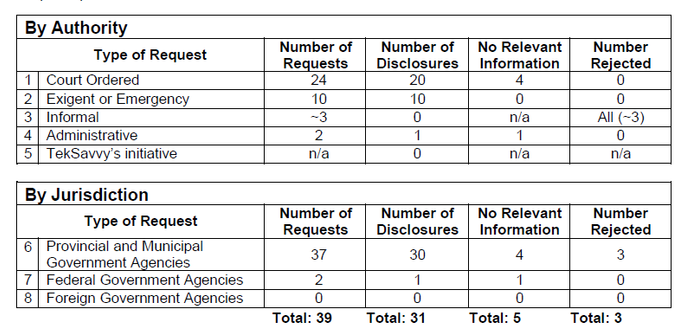
The number of requests and disclosures in this report is pretty typical. In Q3 2025, we got 39 requests and orders, compared to:

59 in Q4 2023
39 in Q1 2024
40 in Q2 2024
40 in Q3 2024
39 in Q4 2024
36 in Q1 2025
51 in Q2 2025
2/9

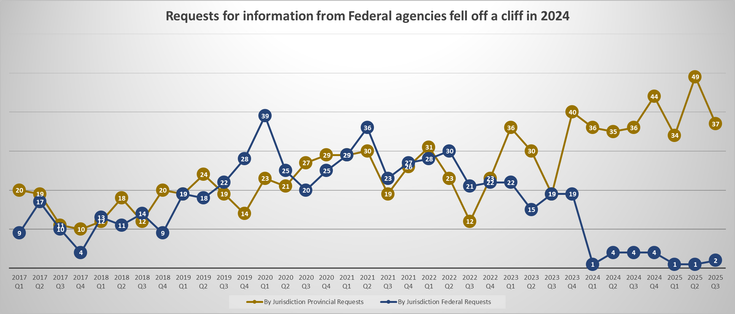
Requests from federal agencies remains very low compared to pre-2024, at just 2. From 2020-23, the avg number of fed requests per Q was 25; since 2024, it has been under 5. Fed requests dropped in 2024, while Prov requests rose. We don't know why it's happening; changes in police practices? 🤷
3/9
@andykm Requests from federal agencies are low…. because they’re getting the data that meets their needs from somewhere (someone?) else?

@JustinDerrick My best guess is this: Formerly the RCMP would receive reports or complaints, but most things are outside their jurisdiction, so their purpose is only to find out where the person is so they know what police force to send it to. So they would send us orders just for the customer’s name and address. Then they would send the case to local police to investigate, sometimes starting with another order to us for more information.

My guess about what’s changed is that now they skip the first step and instead rely on geolocation tools to figure out where the IP address probably was, and send it to local police based on that. So not exactly getting information from somebody else, but rather skipping a cycle with IP address geolocation. Which is sometimes incorrect, but is probably more efficient overall.