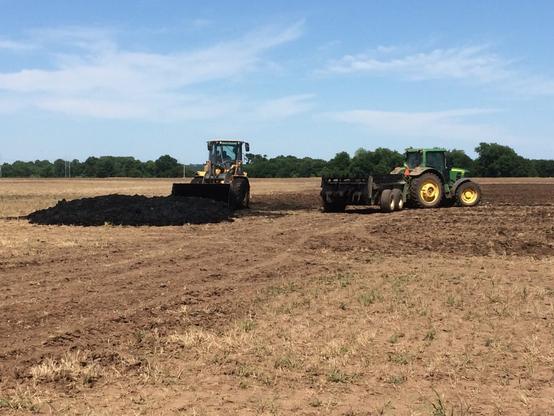
So, reading about a #Fertilizer shortage... Specifically, #urea. Um, urea can be made with urine. That's the difference between #BigAg and #RegenerativeAgriculture -- utilizing "waste" in an efficient and sustainable way.
@DoomsdaysCW
I wonder what the practicalities on this would be. Not wanting to rain (in any color of shower) - on your urea parade, I just like to think about these things:
- Would national pee production be enough to supply fertilizer needs?(actually probably yes, there’s plenty of NPK in pee)
- How would this resource be collected? Would it be feasible to separate it back out of sewage sourced from waste treatment plants; or would the urine need to be intercepted…
*/

@Gorfram I'm thinking interception would be the best way to do that. But, I wonder if separation is possible after the fact. It's certainly something to think about... I know there are some folks out there who use "humanure," but is it safe? Also, what about other stuff found in urine -- especially chemo drugs or other medicines that might alter the chemistry of the urine.

Interception is enormously better — makes the urine and the poop more handle-able. BUT unlike the “wash it away” system it has to be handled.

SOIL, aka EkoLay in Haiti, is one of the longest running “container sanitation “ operations I know of, check out their website!

@DoomsdaysCW @Gorfram

The Seattle area does extraction at the end plant and we ship mostly phosphorus east to… orchards, forest re establishment? Engineering and social problem, that was.

Deer Island in Boston might do the same. @DoomsdaysCW @Gorfram

For a while a professional pathologist in Portland OR was managing his households fecal waste to some very high standard. Wasn’t easy. Very informative.

@DoomsdaysCW @Gorfram

So, the issue with the Deer Island facility is #PFAS. We need to be more careful about what we flush down the toilet, and also start using firefighting foams without #ForeverChemicals, @clew .

@Gorfram

Our sewage often becomes fertilizer. Problem is, it's tainted with PFAS

Barbara Moran
March 30, 2023

https://www.wbur.org/news/2023/03/30/boston-massachusetts-pfas-forever-chemicals-sludge-deer-island

Our sewage often becomes fertilizer. Problem is, it's tainted with PFAS

About half the wastewater sludge in the United States is turned into fertilizer. Some want to ban the practice because the sludge contains PFAS and can contaminate food crops. Others say the problem is not so simple.

Yes, there’s PFAS in sewage; it’s surprisingly unclear whether there’s any cycle of nutrients that isn’t already PFAS contaminated. We just look harder at sewage; we don’t know that there’s an alternative.

Doubly excellent reason to drop PFAS use, ofc.

@DoomsdaysCW @Gorfram

Oh, I'm sure PFAS is everywhere. In our food, water, etc. I think it's even been found in rainwater, along with microplastics. The "industrial age" has done a good job at mucking about with stuff. Better living through chemistry? Ummm... How about, does the sh*t decompose properly without pollutants? That makes for better living, all around! @clew @Gorfram