I'm not saying that the meeting camera in my office isn't calibrated for black skin, but I look like I'm about to snitch on the mafia and it's protecting my identity.
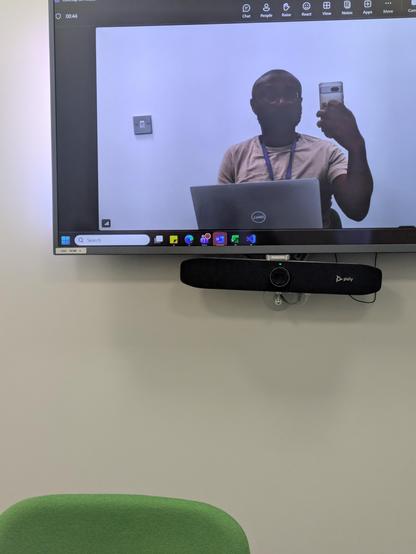
@davidnjoku Not saying this isn’t a massive systemic issue, because it is, but in this particular case you’re being underexposed because you’re against a very white background. The auto-exposure is looking at the whole frame and trying to expose it all equally well, which is why the white is coming out blue/grey. If the background was closer to your skin tone it’d probably be absolutely fine. Try sitting in front of a wooden door or a dark curtain. (I spent a few years teaching photography and this is a common error!)
@pete @davidnjoku I mean… we’ve had center-weighted metering since the 70s and face detection algorithms have been embeddable for decades. I think we should feel comfortable to say a) there’s no excuse for this and b) this isn’t happening because of technological limitations.
@MostlyBlindGamer @davidnjoku Oh, 100% agree. It really shouldn’t be happening. But if only people were taught in school not to sit in front of bright white walls or windows when on camera!
@pete @davidnjoku I totally get where you’re coming from, but I’ve spent enough years in corporate offices to know two things: 1. You don’t really have a choice and 2. The engineers making cameras know that.

@MostlyBlindGamer @pete @davidnjoku In this frame, metering for the subject's skin is likely going to result in the wall being completely blown out, clipped into pure white, to the extent that the edges of his shirt and parts of the laptop get lost.

This is a physics problem, not a camera problem. Sensors, and film only have a limited dynamic range. You can't properly expose dark, without blowing out light. Darker backdrop, or a light with a snoot are options.
@metaning @pete @davidnjoku I’ve been doing film and digital photography for years and also have a background in computer vision. I have very little interest in the technical side of this conversation.
There is a set of decisions in the photographic process that come with a set of tradeoffs.
A decision to underexpose a person to protect the highlights in the walls is an unacceptable, inhumane decision.
I hope the irony of the idea of protecting the white wall, as opposed to the blank person is not lost on anyone.
I’ll be blocking reply guys from this point forward.
@MostlyBlindGamer @pete @davidnjoku Sure, video conferencing cameras should have the intelligence to figure that out better, and off-eyeline active lighting, realtime RAW & HDR processing, and meeting rooms / video conferencing locations should be legally required to have neutral 50% grey walls under the same legislation covering access for wheelchair users etc. Failing to do all those things is definitely a choice / ignorance from a lack of diversity in decision makers.