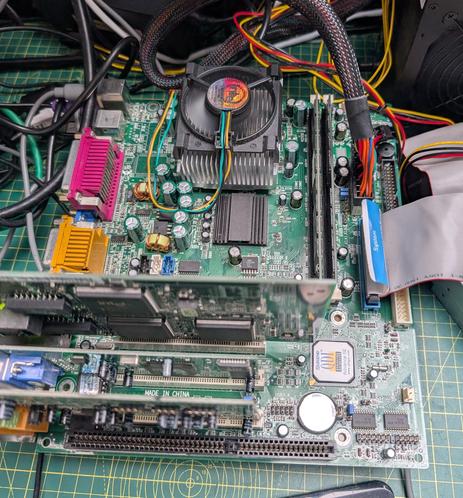
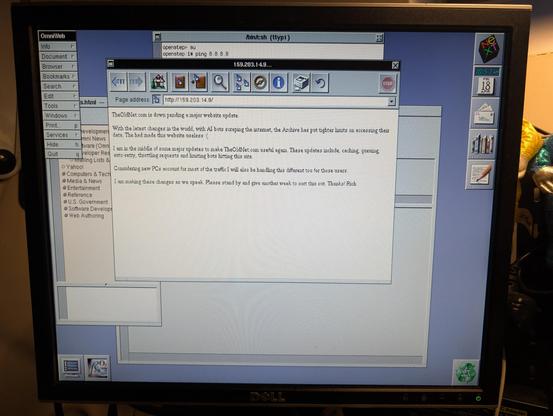
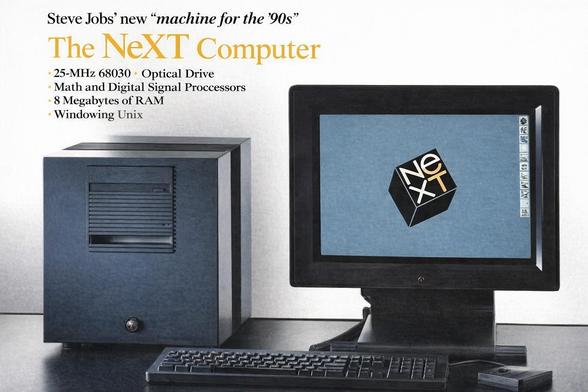
I've always wanted a machine to run NeXSTEP natively, the chances of me ever getting a real Next Computer are very slim.
So, I've been researching hardware for an Intel based build and today I got to about 99% completion of the testing.
I'm more than pleased! 😍👇
The hardware:
- Pentium 3 - 800Mhz (Coppermine)
- 512MB RAM
- Ati Rage XL 8MB Video
- Creative Soundblaster PCI 128
- Intel Pro 100 Network Card
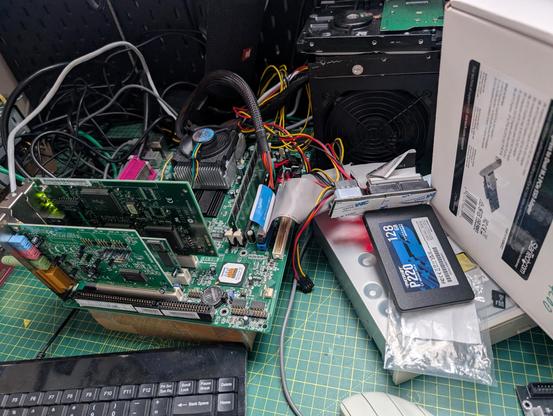
- SSD
The goal:
- High Res Colour Video
- Sound
- Full Networking
- Fast Booting and Usability
So, as I've had to do numerous installs to get the video working, I ended up making a VMWare machine.
I mounted an SD card as a physical IDE drive in the virtual machine and did the install that way.
Also a great way to get files on is to add packages to an ISO and mount it.
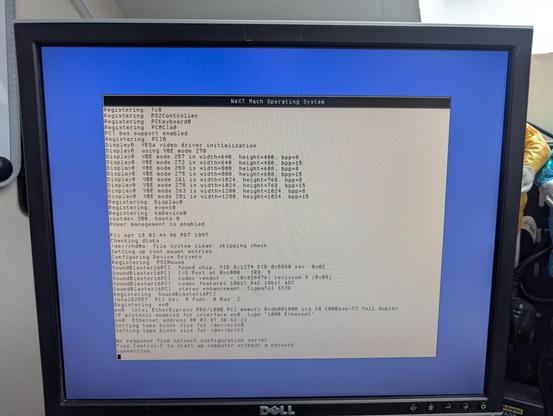
The Video is fully working, check this screensaver out, I think I've seen it somewhere before 🤔
Sound is also now working!
The IDE to SD card was quite slow, so I've dd'd a backup image of it and written it to an SSD, it's about 5x+ faster now, really impressed with the boot speed and general usability.
So, to get the network card to work I've had to swap it around with the video card as I had IRQ issues. It's now initialising.
Also I had to use my 10/100 switch as it only seems to like a 10mb connection.
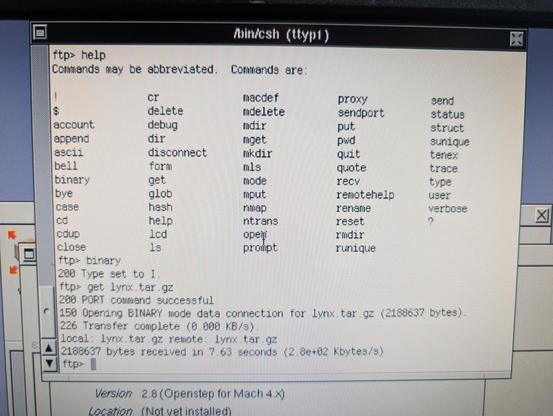
What I love about these kind of projects is the learning process. I've now managed to get the network working on my lan. I was trying to copy some software packages over and they all didn't extract properly.
I realised the built in FTP client is default in ASCII mode, not binary. 😂
It's now talking to the outside world, I've also installed a web browser.
Here's theoldnet.com but I've not managed to get the DNS working yet, I had to enter the I.P address.

@Gammitin way way back at DreamWorks we supported NeXTStep 3.3 on a set of Intel machines for a custom ink & paint app.

They were... Less than totally stable and needed rebuilding so very often.

There were so many time consuming steps in the setup we came up with a custom floppy which would download a gzipped 2GB disk image, write it to the disk, then send a pager message when done