 rss
rssThe Iran War You’re Not Hearing About
The Iran War You’re Not Hearing About - Abolish Capital!
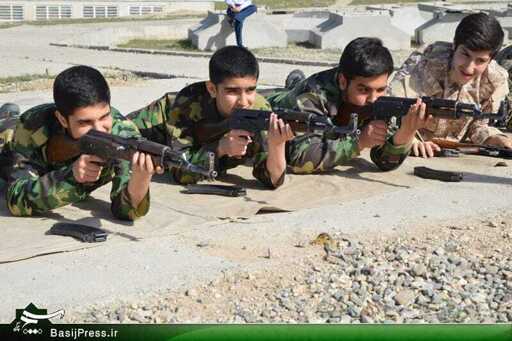
[https://substackcdn.com/image/fetch/$s_!Qofm!,w_1456,c_limit,f_auto,q_auto:good,fl_progressive:steep/https%3A%2F%2Fsubstack-post-media.s3.amazonaws.com%2Fpublic%2Fimages%2Fe8dd63c9-24a4-4aa4-9363-5584aa5602db_800x533.jpeg]https://substackcdn.com/image/fetch/$s_!Qofm!,f_auto,q_auto:good,fl_progressive:steep/https%3A%2F%2Fsubstack-post-media.s3.amazonaws.com%2Fpublic%2Fimages%2Fe8dd63c9-24a4-4aa4-9363-5584aa5602db_800x533.jpeg Boys training for Iran’s Basij paramilitary forces Subscribe now [https://www.kenklippenstein.com/subscribe?] “Our objectives here from the very beginning had nothing to do with the leadership,” Secretary of State Marco Rubio told Al Jazeera yesterday, denying once again that the Trump administration is seeking a change in governments. It’s a pretty weird thing to say given that the opening salvo of the now month-long war was to target the leadership in Tehran, killing Supreme Leader Ayatollah Ali Khamenei and numerous others at the top level. “Would we be heartbroken if there was a change in leadership?,” Rubio asks. “Absolutely not. If there’s something we could do to facilitate that, would we be interested in participating? Of course.” So is Rubio’s insistence that they’re not seeking regime change a lie? Yes and no. Though regime change is not an official objective, there’s a covert war running alongside the overt one, and its whole purpose is to usher in regime change, sources tell me. It’s been something that Israel has been explicitly pursuing since the beginning. But not the Pentagon; not officially, anyway. Rubio repeated to Al Jazeera the commonly cited four objectives of the war: destroying (1) Iran’s air defenses, (2) its ballistic missile and drone capacity, (3) Iran’s navy, and (4) Iran’s ability to threaten its neighbors in the future. The administration is happy to talk about its progress on these objectives, constantly bragging about destroying this target, eliminating that capability. But there is a sub rosa war, one that is being fought in the shadows, and it is beyond the kinds of special operations that would carry out a raid on targets like Kharg Island, as I reported yesterday [https://www.kenklippenstein.com/p/trump-goes-commando]. They are even more secret, involving the “black” special ops forces and the CIA and the Israelis. There are several reasons that the operations are secret: to keep “conventional” war within the bounds of the law and what is indeed conventional, to hide special capabilities (like exploding pagers), to protect Iranian insiders who might be helping but might govern tomorrow, and to ensure that a very difficult to achieve objective not be the standard by which the war is judged. That there is a “white” side and a “black” side to these operations is never well explained because of secrecy, and the media does a terrible job of clarifying. This has led to all kinds of confusion and speculation of a massive ground invasion that bears little resemblance to the actual war, as I’ve reported [https://www.kenklippenstein.com/p/trump-goes-commando]. In contrast to the U.S., Israel has been quite open about attacking the fabric of domestic control in Iran. It has even acknowledged targeting internal security forces at a granular, so-called “hyperlocal” level [https://www.longwarjournal.org/archives/2026/03/israel-shifts-to-hyperlocal-targeting-in-iran-as-regime-military-power-degrades-march-11-13-updates.php], right down to police departments and even security checkpoints. From the first moments of the war, the IDF has been striking Internal Security forces headquarters (ISF or FARAJA), the national police, as well as Basij headquarters, the paramilitary militia of the regime used to suppress protests and enforce social control. On March 4, for example, IDF spokesperson Brig. Gen. Effie Defrin said [https://www.idf.il/en/mini-sites/israel-at-war/briefings-by-idf-spokesperson-bg-effie-defrin/march-26-press-briefings/press-briefing-by-idf-spokesperson-bg-effie-defrin-march-15th-2026-1/] that beyond military targets, “we also struck the regime’s repression mechanisms. These include the Basij, the Internal Security Forces, and the notorious intelligence headquarters.” Since then, the list of security targets includes daily strikes on headquarters in Tehran and the provinces, as well as the IRGC and its intelligence elements, special units, the Tehran Revolutionary Court, Law Enforcement Command, the Basij and other police offices and posts. Headquarters, command centers, units, and supporting infrastructure have all been struck, moving to lower and lower echelons as top-level elements are destroyed. On March 10, a dedicated protest-suppression command center run by the IRGC was attacked. On March 17, a high-impact strike reportedly on a “makeshift headquarters” in Tehran killed Basij Organization Commander Brigadier General Khalam Reza Soleimani and his deputy, Ghassem Ghoreyshi. Some reports claim that approximately 300 Basij commanders and field officers were eliminated. Around this time in mid-March, the U.S. military joined the effort, a well connected military official tells me. “For now,” the Intelligence Community’s 2026 Annual Threat Assessment [https://www.dni.gov/files/ODNI/documents/assessments/ATA-2026-Unclassified-Report.pdf] stated on March 18, Iran “retains the ability to … suppress internal threats to the regime’s hold on power.” The next day, President Trump stated that the Iranian regime was “failing from within” and said his “biggest problem” was having no clear leadership left to negotiate with after the elimination of high-ranking Iranian officials. Treasury Secretary Scott Bessent said [https://x.com/RapidResponse47/status/2034663974264783081] that same day that “we are seeing defections at all levels as they’re starting to sense what’s going on with the regime … The regime will probably collapse within itself.” Those indiscretions weren’t followed up, and the media interpreted their statements as refuting Tulsi Gabbard’s testimony, but in reality, the president just slithered back into safer territory focusing on conventional military targets, declaring on March 20: > “We won. We’ve knocked out their Navy, their Air Force. We’ve knocked out their anti-aircraft. We’ve knocked out everything. We’re roaming free. From a military standpoint, all they’re doing is clogging up the strait [of Hormuz]. But from a military standpoint, they’re finished.” On the “white” side, the U.S. was bombing the IRGC (and intelligence) at lower and lower echelons, directly and indirectly supporting the “black” efforts to facilitate a change in regime or foment an uprising. It’s normal for the U.S. and Israel to deconflict their attacks, but what I’m describing goes beyond that. More than just the indirect support (e.g. provision of targeting intelligence) to Israel, there are also occasional direct U.S. attacks on Iran’s internal security forces, including cyber and space attacks. So what effect is this all having? It’s difficult to know what’s happening on the ground inside Iran with any confidence, especially with the Internet being suppressed. The regime has also long suppressed independent media, and the current conflict has only tightened that information environment — dissidents and journalists don’t speak publicly in a police state, particularly one in the middle of a war. But there are indicators. One of the more striking ones emerged this week: Iran’s IRGC announced a recruitment campaign for civilian volunteers called “Homeland Defending Combatants for Iran,” setting the minimum age to 12, as Human Rights Watch has observed [https://www.hrw.org/news/2026/03/30/iran-military-stepping-up-child-recruitment]. In other words, Iran’s premier ideological military force is apparently desperate enough to recruit children to help staff the exact kind of checkpoints and security posts that have been systematically targeted in the strike campaign described above. And on Monday, a top IRGC commander in charge of internal security of the capital, Brig. Gen. Hassan Hassanzadeh, was reportedly [https://www.ncr-iran.org/en/news/iran-news-in-brief-news/iran-news-in-brief-march-30-2026/v] killed. (The claim comes from an Iranian opposition outlet, so treat it with a grain of salt; but Iranian authorities have not disputed it, and these are exactly the sort of people Israel and the U.S. are targeting.) As Rubio says, overthrow, regime change, change of government, revolution is not the official purpose of Operation Epic Fury. That tracks with what military officials have described to me: the CIA working with whomever it can find that might provide intelligence and support covert operations, the U.S. sharing intelligence and targeting data with Israel, and the supporting U.S. bombing that weakens the IRGC’s control over the country. The strikes on internal security forces, a campaign of Starlink smuggling — these are consistent with creating conditions for internal change without formally owning that as a goal. (The Trump administration has reportedly [https://www.wsj.com/world/middle-east/u-s-smuggled-thousands-of-starlink-terminals-into-iran-after-protest-crackdown-69a8c74f] smuggled thousands of Starlink terminals into Iran ever since its brutal crackdown on protests last year to facilitate internal and external communications. Iran is apparently worried about this, with state media organs announcing periodic arrests and seizures of the Starlink devices.) All of this is echoes Donald Trump’s call, on the first day of the war, for the people of Iran to “take over your government. It will be yours to take.” Trump, having launched his first presidential campaign bitterly critical of the Bush administration’s regime change wars, has found a version he can live with, which is no stated goal. (Note that in Desert Storm in 1991, the official position of the first Bush administration was that it was not pursuing regime change against Saddam Hussein even as bombing and other operations were undertaken to find the silver bullet that might achieve that very goal.) All eyes might have shifted to the Strait of Hormuz and escalation threats, and a supposedly looming large-scale ground “war,” but amidst it all, the bombing continues. An increasing thrust is attacking the apparatus of state control, sources have made very clear to me. Will it work? As Rubio would say, what “it”? Subscribe if you’re glad not to be an Iranian security official Leave a comment [https://www.kenklippenstein.com/p/the-iran-war-youre-not-hearing-about/comments] Share [https://www.kenklippenstein.com/p/the-iran-war-youre-not-hearing-about?action=share] — Edited by William M. Arkin — From Ken Klippenstein [https://www.kenklippenstein.com/feed] via This RSS Feed [https://www.kenklippenstein.com/feed].