#Gardeners at a small scale #nodig methods are fine. They work, you should use them.

Once you start heading out into over a half acre you might want a different plan. Animal rotation, cover crop, and fallow years is what we have settled on.

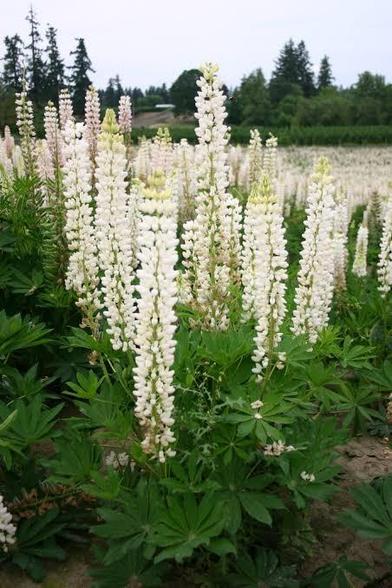
For cover crops we grow white lupines from saved seed. We are testing if we can grow onions in the same field this year, so the cover crop field isn't empty.

Why White Lupine? You can eat them if you need to, they just require processing.
For centuries ancient humans used animal rotation, crop rotation, cover crop, and fallow years to maintain fertility on agricultural fields.

I'm not convinced any other farming system can promise that type of longevity except for food forests, which we also practice and don't differentiate spaces that are for food forests and those for something like wheat. We just grow wheat under fruit trees when we want to.

To me, it seems like mixing these resilient systems makes sense for food autonomy.

@theloopfarm I didn't recall there was a white lupine! Does it change color if it mixes with other varieties? Most of the ones I see around are purple and very rarely, pink (I'm in WA)

@marsiposa Nope. It's an annual and doesn't mix with the perennial type. We also grow blue lupine in static locations but these get incorporated into the soil by pigs or we will leave the field fallow the next year.

It was one of Romes primary cover crops and grown everywhere in the US until soy took over. Funny though that soy adds less nitrogen to the soil than White Lupine. Mostly it was lobbyist that made that happen.

@theloopfarm oh, I had no idea! Very interesting, I'll look into it. Thanks for sharing 🙂
@marsiposa Let me know if you have trouble finding seeds. I have stamps and an envelope.
@theloopfarm thanks so much! I only have a small city backyard, so I have to think first where could I actually plant it 😅
You plant it this time of the year? I'm in zone 9a, and the perennial lupines are 5in tall already.

@marsiposa I put mine in the ground a month ago in zone 6b/7. The Romans would over winter the seed, so they planted seed in autumn. So in zone nine you would grow them as a cool season flower.

That way they are growing when all of your summer crops have been removed from the garden.

The other option is fava beans.

If I had a garden in your zone I would grow fava/Lupini beans throughout the autumn and into winter and spring. That way you get to use the space twice.

@theloopfarm ah, excellent. I was just wondering if it worked like a fava bean.
Thanks so much this is all very useful information for next autumn.