surprisetalk
OpenAI closes funding round at an $852B valuation
https://openai.com/index/accelerating-the-next-phase-ai
https://www.cnbc.com/2026/03/31/openai-funding-round-ipo.html
OpenAI closes funding round at an $852B valuation
https://openai.com/index/accelerating-the-next-phase-ai
https://www.cnbc.com/2026/03/31/openai-funding-round-ipo.html
I'm old enough to remember when companies worth $1 billion were called "unicorns." Now we have a company raising 122 times that? Valued at nearly 1000 times that...?
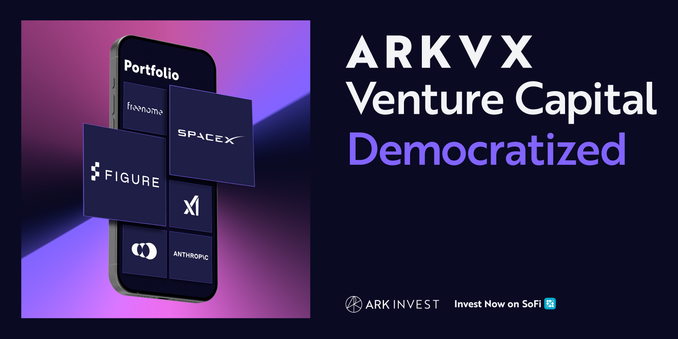
At least they're throwing consumers a bone via the ARK deal. It's crazy how little AI exposure is available to anyone who isn't already wealthy and/or connected.
> Nobody apparently believes that capital is worth investing into anything but AI.
This is the main reason we see this insane investment into AI imo. If you imagine having lots of money, where should you invest that currently?
Housing market: Seems very overvalued (at least in germany). Also with the current uncertainty and inflation its hard to make an investment that pays back over 20-30 years. So building is also difficult.
Stocks are very volatile currently. Not only since Iran. To me it seems since the financial crisis 2008 investors don't enjoy stocks as before.
Gold: Only if you are paranoid about collapse of society. It doesn't make sense to invest into s.th. without interest rates.
Crypto: Same as gold, but better if you like gamling. I would assume most people who are very rich don't gamble with most of their fortune.
Looking around, and especially forward, it would be military tech, e.g. [1], and its supply chain, e.g. [2] :-\ Valuations are not as crazy, but I bet there'll going to be a lot of demand in the coming decade, unfortunately.
Chip production, too, of course, but it's overflowing with money already, apparently. It's growing though, because there are real actual shortages of stuff like RAM and SSDs, there's money to be made immediately if you can. Chinese RAM manufacturers are building out like crazy.
[1]: https://www.ultimamarkets.com/academy/anduril-stock-price-ho...
[2]: https://www.marketscreener.com/quote/stock/RHEINMETALL-AG-43...
> Looking around, and especially forward, it would be military tech, e.g. [1], and its supply chain, e.g. [2]
Only viable if you’re okay with the ethical implications of funding war.
> Stocks are very volatile currently. Not only since Iran. To me it seems since the financial crisis 2008 investors don't enjoy stocks as before.
These returns do not qualify as “enjoying stocks”?
https://investor.vanguard.com/investment-products/etfs/profi...
The returns are higher than before 2008, the previous 15 years are unprecedented.
https://www.macrotrends.net/2526/sp-500-historical-annual-re...
> At least they're throwing consumers a bone via the ARK deal.
https://www.ark-funds.com/funds/arkvx
The fund is invested in most of the hot tech companies.
> At least they're throwing consumers a bone via the ARK deal. It's crazy how little AI exposure is available to anyone who isn't already wealthy and/or connected.
It is deliberate. Period.
It's always been known that you make money in the private markets and pre-IPO companies and retail is the final exit for insiders and early investors.
Retail is not allowed to be early into these companies (Because that would ruin the point of being an insider) and this "exposure" has to be at the near top.
> The broad consumer reach of ChatGPT creates a powerful distribution channel into the workplace
They mention this line in different forms a couple of times in the article. It’s clear they’re pretty rattled about Anthropic’s momentum in enterprise, I wonder how confident they really are in this rationale.
> Today, we closed our latest funding round with $122 billion in committed capital at a post money valuation of $852 billion.
A couple things that stand out to me about this is the use of the phrase "committed capital", which only sounds like a promise that could break from various circumstances, and the valuation of their funding keeps changing so it sounds like a max rather than the valuation every investor invested at.
That’s typical. Large funding rounds usually aren’t delivered as one single giant lump sum into the bank account. The capital is committed in stages that can depend on hitting milestones or goals.
This is done even in smaller startup funding rounds some times.
No, they didn't raise $122B as the HN title implies. A big chunk of that $122B is a "maybe" that depends on various things that need to happen in the future.
Oh, man... I can't wait to see where this is going. Might not be pretty after all.
That’s logically inconsistent. If the company was performing poorly enough that they couldn’t meet their funding milestones from a previous round, they’re not going to have an easy time raising the same money in a future round.
The milestones aren’t a hard-stop that forbids the previous funding round participants from providing the money if they still choose. It’s just an out.
Note that even that "money in the bank" of traditional venture firm is not really money in the bank. VC, PE, and hedge fund managers usually don't have all the cash for the fund sitting in the bank at all times. Rather, their agreement with the LPs that fund the fund is structured as a series of capital calls: it gives the fund the right to demand that their LPs deposit cash in their bank accounts within 10-30 days, which can then be used to fund the investments that the VC firm makes. The capital calls are backed by legal documents enforceable in court, with pretty stiff penalties for failing to meet a capital call.
Such a funding structure here isn't all that different: the funding agreement gives OpenAI the right to call on their backers to make certain cash deposits, contingent upon milestones being met. Deep down inside, "money in the bank" doesn't actually exist, it's just mutual agreements backed by force of law.
The funds are committed under the terms of the deal (share price, things like board seats, and other details). There are legal obligations to provide it.
This is a common structure for large investments. It would be really inefficient for all of these investors and companies to have to have the money sitting in cash to do a deal and then transfer it into the company's bank where it sits and earns interest for years until they can deploy it.
Even VC firms who raise funds work this way. The capital is "committed" but investors don't wire all of the money over right away so it can sit in the VC firm's bank accounts, waiting. The VCs do what's called a "capital call" through which they're legally bound to provide the money they committed when requested, under the terms of the deal.
One of the stipulations is that OpenAI achieves "AGI"... Need I say more?
Also a lot of this "money" is in cloud compute and credits not cash so...
Their ~$50 million total Alibaba investment turned into ~$70 billion. As of two years ago they were still liquidating out of it.
January 26, 2024 - "Japanese investment holding firm SoftBank Group Corp has largely cleared its ownership in e-commerce giant Alibaba Group Holding, concluding one of the most successful deals in China's internet industry and a holding that spanned about 23 years."
"SoftBank, which invested US$20 million into Alibaba when it was still a start-up in 2000, said in a corporate filing on Thursday that it was set to book a gain of 1.26 trillion yen (US$8.5 billion) - about 425 times the value of its initial outlay - for the Tokyo-based firm's 2024 financial year after divesting its [remaining] shares via subsidiary Skybridge."
https://finance.yahoo.com/news/japans-softbank-concludes-run...
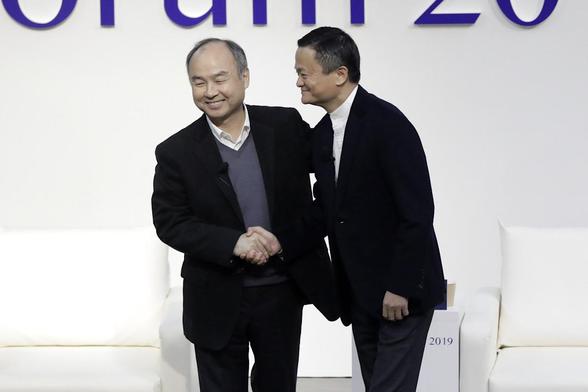
Japanese investment holding firm SoftBank Group Corp has largely cleared its ownership in e-commerce giant Alibaba Group Holding, concluding one of the most ...
I've wondered how many announced fundraising rounds were like this. It's in everyone's interest (VCs and entrepreneurs) if the message to the outside world is "this company is amazing so they've raised a boatload of cash". But VCs might not want to give it all up front, or unconditionally.
It makes it hard to say what the valuation of a company is. If the milestones are unlikely to be hit, then it's anyone's guess.
$2b/month which is $24b/year. Not as much as I expected considering they were at $20b by end of 2025.[0] They only added $4b since?
Anthropic had $19b by end of February 2026 and they added $6b in February alone.[1] This means if they added another $6b in March, they're higher than OpenAI already.
However, I heard that OpenAI and Anthropic report revenue in a different way. OpenAI takes 20% of revenue from Azure sales and reports revenue on that 20%. Anthropic reports all revenue, including AWS's share.[2]
[0]https://www.reuters.com/business/openai-cfo-says-annualized-...
[1]https://finance.yahoo.com/news/anthropic-arr-surges-19-billi...
And that is revenue only. In the past 15 or so years most US companies (and especially startups) always talk about revenue only. Wheras only profit should matter.
E.g. what good is 20 billion per year when "OpenAI is targeting roughly $600 billion in total compute spending through 2030". That is $150 billion per year?
why should only profits matter? if i had a killer product today that i just need to sell tomorrow, wouldn't you still invest today knowing i'll probably only start to make money tomorrow (or perhaps next week)?
the expectation is that they'll eventually make money. they can't raise forever. only startups are not profitable for a few years. but most companies that have existed for a long while have been profitable
and since they're expected to make a LOT of money, everyone wants a piece of that future pie, pushing up the valuation and amount raised to admittedly somewhat delusional levels like here
not if your product is selling two dollars for one dollar and as soon as you'll start to charge more I'll switch to one of your twenty competitors
profit isn't a function of having a killer product, it's a function of having no competition
And why do you think twenty competitors can stay competitive for years to come?
Industries always consolidate and winners emerge. SOTA LLMs look like a natural monopoly or duopoly to me because the cost to train the next model keeps going up such that it won't make sense for 20 competitors to compete at the very high end.
TSMC is a perfect example of this. Fab costs double every 4 years (Rock’s Law). It's almost impossible to compete against TSMC because no one has the customer base to generate enough revenue to build the next generation of fabs - except those who are propped up by governments such as Intel and Rapidus. Samsung is basically the SK government.
I don’t see how companies can catch OpenAI or Anthropic without the strong revenue growth.