@nyhan Edit: adding a link https://pubmed.ncbi.nlm.nih.gov/40911554/ and a quote from it:
wind was the most probable mechanism of infection transmission between poultry in at least two independent cases. By aligning the genetic and meteorological data with critical outbreak events, we determined the most likely time window during which the transmission occurred and inferred the sequence of infected houses at the recipient sites. Our results suggest that the contaminated plume emitted from the infected fattening duck farm was the critical medium of HPAI transmission
ha, yeah. Especially because there was a study (and I think a second) on caged chickens who aren't ever outdoors. Zero wild life exposure. Extremely careful worker protocols: fresh overalls and boots on entering if I recall.
The buildings of course had unfiltered air vents and intakes.
By doing genetic testing on the strains in two such facilities some few km apart, and checking the wind direction logs, they were able to prove that the second farm was infected only when the wind changed and the earlier-infected chicken's air vent plume crossed the later-infected barn.
Extraordinarily clean science. As close to an absolute proof as possible, that H5N1 is airborne bird-to-bird in farms (and between them).
This, despite the fact that we know that H5N1 also is very competent at oral-fecal transmission!
 datum (n=1)
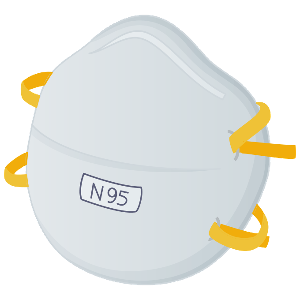 and clean air, because
 Kate Nyhan

 PapyrusBrigade
 ❄️SnowyIn🇨🇦❄️
 LisPi
LisPi Les Lore