 gloriouscow
Check out these fine folks using a "Selector Light Pen" with the IBM 3270 Data Display System.
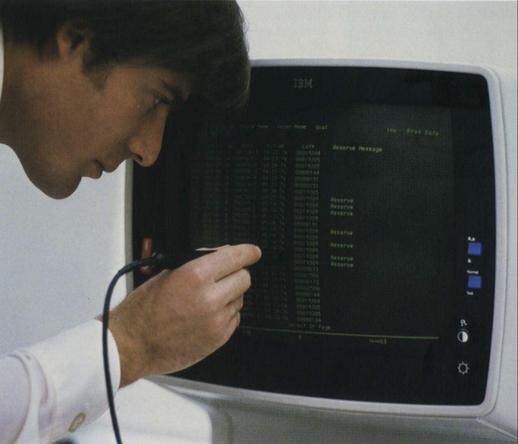
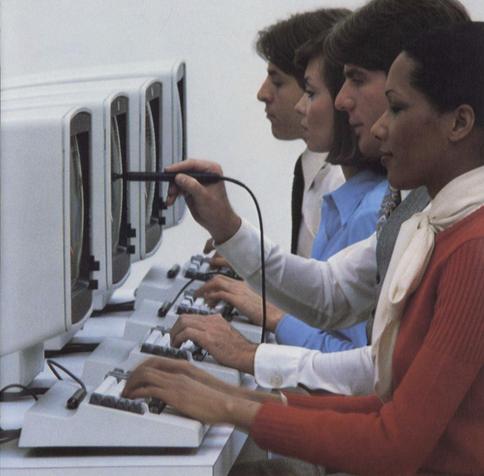

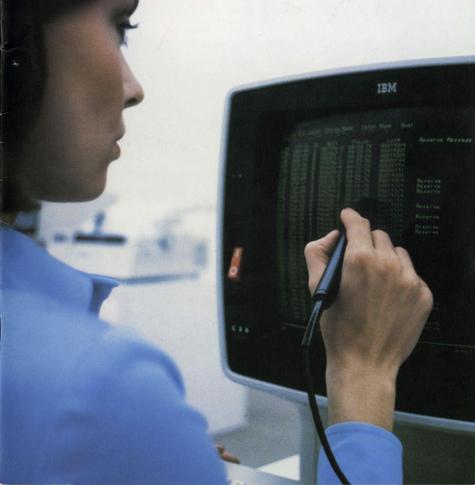
Check out these fine folks using a "Selector Light Pen" with the IBM 3270 Data Display System.
In this case, it wasn't a gimmick. The late Chuck Peddle, a staple of the Vintage Computer Federation forums, had this to say about them:
Selecta pens were an extremely popular accessory on 3270 terminals and worked very well - that is to say flawlessly - and so they were certainly not a "dead end technology".
IBM made the Datamaster, the system from which the IBM PC derives much of its heritage, also compatible with a light pen.
It seems a bit odd then, that we go from a hugely successful product line like the 3270, to basically a half-baked nod to light-pen support in the PC, with IBM not even bothering to sell a pen accessory of their own.
It's not like they didn't know how to make them. They were still selling the damn things!
You could even buy a specially kitted out IBM PC that operated as a 3270 terminal.
The IBM 5151 was initially the only monitor that you could purchase for the PC - it took nearly two years for IBM to get the color 5153 out the door (your other option was a third-party composite monitor in the meantime).
The 5151 had a refresh rate of 50Hz. To avoid eyestrain, it used a high persistence P39 phosphor. This wreaked havoc with light pens circuits.
So much so, that IBM actually removed the light pen header from subsequent versions of the MDA card. It's not just unpopulated - it's gone. No light pen for you, mister!
This had already been a solved problem for nearly a decade or more. Light pen systems often used dual phosphor coatings - one phosphor would be a long persistence phosphor in the visible spectrum, while a much faster phosphor responded in the infrared range, which a pen could pick up.
Best of both worlds! Except, you know, this is incompatible with trying to sell stuff dirt cheap.
The fast responding phosphor wasn't always infrared. One historically famous display was the DEC Type 30 - you may know it as the display used for what many consider to be the game that started the video game industry - Space War.
It had a fast blue phosphor and a yellow very high persistence phosphor, giving the display a very unique two-color appearance, as your blue ship left behind it a hazy yellow trail.
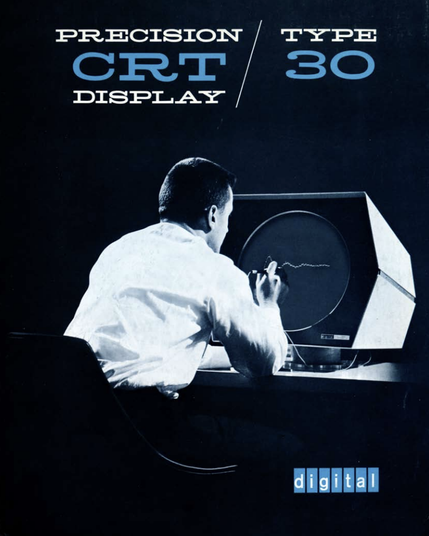
Here's an excellent article on the significance of Space War, with some visualizations of what the game looked like.
https://www.masswerk.at/nowgobang/2021/spacewar1
No light pens were involved, sadly.
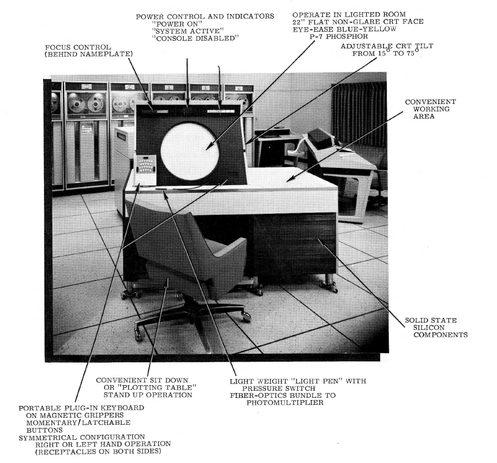
Here's the Digigraphic Display System 270 from Control Data Corporation, circa 1965.
This was another dual-phosphor system using the same "P7" phosphor as the DEC Type 30.
It could connect to your CDC 3200 (you have one of those, right?)
If you look closely, you can see the light pen laying on the table.
I want you to consider that this is 1965, and this system has an addressable resolution of 4096x4096. Yes, it's vector so its not exactly comparable to a modern 4K display, but that's some hella resolution.
One thing I need to learn more about is how light pens worked with vector displays. Because all of the timing logic I'm familiar with requires a raster scan with regular sync signals. This ain't it.
I will be at VCF East in a few short weeks.
I will be bringing a light pen, and you may be able to play with it at the Seequa Chameleon exhibit, assuming I can fashion an adapter and we can find any light pen software that the Chameleon will run.
If you're attending, stop by and say hi!
@tom_verbeure I don't think there are any really great ergonomic solutions. Using a recessed monitor might help, to allow use of the system without holding your arm up. But then you are forcing the user to look down, which has other ergonomic concerns. I have arthritis in my neck now (yay for getting old) and even drawing on paper while looking down at my desk becomes uncomfortable after while.
There were some applications that were uniquely suited to a pen, though. FTG documents describe a use case of using a pen to control a CRT from behind a transparent protective shield up to 14" away. This was undoubtedly an industrial application - if you have a need for a blast shield like that you probably also don't have a mousepad lying around. Interesting scenario.
The pen was used in medical settings because it could operate via sterile sleeves and the metal versions FTG made could be easily sanitized.
Considering the nature of a light pen requires a CRT and a CRT will never be something you can comfortably hold at an angle of your choosing, I think we just lost the ergonomics battle from the start.
@tom_verbeure It's funny a few people have mentioned that they built pens and they worked fine, but most people just made some jittery mess.
It's probably a crapshoot - if you got lucky with the right resistor values and the right display and the right EMF environment, maybe you could make a homemade pen serviceable - I think the complicated guts of commercial pens make them reliable.
There must be something else going on here, this is the light pen for the Vectrex game console - you can see the user is able to interact with dark areas of the screen, somehow.
Curious!

Vector displays! Oh this is amazing! I saw this recently about the Hewlett-Packard HP 1345A vector displays used in WarGames, quite interesting stuff!

One 1972 Rolling Stone issue had a big Space War article:
https://archive.org/details/19721207rollingstoneexcerptspacewararticlev02
I purchased a copy of that issue, based on the back cover (or "page 1") portrait:

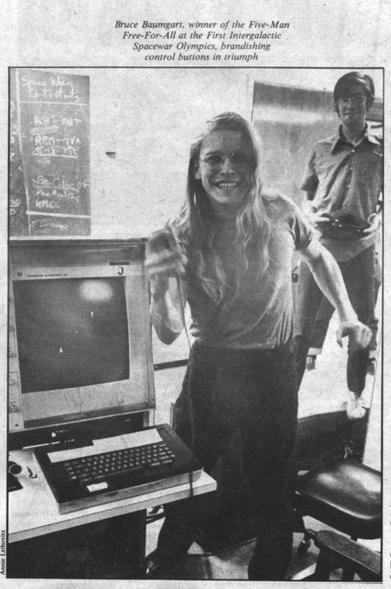
Ralph Gorin is mentioned in the article, but not as a winner. Bruce Baumgart won Free-For-All (see photo) and Tovar (I can't find a full name) and Robert E. Maas (REM) won team.
That was probably because they used a standard radar-CRT ?
I think the rapid-blue/slow-yellow was mostly for air, because it enabled you to estimate speed and direction visually.
Sea vessels are too slow for that.
Many sea-radars had a plastic overlay sheet you could draw on with grease-pencil, to estimate speed+direction, in that slower environment.
@lkundrak It is possible to build your own, but what they do not tell you is that anything you can cobble together with a photodiode, a resistor, and some bubblegum is going to be absolutely terrible, giving you a very negative impression of a technology that frankly needs all the help it can get.
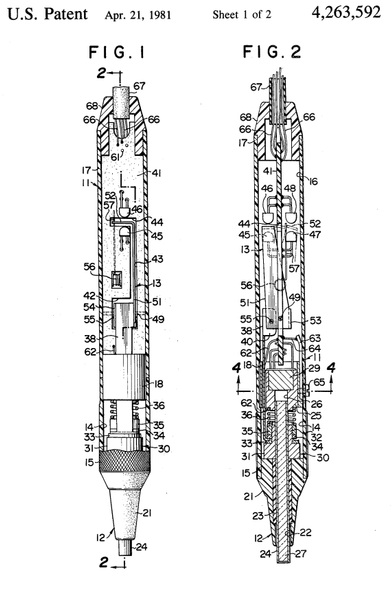
Your average light pen is a rather complicated little thing. It has a waveguide or lens assembly to focus and direct the incoming light, amplification and high-pass circuitry and other filtering.
Later pens that supported higher (or multiple) frequencies had timing circuits to produce a strobe pulse of a minimum specified length.
@gloriouscow Interesting... I was under the impression that IBM created the 5153 _precisely_ because nobody before 1983 was creating a monitor compatible with the connector. So everyone who wanted color had no choice but to use the composite output before then.
But I never looked at old catalogues to confirm/deny this. I just believed it when I read it :P.
@cr1901 What I have personally learned is that composite displays aren't nearly as bad as I assumed, if you're okay with monochrome. My 1084D looks pretty brilliant in composite, with crisp white 80 column text. Quite readable.
This is still something I need to fix in my own emulator - I do not automatically disable the color burst in 80 column mode like the CGA does. it gives you the impression that composite is always an unreadable mess.
@cr1901 I'm fairly sure it's using a P39 phosphor. In any case, I'm going to take oscilloscope measurements of (attempting) to use it with the light pen.
It should be informative to see just why it caused pens so much grief!
@gloriouscow > and if you were hooked up to a television, God help you.
Yea, this is exactly what I did when I got my IBM 5150 in 2011, w/ a 1999 CRT TV. It was awful :).
@gloriouscow *Years* ago, I made a lightpen with a phototransistor and some basic code from a magazine. It worked well on my Apple ][ clone.
I cannot recall what magazine, though.

 Tom Verbeure
 ROTOPE~1 ⭐️
 Rusty Shackleford
 Dave Fischer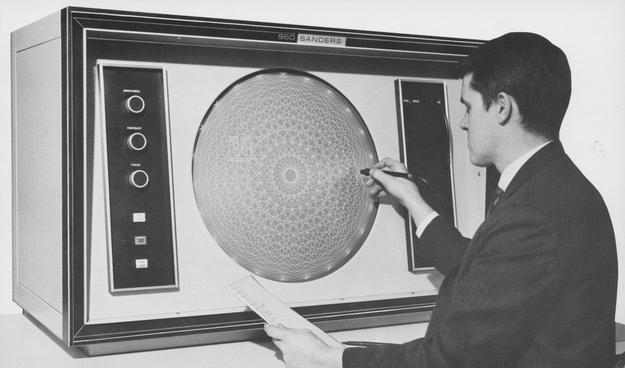
 Eli the Bearded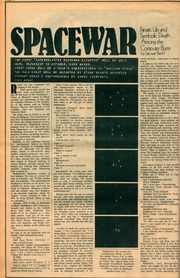
 Rich Alderson
 🇺🇦 haxadecimal 🚫👑
 Poul-Henning Kamp
 NEPŘÁTELSKÉ EMOCE 🇺🇦🇨🇿
 William D. Jones
 Simon Brooke
 Regionales Retro-Rechenzentrum
 AG7GM Dan
 RevK
RevK