 LikesOldMacs
A fun #marchintosh surprise from @csilverman 😁 what fun and thank you!!
We got to experience this unusual Mac for a few hours before (predictably) the barrel jack gave up on this 5300-based machine. HD imaging and some touch-up work on the docket! 🤞
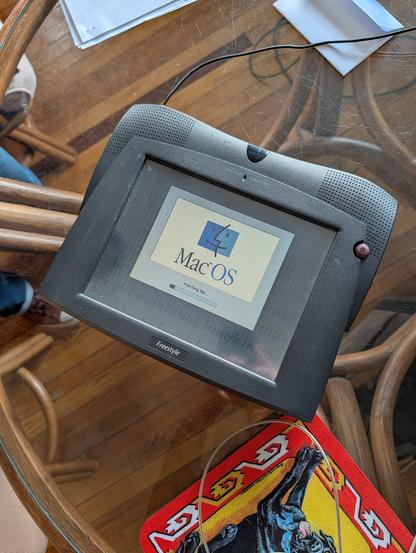
A fun #marchintosh surprise from @csilverman 😁 what fun and thank you!!
We got to experience this unusual Mac for a few hours before (predictably) the barrel jack gave up on this 5300-based machine. HD imaging and some touch-up work on the docket! 🤞
@likesoldmacs @csilverman crumbs, like #appleNewton big brother
@falken @likesoldmacs @csilverman Yeah, somewhere between the early #AppleNewton 'Cadillac' #prototype and an #eMate300 (sans keyboard), if it had been in the PowerBook color palette.
See @splorp's photos of the 'Cadillac':
https://flickr.com/photos/splorp/albums/72157623287193080/
And, Sonny Hung's:
https://www.flickr.com/photos/sonnyhung/albums/72057594095135157/
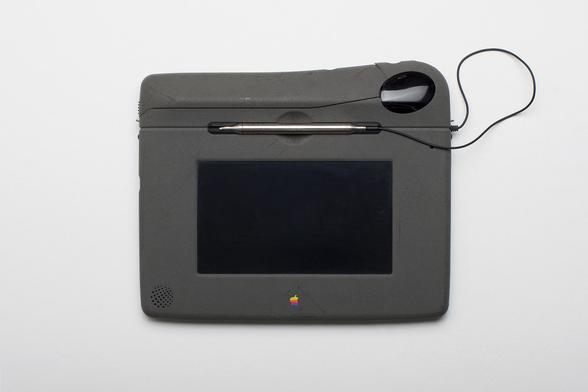
A functioning prototype of the larger, tablet-style Newton. Sonny Hung also has images of the OS running on this device in this set. This item is part of a collection obtained from Russ Uzes, October 2004. Russ originally purchased it on eBay from a company called Mac-Pro Systems. When asked about the device’s history, they told him … “We just found the Cadillac in a box of stuff in the office. We have no idea where it came from.”
@likesoldmacs @morgant @falken @splorp I think I remember from "Defying Gravity" that Apple almost went with Cadillac, or something like it. Michael Tchao, who handled product marketing for Newton, was on the same flight with Sculley and talked him into the smaller form factor, which was probably a good idea, since I heard somewhere that Cadillac would've cost something like $8K.
A bit surprising to me that Apple never actually released a Mac tablet, given how many of these they prototyped.
@splorp @proedie @likesoldmacs @morgant @falken I do think it's safe to say that an $8K tablet would've bombed worse than Newton ever did. They'd have sold three, one to Sculley's mother.
Newton the product wasn't a success, but Newton the idea was a *huge* success. The PalmPilot was basically Newton as it should have been: smaller, lighter, less capable but less expensive. If Apple had built a "Newton Mini" before Palm did, who knows—iPhone could've been an update to an existing product line.
@splorp @proedie @likesoldmacs @morgant @falken This is an interesting read: https://lowendmac.com/2013/the-story-behind-apples-newton/
I think Apple definitely could have made an affordable tablet if they'd wanted to. Sounded like the main problem was deciding what compromises to make. There was a sentiment that an underpowered Newton was worse than an unaffordable one; even the final, small version was more tablet-ish than pocket-sized, just because of everything they wanted it to do.
In the late 1980s, Apple appeared to be in the middle of a resurgence. John Sculley had forced out the volatile Steve Jobs in 1985, and a cadre of older, more experienced executives focused on building the Apple and Macintosh brands. The company was beginning to grow complacent, working to protect Macintosh revenues at the […]
@csilverman @splorp @proedie @likesoldmacs @falken The hardest parts of really creating a new market is decisiveness. Especially in one so personal as to be carried on one's person all of the time and to store & retrieve intimate details. Then try pushing the envelope with new technologies and interfaces that aren't yet proven.
It was much easier for Palm to then create a stripped down and affordable (if significantly less powerful & resilient) PDA, once it had been fully realized.
 ⊥ᵒᵚ Cᵸᵎᶺᵋᶫ∸ᵒᵘ ☑️
 Morgan Aldridge
 Chris Silverman 🌻
 proedie
 Grant Hutchinson