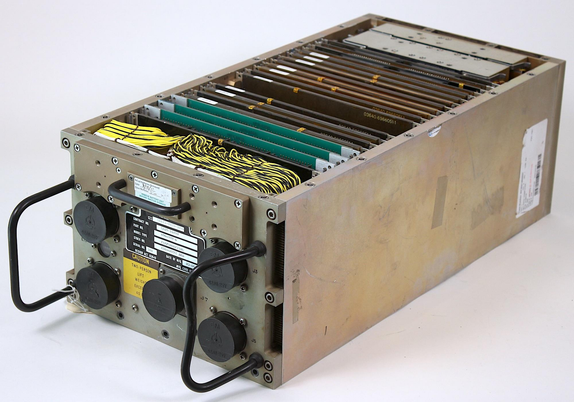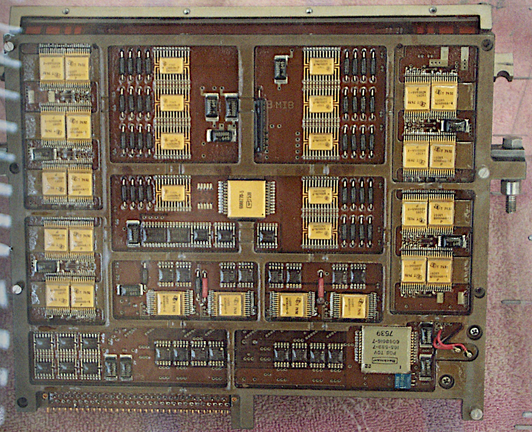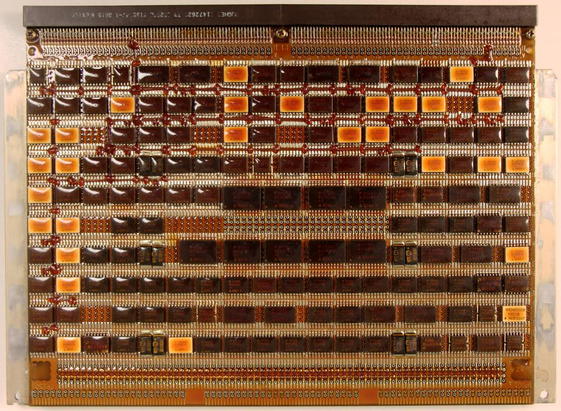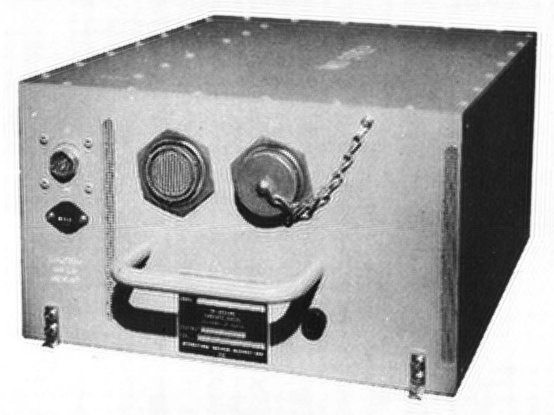
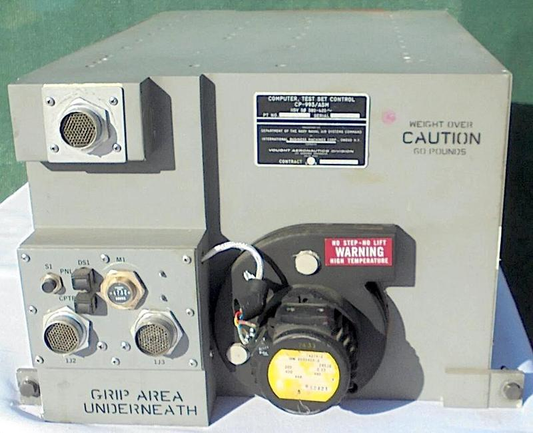
In 1967, IBM introduced the System/4 Pi line of aerospace computers, packing mainframe performance into a compact box. 4 Pi computers powered everything from military aircraft to the Space Shuttle to sonar systems on submarines. Thread...
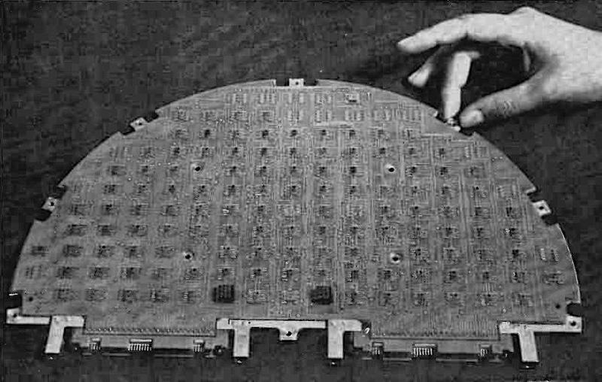
IBM's 4 Pi computers were built from simple TTL integrated circuits and used magnetic core memory for storage. "Flat-pack" integrated circuits on multi-layer circuit boards provided dense logic. The board below was round to fit inside a tactical missile, but most of the computers used standardized rectangular boards called "pages".
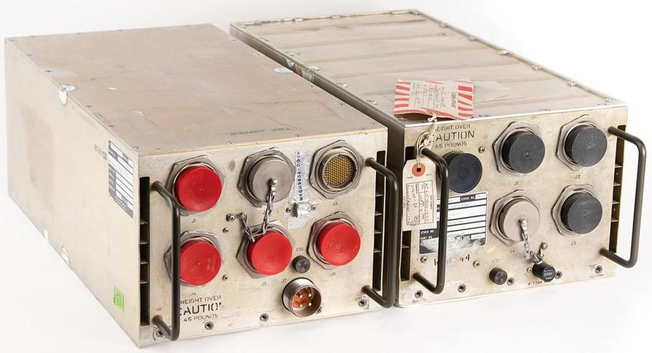
The Space Shuttle used a more advanced System/4 Pi computer called the AP-101B. A separate computer, the I/O Processor, provided 24 data buses to all parts of the Shuttle. These boxes still used individual TTL chips and magnetic core memory.
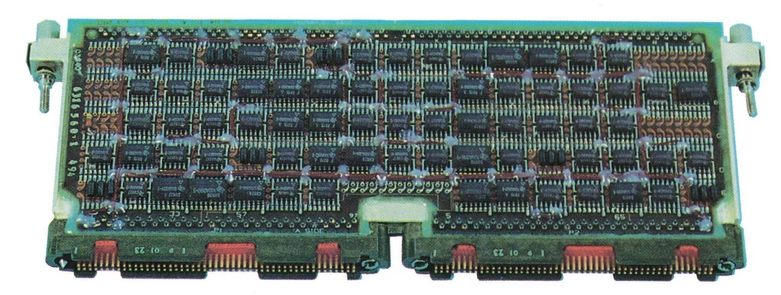
In 1991, the Space Shuttle upgraded its computer to the AP-101S, replacing two 60-pound boxes with one box. Since there were five computers on the Shuttle, this change freed up 300 pounds for additional cargo. The CPU was implemented in three boards full of chips, one below. These boards were much larger than the earlier 4 Pi boards.
There were many more models of System/4 Pi computers, including refrigerator-sized computers used on submarines; see my article for details: https://www.righto.com/2026/03/ibm-4-pi-computer-history.html
The rise and fall of IBM's 4 Pi aerospace computers: an illustrated history

The morning of April 12, 1981, 20 years to the day after Yuri Gagarin became the first person in space, the Space Shuttle thundered into the...

I forgot to explain the 4 Pi name. IBM's System/360 mainframes got their name because they supported a full 360ยบ circle of applications, from business to scientific. The 4 Pi aerospace computers, however, were designed for the 3-D world, a "sphere" of applications. While a circle has 360ยบ, a sphere has 4ฯ€ steradians of solid angle.
@kenshirriff and yet people claim that Thomas J. Watson Jr. had no sense of humor
@kenshirriff I can say from experience those things are not great for toting up a ladder, but they did their job, more often than not.
@kenshirriff It's quite amazing the weight of systems they got to fly!
@kenshirriff Thanks, great article & a part of computer history unknown to a non-defense software engineer. Started my career in military communications, was one of the first users of ARPANET in 1976, but had no idea what flight computers were in use at the time. Now I do ๐Ÿ™‚

@kenshirriff

The monocle is a fancy touch ...

@kenshirriff Small correction there: The Space Shuttle contained six GPCs. A spare one was located in the mid-deck, permitting to replace a failed GPC while still in orbit.
@kenshirriff Geez that is a whole lot of chips and not a whole lot of anything else. Definitely not computing as most of us know it. 1991, but still basically using the tech from the 60s...
@nazokiyoubinbou @kenshirriff Made them easier to rad harden, though. Plus a certain amount of rad and thermal resilience.

@drwho @kenshirriff Oh I have no doubt that was the intent, but I still don't understand why it's so hard to rad harden anything more complex. If they could get a single chip to do all this it would lighten the payload by another like 100+ each probably. I know it's insanely hard though. It just feels weird to see sixties tech in the nineties.

I know they used a chip roughly equivalent to the one in the Playstation much later for one of the major probes (I forget which one?) So I guess at least eventually they figured out a way, but that obviously would have been much later than 91.


@nazokiyoubinbou @kenshirriff I can explain (used to work on stuff like that), need to get home to a real console to type it out.
@drwho @kenshirriff Don't go too out of your way on that. It was more an idle curiosity than anything else. Not worth a whole big writeup.
@kenshirriff My dad worked for IBM and used to move these series/family devices around the country to deliver off to USAF bases for use on B-52s back inna day. ๐Ÿ‘ He told me they were shoebox sized (very roughly) and called it an "airborne computer"
@kenshirriff And, at least for the ones he was responsible for, cost ~$50,000 USD again, back inna day.
@kenshirriff The Raspberry Pi oft the Sixties! โ˜บ๏ธ
@RichieRich @kenshirriff It was... slightly bigger and heavier back then. ๐Ÿ˜†