An excellent 7-minute whistle stop tour, departing from

the first ‘legal’ Gulf War in 1990, with UN approval

passing through the second ‘illegal’ Gulf War from 2003, with no UN backing

to the third WTF Gulf war of 2026 where…

“Washington is increasingly unable to secure broader support for its own goals, increasingly unable to achieve its goals, and increasingly unable to say what those goals might be”
#iran

https://overcast.fm/+8dw_1Tf8Y

The Third Gulf War — Macrodose

On this week's Macrodose, James Meadway looks at how the ongoing Iran war forms part of a longer story of US decline (0:45), why a direct consequence of the war is higher borrowing costs for government (7:50), and what the UK government actually doing in response to the crisis (12:22).Subscribe to support the show at ⁠⁠⁠⁠⁠patreon.com/Macrodose.⁠⁠⁠⁠⁠ Your pledge is a donation supporting free public education; perks are thank-you gifts for your support.Got a question or comment? Reach out to us at ⁠[email protected]⁠.To learn more about the work we do at Planet B Productions, head to ⁠planetbproductions.co.uk⁠.Listen to Death In Westminster - a new documentary podcast from Planet B Productions & Novara Media: https://novaramedia.com/category/audio/death-in-westminster/#the-station
…The narrative draws upon

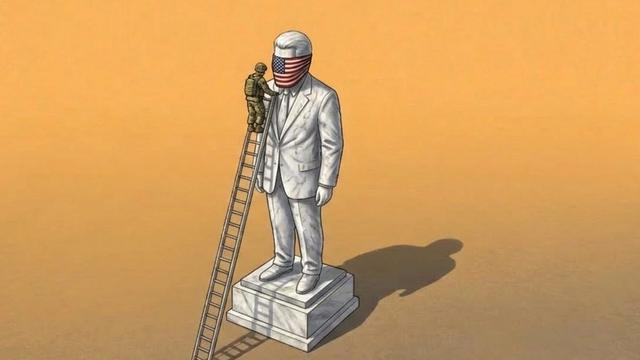
‘The Three Gulf Wars of American Hegemony: tracking the decay of the unipolar moment’

by Seva Gunitsky, an associate professor of political science at the University of Toronto
https://hegemon.substack.com/p/the-three-gulf-wars-of-american-hegemony

The Three Gulf Wars of American Hegemony

tracking the decay of the unipolar moment

Hegemon

…What follows James Meadway’s Gulf War tour is an excellent 4-minute segment setting out the parameters of government borrowing and along the way the limits of MMT, in a way that is easy to follow for an economics layperson like me.

Transcribed below (look, Ma, no LLMs used to do so!)…

…1/9
“One of the war’s immediate consequences is the rise in gov borrowing costs across much of the world and most definitely in the UK, which saw its gov borrowing costs rise to 5% and above.

The reason is the UK is highly exposed to the rest of the world.

We import 40% of our food, 50% of the natural gas we use, and about 60% of our fertiliser.

And our gov owes about a third of its debt to people and institutions in the rest of the world. An unusually high level for a ‘developed’ country…

…2/9

“That combination is deadly. The heavy reliance on imports of essentials means we need a valuable Pound to make sure we can buy those imports without having to exchange too much of what we produce here in return.

At the same time the large foreign ownership of UK government debt means people with no commitment to this country can choose to buy or sell that debt as and when they feel like, creating a big instability in government borrowing costs and potentially the value of the Pound…

…3/9

“If the people and institutions lending money fear that the government will end up with big expenses it can’t cover, like providing support for household energy bills, they will start to force up the cost of government borrowing.

Now there’s a story doing the rounds that this doesn’t matter. That since the UK can issue its own currency, the government can always repay any debt, and can always pay for anything it wants in that currency…

…4/9

“Some of you might recognise this as the sort of story associated with Modern Monetary Theory (MMT).

In a *very* limited sense it is correct. In principle the gov can issue money and offer it in payment for anything it wants. Its problem is that people might not want this money or, if they do, they might want a great deal of it.

And when the whole UK has to import so much of the essentials of life, the willingness of other people elsewhere in the world to accept the Pound really matters…

…5/9

“Their willingness to take Pounds and that demand for money helps set the exchange rate. If their demand drops away, the Pound will crash in value and suddenly we have to offer more and more Pounds to swap into Dollars or Euros or whatever to pay for those essentials.

We would see the impact of this back home as rapidly increasing prices of things we import, including essentials like natural gas and food…

…6/9

“One way for sentiments in the rest of the world to change is for the government here to issue more and more debt.

At that point, those holding the one third of UK debt owned by the rest of the world are likely to decide that they are likely to be holding a significantly less valuable asset and, in effect, demand higher interest payment in compensation.

They can sell the debt they hold, meaning there is less demand for Pounds and so the value of the Pound could also begin to slide…

…7/9

“This is, by the way, roughly what has been happening over the last few days.

The great vulnerability is that decisions taken by participants in financial markets many thousands of miles away, with little to zero concern for the lives of anyone here in the UK, will in fact impact pretty directly on the lives of people here.

Our collective dependency on imports from the rest of the world creates a collective exposure *to* the rest of the world…

…8/9

“Either directly, in that there are blockages and shortages appearing in essential goods, or indirectly through this financial impact.

Put all this together, and the basic problem is that the capacity of the UK government to either issue more debt or issue more money to pay for what it needs is significantly limited, and we are, in practice, running up hard against its limits.

The UK government can issue as much money as it wants. It’s just that that money may not be worth very much…

…9/9

“There are routes around these financial barriers. The easiest is the one that has become very popular in the last year, which is to start taxing wealth properly.

Doing this reduces the government’s need to borrow and so reduces the exposure to the rest of the world.

But what we have at the moment is a government not even prepared to do that.”

Transcription ends

https://overcast.fm/+8dw_1Tf8Y/07:50

The Third Gulf War — Macrodose

On this week's Macrodose, James Meadway looks at how the ongoing Iran war forms part of a longer story of US decline (0:45), why a direct consequence of the war is higher borrowing costs for government (7:50), and what the UK government actually doing in response to the crisis (12:22).Subscribe to support the show at ⁠⁠⁠⁠⁠patreon.com/Macrodose.⁠⁠⁠⁠⁠ Your pledge is a donation supporting free public education; perks are thank-you gifts for your support.Got a question or comment? Reach out to us at ⁠[email protected]⁠.To learn more about the work we do at Planet B Productions, head to ⁠planetbproductions.co.uk⁠.Listen to Death In Westminster - a new documentary podcast from Planet B Productions & Novara Media: https://novaramedia.com/category/audio/death-in-westminster/#the-station

…Postscript:

I’m receptive to the MMT explanation of how money and taxation works for a fiat currency. In particular, the understanding that taxation deletes money. It does *not* raise revenue.

(Someone tell every bloody BBC Economics Editor.)

But there’s no doubt that all the MMT treatises I’ve read, and I’ve read quite a few, like to emphasise fiat currency as a sort of closed system.

Please note…

…I’m not saying they literally say that. But that is the *emphasis* of the exposition of the theory in order to make it compelling and intelligible.

But, as we are seeing in real time, there are no closed systems.

We are all in this together even as extractivists spend billions of brain hours telling us we’re not

@urlyman which currency will come out on top in this environment, I wonder? Even if the dollar retains its buying power initially, countries like the UK and Japan that rely on imports and have large US Treasury reserves will be forced to sell them if their own currencies tank, driving down the value of dollars in the process.

Will we see a shift of value towards currencies from commodity heavy economies? It really looks like highly “financialized” currencies are the most at risk.

@macbraughton good questions. I’m not clever enough to have any idea, other than to say it’s gonna be shockingly multipolar for the foreseeable.

Where that ends up depends on whether we recognise that money does not encode for habitability at all as it stands, and so we set about redesigning it.

And if we don’t…
https://mastodon.social/@urlyman/112042715978488637