 TORcicada
CERN uses tiny AI models burned into silicon for real-time LHC data filtering
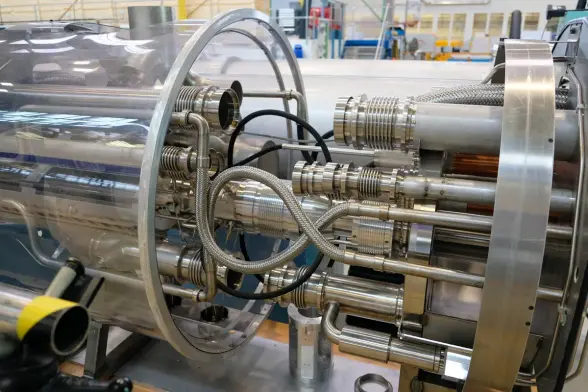
CERN Uses Tiny AI Models Burned into Silicon for Real-Time LHC Data Filtering
CERN’s deployment of the 'AXOL1TL' (Anomaly eXploration with On-chip L1 Trigger) algorithm represents a critical shift toward edge-computing at the sub-atomic scale. By utilizing the 'hls4ml' transpiler to map deep learning architectures directly onto radiation-hard FPGAs and custom ASICs, the Level-1 trigger achieves nanosecond-scale inference (under 50ns) to filter a 40MHz collision stream. The architecture bypasses traditional Von Neumann bottlenecks through extreme quantization (2-6 bit weight precision) and the extensive use of precomputed lookup tables (LUTs), effectively 'burning' the model logic into the physical substrate. This hardware-first approach enables the real-time identification of 1-in-a-trillion 'Rare Signal' events while discarding 99.98% of the 40,000 exabytes of annual background noise.