 rss
rssPEMEX & Energy Security in the Face of the International Crisis
PEMEX & Energy Security in the Face of the International Crisis - Abolish Capital!
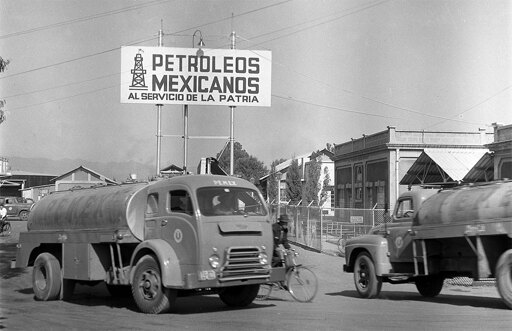
This article by Aníbal García Fernández originally appeared in the March 24, 2026 edition of [https://contralinea.com.mx/interno/semana/pemex-seguridad-energetica-ante-la-crisis-internacional/] Revista Contralínea [https://contralinea.com.mx/interno/semana/pemex-seguridad-energetica-ante-la-crisis-internacional/]. Oil is the engine of the world and, particularly, of capitalism. However, it is a finite resource, so finite that some analyses indicate that global oil production has already passed; others place the decline in global production around 2027-2028, and still others until 2040. Mexico has just over nine years of oil reserves and seven years of gas reserves remaining. Therefore, it is important to strengthen energy sovereignty, but even more so, energy security. On March 18, 1938, Mexico opposed the continued privatization of its resources. This date is significant because it marked an international milestone with the expropriation of oil from U.S. companies; it also ended a years-long conflict with oil workers and served as a precedent for future expropriations in other countries. [https://mexicosolidarity.com/wp-content/uploads/2026/03/image-126.png] The oil expropriation is deeply linked to the Mexican Constitution and the application of Article 27. As Lorenzo Meyer mentioned in his book Las raíces del nacionalismo petrolero en México (“The Roots of Oil Nationalism in Mexico”), after the Mexican Revolution the United States government interpreted that, if the 1917 Constitution were implemented, “not only would the material interests of American capitalists have been affected, but even their political hegemony would have been reduced in their still small but growing area of influence.” It is under this interpretation that the application of the Mexican Constitution, from its inception, has served as a bulwark against the hegemony of the neighboring country, as it protects national resources and sovereignty. This explains why successive governments of that nation have made countless efforts to amend it, particularly Article 27, along with Articles 25 and 28, which regulate energy in our country and the economic model. These efforts, of course, include the Mexican political and economic elite who subscribe to these unpatriotic principles. However, energy security is equally important. Its defining element is the relationship between hydrocarbon reserves and production in our country. But it must be clear that energy security goes beyond this, considering energy a public good provided by the State to ensure the continuity, reliability, accessibility, affordability, and sustainability of fuel and electricity supply as pillars of development. Perhaps, as a result of international events, it will become increasingly relevant to consider minerals as part of energy security, but that is another topic for future discussion. [https://mexicosolidarity.com/wp-content/uploads/2026/03/image-131.png] Oil Reserves & Production in Mexico ----------------------------------- Mexico has 9.8 years of oil reserves remaining. According to data from PEMEX’s Directorate of Planning, Coordination, Performance, and Sustainability, proven crude oil reserves in 2024 are 5.293 billion barrels of oil equivalent . Meanwhile, oil production, according to the state-owned company, is 1,485 barrels per day. Therefore, in scenario “A,” where no new reserves are added and the current production rate is maintained, Mexico has oil reserves until 2033. If probable reserves (which have a recovery confidence level of 50 percent or more) are added, and with the same rate of oil production, Mexico has 17 more years . It is important to remember that the country’s oil production peaked in 2004, reaching a maximum output of over 3,380 barrels per day. From then on, production declined, as did reserves, as shown in Figure 1. Chart 1. Crude oil reserves by six-year term [https://mexicosolidarity.com/wp-content/uploads/2026/03/image-127.png] However, the outlook for gas is not so different. Mexico’s reserves are only 7.3 years long, considering proven reserves in 2024 and production for the same year. If probable reserves are included, the national reserves would be 13 years long, that is, until 2037. The main culprits for the loss of sovereignty and energy security are the PRI and PAN governments, which prioritized the export of crude oil, the loss of oil transformation processes, the division of the petrochemical industry, and the division of PEMEX to bankrupt it. To illustrate the above, during the neoliberal period, according to the agency’s data, 562 oil wells were drilled under Carlos Salinas, producing 13.25 million barrels per day; under Ernesto Zedillo, 1,089 wells were drilled, producing 17.486 million barrels per day. However, the extractive focus was on Felipe Calderón — a illegitimate president, as President Sheinbaum has stated — since during his six-year term, 6,211 wells were drilled, and production barely reached 16.146 million barrels per day . With President López Obrador and the program to recover sovereignty, but above all, energy security (a broader concept and just as important as sovereignty), with 1,123 wells, production reached 10 million 581 thousand barrels per day. Figure 2. Wells drilled and oil production by six-year term [https://mexicosolidarity.com/wp-content/uploads/2026/03/image-128.png] Mexico has not made any major oil well discoveries. The last one was Cantarell in the 1970s, and under Andrés Lajous’s administration at Pemex, it was decided to inject nitrogen into it, resulting in a loss of production, and what was once the second largest oil field in the world began to decline. Thus, the graph above shows that with Calderón and Peña Nieto, the two Presidents of the privatizing energy reforms, more oil wells were required and production declined, that is, a loss of productivity was generated. But there is another factor: the decline of oil fields in Mexico. Viewed historically, as shown in the following graph, the country is already in a declining phase. A clear example of this situation is that in 2004, the 200 wells in Cantarell produced more than the 4,255 national wells in 2021. The difference is staggering: they produced 25 times more than in 2021. Figure 3. Number and volume of crude oil and fields discovered (1900-2015) [https://mexicosolidarity.com/wp-content/uploads/2026/03/image-129.png] According to data estimated by UNAM researchers Luca Ferrari and Diana Hernández in their text Hydrocarbons Sector: Historical Evolution, Current Situation, and Scenarios on Energy Sovereignty —published by the then-CONAHCYT in 2024—, in 2000 Cantarell accounted for 60 percent of national production with 200 wells. By 2021, the Ku, Maloob, and Zaap fields, along with the next six highest-producing fields, represented 62 percent, with 356 wells and an average production of 3,033 barrels per day. The remaining 38 percent was covered by 200 fields with 3,899 wells. But the most relevant point is that, in 2000, the relationship between investment and daily barrel yield was considerable. For every million pesos invested, 66 barrels per day were obtained; in 2018, this figure was only 11, an 83 percent reduction; and in 2020, the yield continued to decline, as shown in the following graph . Chart 4. Investment in Pemex for exploration and production and yield in barrels per day extracted for every million pesos invested per year [https://mexicosolidarity.com/wp-content/uploads/2026/03/image-130.png] That’s why a state and a public company that guarantee the oil supply are so important, as is a public policy that views energy as a good and a service, not just a commodity. In fact, PEMEX has a National Strategy for Reactivating Closed Wells with Opportunities dating back to 2025. The Global Energy Crisis ------------------------ The global energy crisis is rarely discussed until significant international events occur, many of them geopolitical in nature. However, during the height of the Covid-19 pandemic, one news item that went largely unnoticed was that of peak oil. In 2020, Rystad Energy stated that, according to its analysis, global oil demand would reach its maximum of 102 million barrels per day in 2028. Equinor predicted a collapse in production in 2027 or 2028; the French firm Total placed it in 2030; McKinsey in 2033; and the Organization of the Petroleum Exporting Countries (OPEC) in 2040. Beyond the companies’ analyses of international oil production data, the decline in the rate of oil reserve discovery since the 1980s is evident. Between 1981 and 1990, the annual growth rate of international oil reserves was 3.8 percent. The following decade (1991-2000) saw a decrease to 1.9 percent; from 2001 to 2010 it increased to 2.3 percent, before declining again from 2011 to 2020 to 0.3 percent. Easily extracted oil is running out, it is becoming increasingly expensive, the remaining reserves are more contested, and consumption, although it has slowed down, continues to grow; and the dispute pits powers with military and nuclear power against each other. [https://mexicosolidarity.com/wp-content/uploads/2026/03/pemex-oil-rig.jpg] According to some analyses, our main trading partner, the United States, has six more years of oil left at the production rate and reserves of 2023. And in gas, they still have 20 more years at the production rate and proven reserves of 2024. It is important to remember that our energy matrix relies heavily on natural gas, which is supplied by imports for 74 to 76 percent of our needs. Some of this gas is injected into the energy system to generate electricity, a significant problem of energy dependence resulting from neoliberal policies. In his appearance before the Mexican Congress in 2025, the director of PEMEX, Dr. Víctor Rodríguez Padilla – also an expert in energy security – stated: “The vision of the President of the Republic, who is an expert in climate change and global warming, and all the measures to counteract, prevent, and adapt to climate change, is that the country’s resilience lies in not exceeding 1.8 million barrels per day. Maintaining that level of 1.8 million barrels per day is essential to stabilize income and to safeguard our dwindling oil reserves for the long term. Because, as I was saying, the transition is not easy; it is a long process, and this has been seen in Europe. We cannot accelerate the transition, no matter how much we might want to, because it would destabilize the country.” At the 2025 Energy Forum held in August of that year in the Senate of the Republic, the director of PEMEX also opened a debate that the Mexican population needs to have: there are unconventional resources in the country that would allow us to extend national oil and gas reserves a little longer, as well as gain energy security; but it involves deciding whether or not to allow fracking with new technology. * PEMEX & Energy Security in the Face of the International Crisis [https://mexicosolidarity.com/wp-content/uploads/2026/03/pemex-retro-patria-large-1024x663.jpg]https://mexicosolidarity.com/pemex-energy-security-in-the-face-of-the-international-crisis/ Analysis [https://mexicosolidarity.com/category/analysis/] #### PEMEX & Energy Security in the Face of the International Crisis [https://mexicosolidarity.com/pemex-energy-security-in-the-face-of-the-international-crisis/] March 27, 2026March 27, 2026 In Mexico, energy is a public good provided by the State to ensure the continuity, reliability, accessibility, affordability, and sustainability of fuel and electricity supply as pillars of development. * People’s Mañanera March 27 [https://mexicosolidarity.com/wp-content/uploads/2025/10/claudia-sheinbaum-press-conference-october-30-large-1024x683.jpg]https://mexicosolidarity.com/peoples-mananera-march-27/ Mañanera [https://mexicosolidarity.com/category/mananera/] #### People’s Mañanera March 27 [https://mexicosolidarity.com/peoples-mananera-march-27/] March 27, 2026March 27, 2026 President Sheinbaum’s daily press conference, with comments on disappearances, Cuba, and the US military crossing into Nogales, Sonora. * “Mexico is the sister land that has always stood by Cuba, in good times & bad.” [https://mexicosolidarity.com/wp-content/uploads/2026/03/miguel-diaz-canel-amlo-cuba-mexico-large-1024x683.jpg]https://mexicosolidarity.com/mexico-is-the-sister-land-that-has-always-stood-by-cuba-in-good-times-bad/ Analysis [https://mexicosolidarity.com/category/analysis/] | Interviews [https://mexicosolidarity.com/category/interviews/] #### “Mexico is the sister land that has always stood by Cuba, in good times & bad.” [https://mexicosolidarity.com/mexico-is-the-sister-land-that-has-always-stood-by-cuba-in-good-times-bad/] March 27, 2026March 27, 2026 An interview with President of Cuba, Miguel Díaz-Canel, by Luis Hernández Navarro of La Jornada. The post PEMEX & Energy Security in the Face of the International Crisis [https://mexicosolidarity.com/pemex-energy-security-in-the-face-of-the-international-crisis/] appeared first on Mexico Solidarity Media [https://mexicosolidarity.com/]. — From Mexico Solidarity Media [https://mexicosolidarity.com/feed/] via This RSS Feed [https://mexicosolidarity.com/feed/].