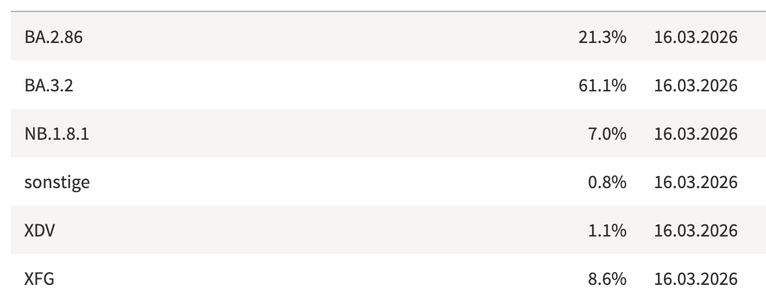
#BA.3.2

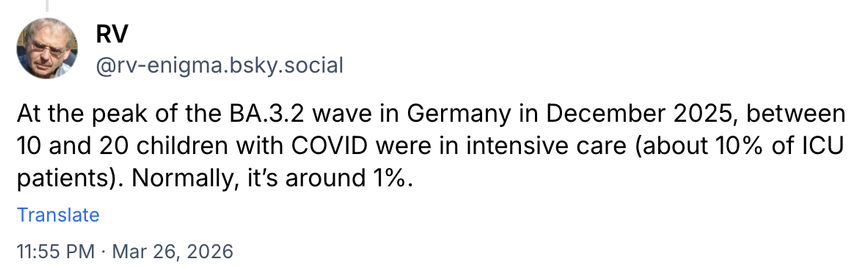
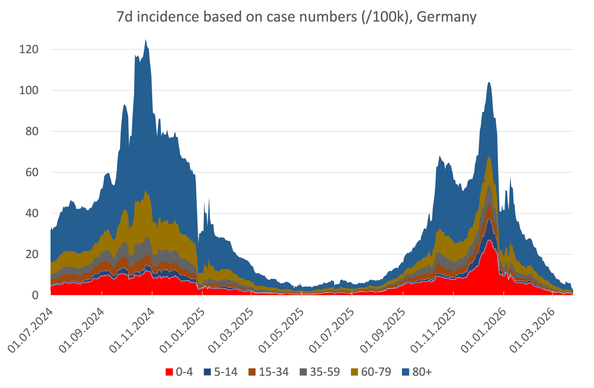
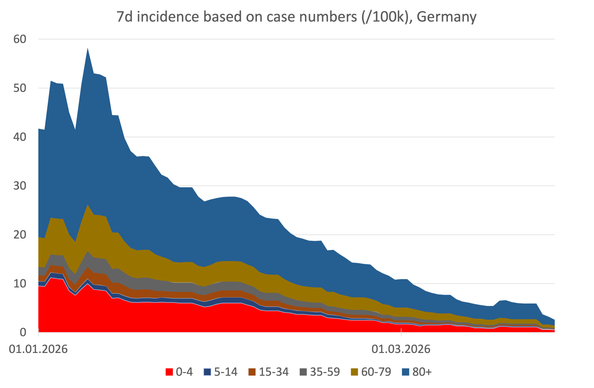
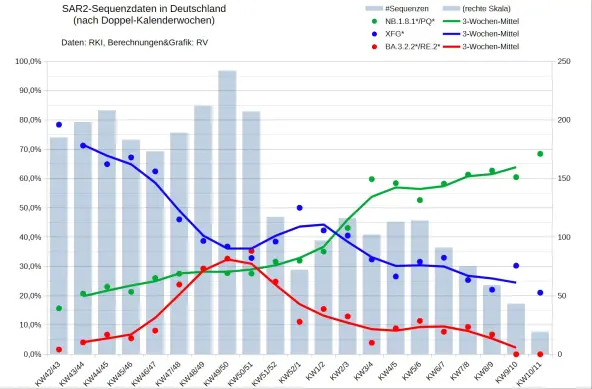
So it seems really true that BA.3.2 preferentially infects small children or is particularly severe in small children:

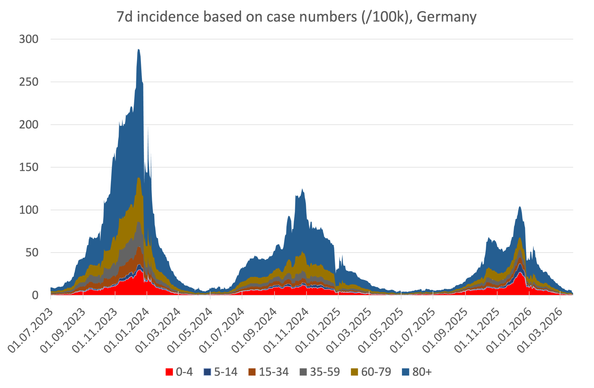
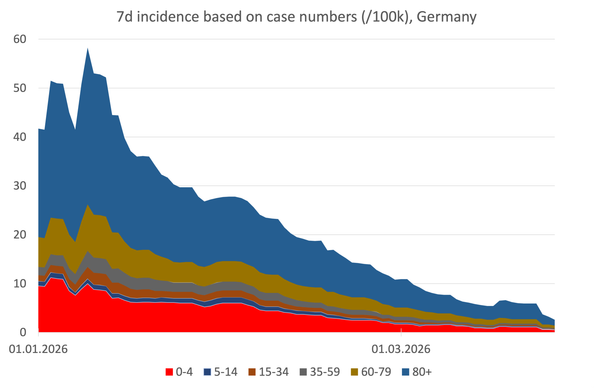
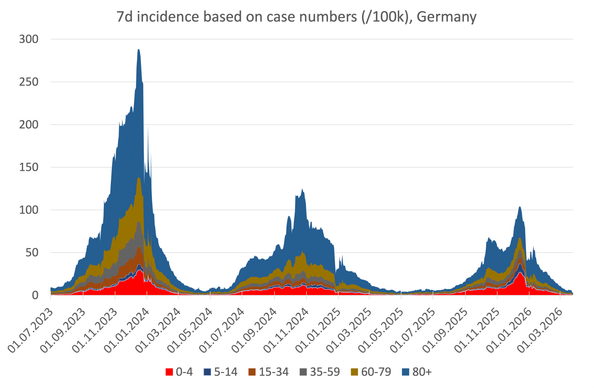
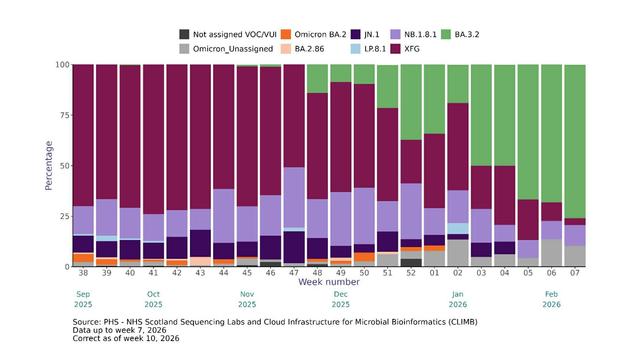
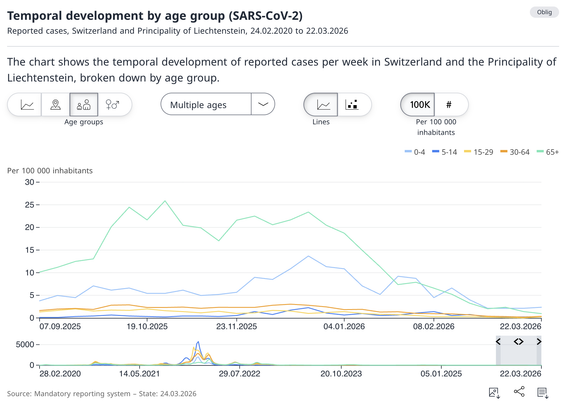
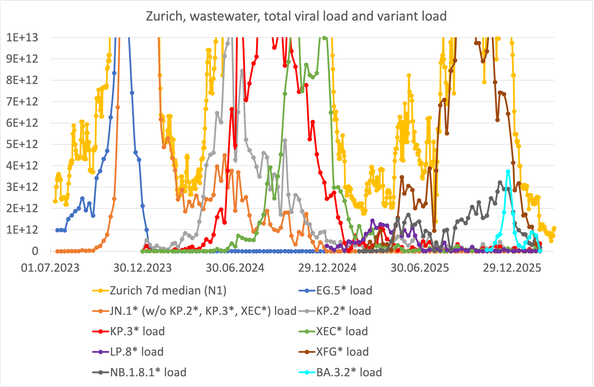
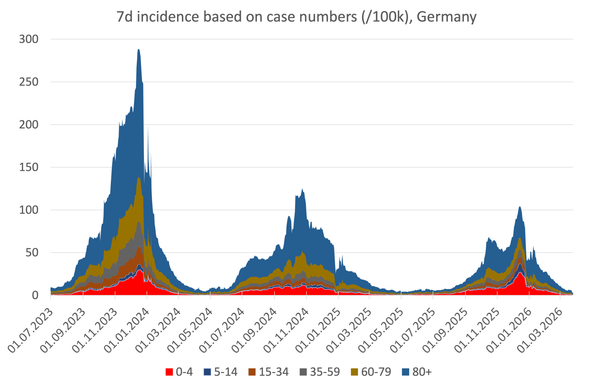
Compare the early German BA.3.2 fraction size peak in mid December (figure @rv-enigma.bsky.social) to case number based incidence in the age groups.
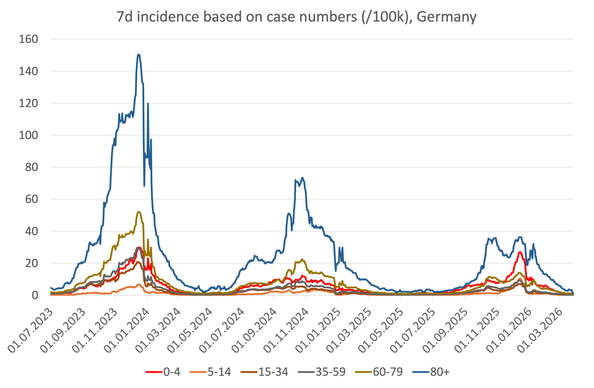
7d incidence in the 0-4 age group almost reached the level seen in the much larger 2023-2024 wave.

Since the abandonment of testing in spring 2023, case numbers are mainly hospital-derived. Therefore, virulence and infection numbers cannot be discriminated with this measure.

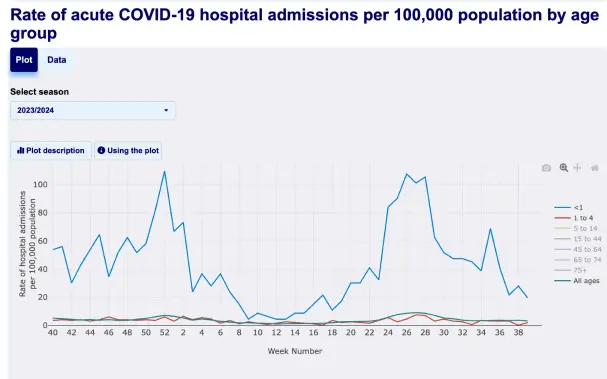
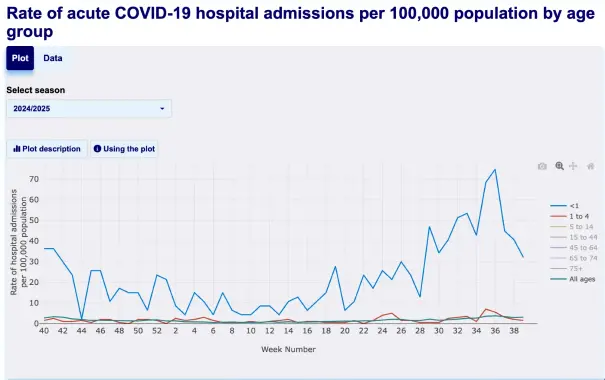
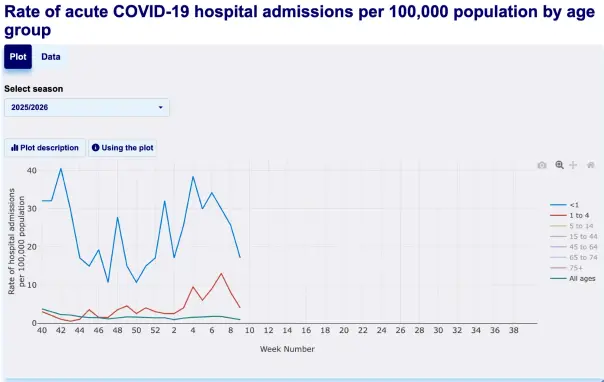
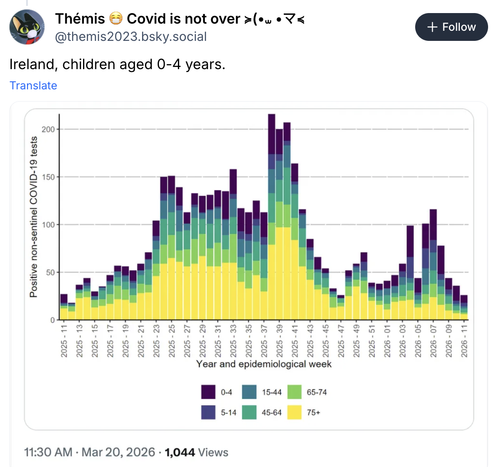
Scotland saw a similar pattern with remarkably high hospital admissions in the age group 1-4 end of February (HT
@catlove40476297.bsky.social
). This seems to correlate with BA.3.2 fractions reaching high levels.

Variant figure: https://x.com/gwladwr/status/2032059098578006423?s=20

Hospital data:
https://scotland.shinyapps.io/phs-respiratory-covid-19/

In Swiss case numbers, 0-4 show higher incidences than 65+, lately. This was never seen since BA.1.

Not sure this fits to local BA.3.2 fraction sizes. It well might.

Case numbers will be mostly from severe/hospital. They are currently lowest ever since the advent of Omicron.

Ryan Hisner (@ryanhisner.bsky.social)

Someone suggested BA.3.2 might preferentially infect kids. I think they're right. Ages of SARS-2 sequences since Dec 1 in Ireland: non-BA.3.2 6/66 (9.1%) age 0-19, (0/1 hospital tests) BA.3.2 43/91 (47.3%) age 0-19 (1/3 hospital tests) 1/4

Bluesky Social
See also:
See also:

Addendum:

The stacked area graphs are a bad way of representing age group specific incidences, as those cannot be added.

Incidence is specific to each age group; each age group has a different size.

For example, the 0-4 age group (5% of the population) has ca. 2/3 the size of the 80+.

I chose it on the fly, yesterday night, to be able to gauge the trajectories over time and compare between individual age groups.

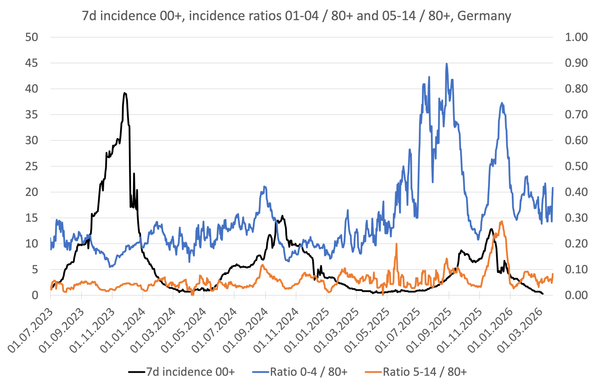
Here a non-stacked figure (left), and a look at ratios between 0-4 and 80+ as well as 5-14 and 80+ (right).

The suspected BA.3.2 signal is also in the 5-14.

I have no explanation for the high 0-4 / 80+ ratio in the low absolute incidence period preceding the wave. Differential testing intensity?

@dominiksteiger Speakin of which: bad news, something failed in the sequencer, it only produced a ridiculously low amount of reads, so new drop of data this week.
@dryak Ah sorry to hear! In Austrian devoncolutions, it certainly is around quite some (in contrast to German clinical specimens). Abs. prev. is very low - the error bars are prob. very large.