 Martin Michaelis (he/him)
And yet another study investigating millions of cases that demonstrates the efficacy of COVID-19 #vaccines. #vaccination #vaccine #COVID19
https://link.springer.com/article/10.1007/s00508-026-02728-6
An analysis of COVID-19 mortality regarding all Austrian political districts - Wiener klinische Wochenschrift
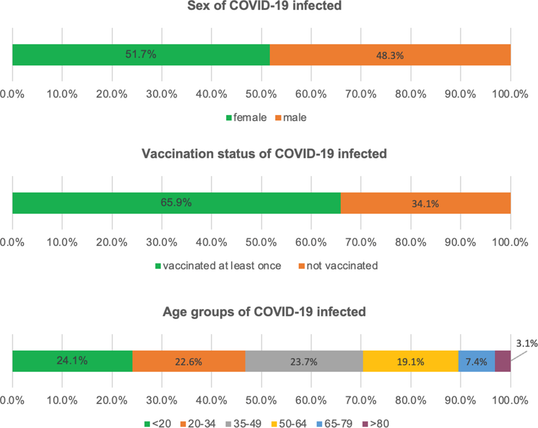
Background Coronavirus disease 2019 (COVID-19), first identified in Wuhan in 2019, rapidly escalated into a global pandemic. Austria reported its initial cases in February 2020, resulting in millions of infections and thousands of deaths. This study investigates COVID-19 mortality across Austrian districts, analyzing factors such as age, sex, immigrant background, household size, education and vaccination status. Methods We analyzed data from the Austrian National Public Health Institute, comprising 4,591,739 confirmed cases and 20,123 deaths as of July 2022. We used a linear mixed model to examine whether individuals died from COVID-19. Furthermore, we created three interaction models: (i) vaccination status and consecutive month, (ii) age and consecutive month and (iii) sex and consecutive month. Additional linear models examined household size, education, and citizenship at the district level. Results Our findings highlight several determinants of COVID-19 mortality in Austria. Advanced age significantly increases mortality risk, while vaccination is strongly protective. Female sex is also associated with reduced mortality. District of residence influences the case fatality ratio, with notable geographic variation. Larger household sizes correlate with increased infection risk. Districts with higher proportions of residents with tertiary education exhibit lower infection and mortality ratio. Districts with a greater percentage of non-Austrian citizens have lower case fatality ratio, likely reflecting a younger population demography. Conclusion Key determinants of COVID-19 mortality include age, vaccination status, and sex. Districts with larger households experience higher infection ratios, while those with more highly educated residents have lower infection and mortality ratios. Districts with more non-Austrian citizens show lower case fatality ratios, likely due to younger populations. Further research into district-level age structures is warranted to refine these models. These findings underscore the importance of vaccination, particularly among older adults, and the need for accessible public health education to reduce infection and mortality ratio, especially in less-educated populations; however, district age structure (proportion of older individuals) substantially influences these associations.