 Liam
Liam 
In today’s lesson about integrating public transport, new technologies and private providers, and accessibility in urban design, here are two pictures: one is a kerb bus stop and the other is a major pedestrian underpass
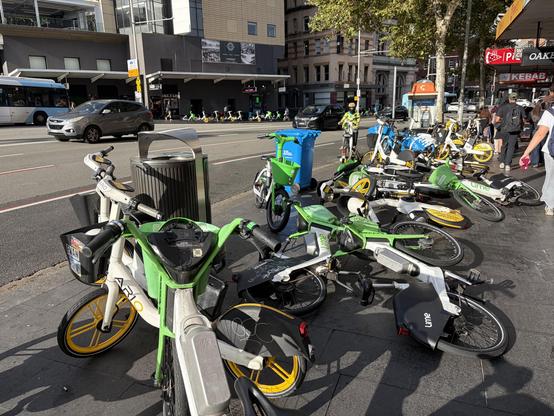
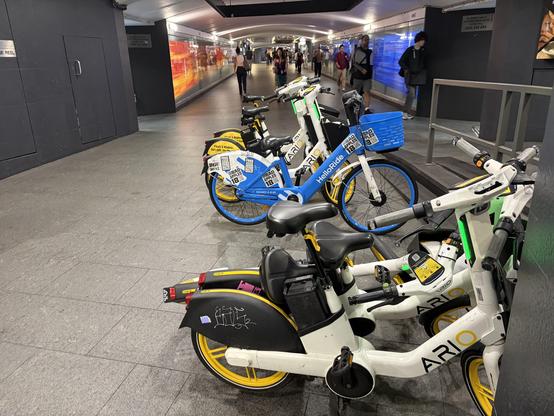
All transport modes impose some kind of externality. Trains need marshalling yards and a permanent way, and have a really serious ongoing maintenance budget. For public modes that’s planned in: bus routes get more roadwork, stops get isolated from parking, it’s accounted for.
For *private* modes like these there’s every incentive for companies to offload the externality (parking) onto the public, and specifically the spaces of the people least likely to be able to step over a tangle of bicycles.
@liamvhogan Shanghai did a massive crack-down in around 2018 after it got ridiculous, kilometres of bikes blocking every subway entrance.
Bikes parked outside of designated share bike areas (painted yellow squares) got loaded en masse into trucks sent by the city and immediately scrapped, and IIRC they also fined the companies for each of them.
I don't know how it looks there now, but it felt like the appropriate level of bloody-mindedness.
 Gus
Gus