 Liam
Liam 
In today’s lesson about integrating public transport, new technologies and private providers, and accessibility in urban design, here are two pictures: one is a kerb bus stop and the other is a major pedestrian underpass
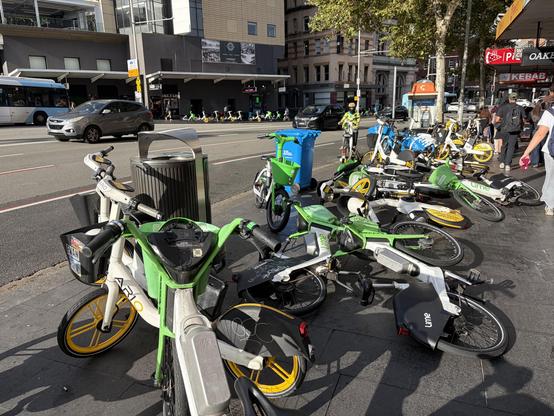
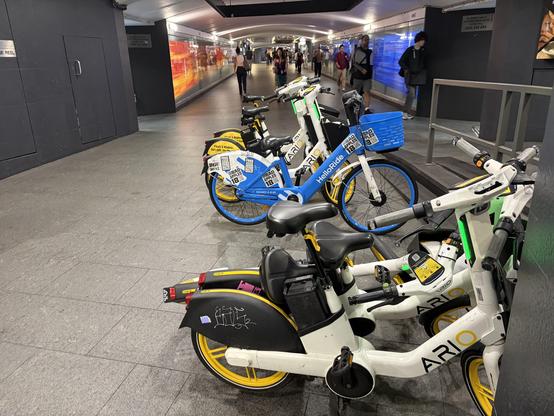
All transport modes impose some kind of externality. Trains need marshalling yards and a permanent way, and have a really serious ongoing maintenance budget. For public modes that’s planned in: bus routes get more roadwork, stops get isolated from parking, it’s accounted for.
For *private* modes like these there’s every incentive for companies to offload the externality (parking) onto the public, and specifically the spaces of the people least likely to be able to step over a tangle of bicycles.
@liamvhogan Governments – at the local level – need to take this seriously. It can be done.
#Canberra, Australia, had two e-scooter companies. They'd set limits on the number of scooters each could deploy. One company (Beam, 'the purple ones') ignored those limits and the city was strewn with their scooters.
So the city council didn't renew their contract. On a Tuesday. And it expired on Sunday, and they told them all the scooters had to be gone, removed, disappeared. By the end of the week. And they were. And that was that.
We can 'fight back'. It's not even a fight! It's just a well-written contract and a local authority that has the guts to stand by it.
https://www.abc.net.au/news/2024-09-04/act-govenment-bans-beam-mobility-escooters/104310798
@liamvhogan And yet in Paris there are orderly, sensible places to park the Vélib bikes. Taking up car spaces mostly. And if you don't park the bike in one, the clock keeps ticking and you keep paying for the bike.
But that means sacrificing parking for cars. Unacceptable, obviously.
@liamvhogan Shanghai did a massive crack-down in around 2018 after it got ridiculous, kilometres of bikes blocking every subway entrance.
Bikes parked outside of designated share bike areas (painted yellow squares) got loaded en masse into trucks sent by the city and immediately scrapped, and IIRC they also fined the companies for each of them.
I don't know how it looks there now, but it felt like the appropriate level of bloody-mindedness.
 Johnny ‘Decimal’ Noble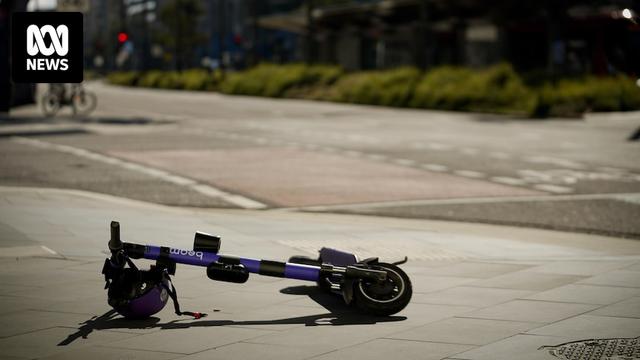
 ǝlqɯnɹ uoɯᴉS
 Gus
Gus