 driesdep
Running Tesla Model 3's computer on my desk using parts from crashed cars

Very cool. Over a year and a half ago I installed a towing brake controller in my Tesla Model Y. Found the location of the plug, how to access and the pinout online (confirmed via a voltmeter..) so the car's side felt straight forward. But then I needed to find a brake controller that can work with the higher voltage (14.4v vs the normal 12v). Then built a cable from the brake controller to the connector that plugs into the car that I found on eBay. I velcro'd the controller under the dashboard. It works pretty well. I towed my small camper several times with it last year with no issues. Yay! However my little project is nothing compared to this post. Love people hacking away. So cool.
>then I needed to find a brake controller that can work with the higher voltage (14.4v vs the normal 12v)
Put a voltmeter on the battery terminals of a regular car at 2000rpm and note the voltage. You'd be surpised (the alternator can produce as high as 15V on some cars).
Automotive transients can be wild. I did a bringup with a board that had specified 100+v range specified for transients and finicky quality requirements on the output. The power supplies took up most of the (very large) board.
14v is not a transient, if your voltage was 12v with the car running, there's something wrong with the charging system (DC-to-DC in an EV, alternator/generator in an ICE)
13-14v is normal in all 12v automotive systems as the charging voltage
If I recall correctly, a fully charged lead acid battery has an open circuit voltage of 13.6V.
So the alternator has to put out at least something higher than if it’s planning on recharging the battery after 500 to 700 amps have been pulled from it for a few seconds to start the engine.
I typically fault anything above 15.6V as “that’s a bit high, your alternator might be on its way out” when working on automotive / caravan / camper van appliances and accessories.
> But then I needed to find a brake controller that can work with the higher voltage (14.4v vs the normal 12v)
Not understanding this sentence. Most running ICE vehicles product closer to that 14.4 than 12v. I think a standard controller would have worked fine?
you're correct. a '12v ICE' alternator generates up to 14.8-15.2v. Most automotive stuff can operate between 9ish-16ish-v , of course totally depending on the product.
of course this is just a modern interpretation. older stuff runs at 6v and some weirdo offbeat cars have a 24v/48v rail sitting around somewhere. Cop cars often had alternators that put out weird voltage ranges for certain equipment, or dual 12v for high amperage output.
Whilst cranking, an ICE car will drop to around 6 volts (then maximum power is extracted according to thevenim's theorem).
That means all computers etc will work at 6v.
> Whilst cranking, an ICE car will drop to around 6 volts (then maximum power is extracted according to thevenim's theorem).
> That means all computers etc will work at 6v.
Not necessarily all of them. Plenty of stuff will drop out while cranking; hopefully not the computers that run the fuel injection and ignition, though.
You are probably right. Surprisingly the first controller I tried didn't work. I assumed the voltage was too high since it worked in my other (much older) car. I found a reference online of people that tried a particular brand/model and that's what I went for. Thankfully my car isn't the model with the internal 18v battery.
It's funny to hear LVDS be described as an "automotive" cable when all of my run-ins with it are for connecting laptop displays to their main-boards! (though that has a very different connector on it, and its a very general term for the signalling protocol from what I remember)
SpaceWire is also just LVDS with an uber-minimal routing protocol. It runs on a lot of satellites.
Not saying there's anything wrong with your perspective (lots of terms get in muddied waters, it's common and not a problem if everyone is on the same page), but this is what I just found on Wikipedia:
"Early on, the notebook computer and LCD vendors commonly used the term LVDS instead of FPD-Link when referring to their protocol, and the term LVDS has mistakenly become synonymous with Flat Panel Display Link in the video-display engineering vocabulary."
https://en.wikipedia.org/wiki/Low-voltage_differential_signa...
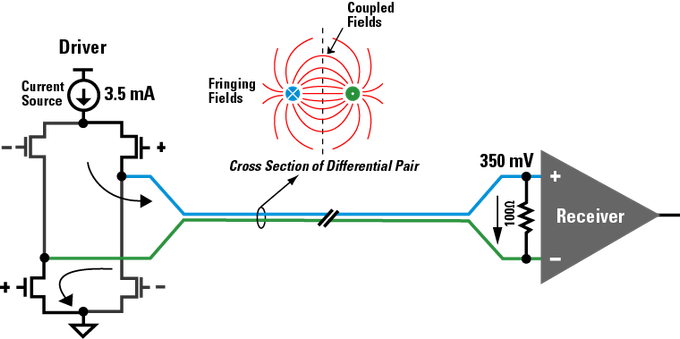
The cable in the article is pretty much doing the same conflation of terms that Wiki is talking about - the automotive one is a proprietary cable that carries some protocol that uses LVDS as its signalling, so at the most basic level both it and the display cable in the laptop are 'LVDS cables' but that's also the most generic term that gives you no information about the protocol actually being carried by the cables.
I used to work for a company that made third party scan tools. We had racks of ecus disconnected from the car with just a diagnostic connector and power. nothing got to a real car without first trying it on the rack. I remember on time we figured out a bmw (pre obdii) had the bytes offset from the standard documentation (it was a semi-standard protocol that some other cars used at the time), we went from we communicate but nothing is wrong to a very long list of dtcs on that controller. (All our competitors also showed nothing wrong, but the official bmw tool showed dtcs)
Diagnostic Trouble Codes?
Congrats, OP has recreated a test/development bench, the bane of developers working on automotive software development all around the world. They're so close to being a real vehicle that you think you'll be able to get a lot of work done, but they're not, so you don't.
Honestly I love it. Few things develop a more fun camaraderie than a bringup bootcamp with two precious/priceless new samples on a large conference table, and everyone being very careful to keep cups/mugs very far away.
And a soldering robot with a specialist a few rooms away to beam down the latest errata into physical form, at times.
Tracy Kidder just died, and Soul of a New Machine was a favorite of my formative years as an engineer. Once I started in headunit ECU development it felt very familiar to me at times.
I'm a software guy, but the gear has a lot of allure.