The Higgs boson gives elementary particles their mass, but 98% of the visible mass in the Universe (not dark matter) comes from a less famous mechanism: chiral symmetry breaking. This is why protons and neutrons are so much heavier than their quarks!

Briefly, protons and neutrons act like bags full of a soup of virtual quark-antiquark pairs, which give them most of their mass. This soup, called a 'quark condensate', breaks a certain symmetry that exists outside the bag: 'chiral symmetry', where you change the phase of the clockwise and counterclockwise rotating quarks separately. In the quark condensate, the clockwise spinning virtual quarks are entangled with counterclockwise spinning virtual antiquarks.

https://en.wikipedia.org/wiki/Chiral_symmetry_breaking

Chiral symmetry breaking - Wikipedia

@johncarlosbaez As a mathematician I have always imagined that I would understand the universe if someone described the Standard Model as a really fancy mathematical something-or-other, without saying things like "a neutron is a soup of quarks and anti-quarks" – these just distract from the math.

I only got a snippet of such a story from a physicist once, and I loved it. I asked what a particle really was, mathematically, and he said something like "eigenvector of a linear approximation to some-field-thing". I may be misremembering the "approximation part", but the important thing was that it was a straight mathematical answer. I felt comforted.

Where could I find out more of this? Is the Standard Model a huge vector field on a vector space, or on a manifold with Riemann metric? Can someone write down the type of the Standard Model in in type theory?

@andrejbauer - I could give you a fairly formal description of the Standard Model, but it would be

1) long
2) fundamentally nonrigorous, in the sense that nobody knows that all the numbers we want to compute from the Standard Model are uniquely determined from any particular axiomatic framework
3) one of several choices: there are different frameworks, each with their own advantages and flaws, and any particle physicist knows more than one.

So, for example, I could write a formula for the Standard Model involves an integral over an infinite-dimensional manifold... such that the measure being used in this formula is not known to exist, and probably doesn't really exist. And even if I showed you this, you'd have no idea what this had to do with anything - without further study.

We must instead accept that right now, the Standard Model is a network of formalisms, where the holes in the mathematics - the chunks of math we don't understand yet - are filled in by physics intuition.

Thus, it's largely pointless to imagine that the Standard Model is some mathematical structure we could understand without actually learning physics. Physics is very different from math. It takes years of study, and most of this is not learning math.

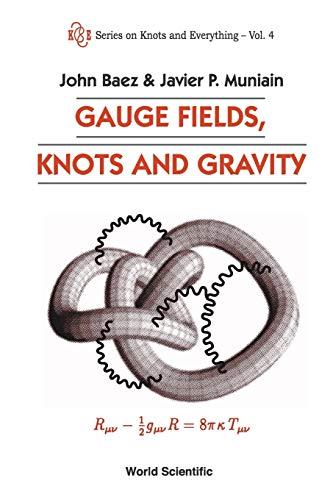
There are, however, large chunks of beautiful and formalizable math connected to the Standard Model, which one needs to understand to understand the Standard Model. I wrote a book about some of those - but not nearly all. My book doesn't try to explain the Standard Model, just some prerequisites.

@johncarlosbaez Thanks for the great answer. I knew I couldn't just absorb all of physics, so I'd be quite happy with snippets. I'll have a look at your book!