
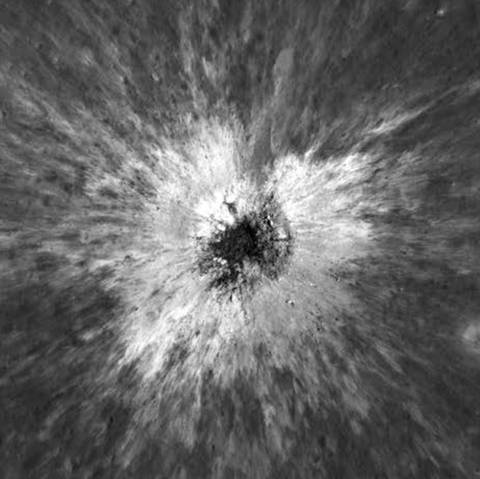
A new 225-meter (740-foot) crater appeared on the Moon while nobody was looking. NASA's lunar orbiter imaged the dramatic aftermath.

Such large impacts are once-in-a-century events. This one happened in the spring of 2024.

https://www.sciencenews.org/article/moon-new-crater-nasa-orbiter #space #science #nature #nasa
@coreyspowell How big would the crater have been if it had hit the Earth instead? The article doesn't say, but I guess presumably nearly the same size?

@skyglowberlin @coreyspowell

No, I would think substantially smaller. Atmosphere would break it up, in parts, slow bits down. And the ejected material would also not necessarily get that far.

@knud @coreyspowell Definitely the ejected material would not go as far, but I don't think the atmosphere would have much affect on a meteor of that size.

@skyglowberlin @coreyspowell

But the actual size wasn't mentioned, was it?

@knud @coreyspowell Not in the article, no. But it has to have been reasonably large to make such a large crater.

On the other hand, given the relative sizes a once-in-a-century event on the moon should happen about every decade on Earth... So yeah, I wish the story authors had given a bit more context.

@skyglowberlin @coreyspowell

OK, tried to read up on this: 1/10 years would be the 10m-class of asteroids. These would mostly explode in the upper atmosphere and not actually reach the ground. The air blast could be substantial. The Chelyabinsk-meteor was estimated at 20m.

So: likely breakup, parts might reach the ground, but only at terminal speed, not at initial speed, some boom, but no crater.

Happy to not live on the Moon!

https://en.wikipedia.org/wiki/Impact_event#Airbursts

Impact event - Wikipedia