Enshittification takes place when companies can move value around. Digital tools make this easier than ever to do, for example, by changing prices on a per-user, per-session basis, using surveillance data to predict the highest price or lowest wage a user will accept:

https://pluralistic.net/2023/02/19/twiddler/

--

If you'd like an essay-formatted version of this thread to read or share, here's a link to it on pluralistic.net, my surveillance-free, ad-free, tracker-free blog:

https://pluralistic.net/2026/03/23/nobodys-home/#squeeze-that-hog

1/

Digital "twiddling" represents a powerful system of pumps for moving value around, taking it away from users and giving it to business customers, then taking it from businesses and giving it to users, and then, ultimately, harvesting all the value for the company's shareholders and executives.

2/

Twiddling is powerful because it's fine-grained, allowing businesses to extract more from their most vulnerable customers and workers, while reserving more equitable treatment for more empowered stakeholders who might otherwise take their business elsewhere.

But long before digitization made twiddling possible, businesses that found themselves in a position to make things worse for their customers and workers without facing consequences were accustomed to doing so.

3/

Think of the airport shop that sells water for $10/bottle: that's a ripoff whether you're in coach-minus or flying first class, and it's made possible by the TSA checkpoint that makes shopping elsewhere a time-consuming impossibility.

4/

The airport shop is the only game in town - a "monopolist" in economics jargon. When a business has something you really want (or even better, something you *need*) and it's hard (or impossible) for you to get it elsewhere, they can take value away from you and harvest it for themselves.

5/

The most obvious forms of monopoly extraction are high prices and low wages. Dollar stores are notorious for this, using their market power to procure extremely small packages of common goods in "cheater sizes" that have high per-unit costs (e.g. the cost per ounce for soap), while still having a low price tag (the cost per (small) bottle of soap).

6/

These stores are situated in food deserts, which they create by boxing in community grocers and heavily discounting their wares until the real grocers go out of business. They're also situated in *work* deserts, because driving regular grocers out of business destroys the competition for labor, too. That means they can pay low wages and charge high prices and make a hell of a lot of money, which is why there are so many fucking dollar stores:

https://pluralistic.net/2023/03/27/walmarts-jackals/#cheater-sizes

7/

Pluralistic: Rural towns and poor urban neighborhoods are being devoured by dollar stores (27 Mar 2023) – Pluralistic: Daily links from Cory Doctorow

That's the most obvious form of value harvesting, but it's not the only one. There are other costs that businesses can impose on their customers and workers. Think of CVS, the pharmacy monopolist that uses its vertical integration with bizarre, poorly understood middlemen like "pharmacy benefit managers" to drive independent pharmacies out of business:

https://pluralistic.net/2024/09/23/shield-of-boringness/#some-men-rob-you-with-a-fountain-pen

8/

Pluralistic: What the fuck is a PBM? (23 Sep 2024) – Pluralistic: Daily links from Cory Doctorow

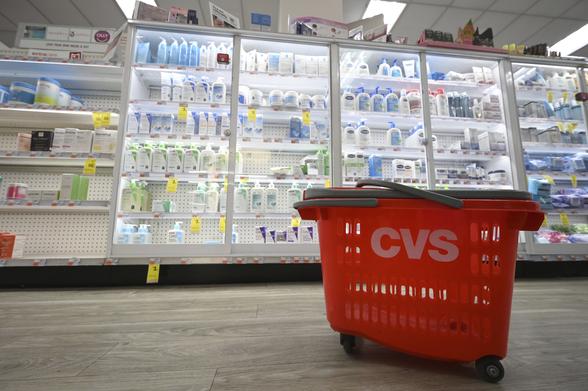
If you've been to a CVS store recently, you have doubtless experienced a powerful form of value-shifting: *understaffing*. CVS (and the other massive chains in the cartel, like Walgreens) have giant stores with just one or two employees on the floor, often just a cashier and a pharmacist.

9/

This makes them easy pickings for shoplifters, so their merchandise is locked up in cabinets and when you want to buy something, you have to find the lone employee and get them to unlock the case. This is CVS trading your time for their wage-bill.

Then, you're expected to check out your purchases - shifting labor from workers on CVS's payroll to you - with badly maintained kiosks that often misfire and require you to wait again for the lone employee to come and override them.

10/

Meanwhile, that employee is absorbing a huge amount of frustration and abuse from customers who are paying high prices and enduring long waits - another cost CVS shifts from their shareholders to someone else (workers, in this case).

Finally, CVS demands that publicly funded police respond to the inevitable shoplifting and other security problems created by running a big-box store with a skeleton crew, shifting costs from the business to *everyone* in the local tax-base.

11/

In "Not Enough Workers For the Job," *The American Prospect's* Robin Kaiser-Schatzlein looks at the systemic trend towards understaffing that has swept across every sector of the US economy over the past five years:

https://prospect.org/2026/03/19/understaff-workplace-business-covid-cvs-pharmacies-hotels-grocery-stores/

12/

Not Enough Workers for the Job

Understaffing has become an epidemic in American workplaces of all kinds.

The American Prospect

Kaiser-Schatzlein lays the blame for many of life's frustrations at the feet of this business trend: "long lines, messy grocery aisles, organized theft, high hotel costs, frequent flight cancellations, deadly medication errors at pharmacies, increased use of medical restraints in nursing homes, and, more generally, a palpable and rising dissatisfaction with work."

13/

As you can see from that list, understaffing affects everyone, from people with the wherewithal to buy a plane ticket to vulnerable elderly people who are literally tied to their beds or drugged into stupors for the last years of their lives.

There's academic work to support the idea that understaffing is on the rise, like a 2024 Kennedy School survey of 14,000 workers where a majority said that their workplaces are "always" or "often" understaffed.

14/

A 2023 study in the *Journal of Public Health Management and Practice* found that public health institutions need to hire *80%* more workers to be adequately staffed. New York's Mt Sinai hospitals paid a $2m fine in 2024 for understaffing its ERs, as well as oncology and labor units. Another study blames understaffing for the rise of use of antipsychotic "chemical handcuffs" in nursing homes:

https://pubmed.ncbi.nlm.nih.gov/35926573/

15/

Association Between Long-Term Care Facility Staffing Levels and Antipsychotic Use in US Long-Term Care Facilities - PubMed

These findings provide support for policy-based interventions to decrease antipsychotic use in LTC facilities by improving staffing skill mix and staffing levels. The results may also inform nursing staff education and training on antipsychotic prescribing practices.

PubMed

The hits keep coming: the DoT Inspector General says that 77% of air traffic control is understaffed, with NYC ATC staffed at 54% of the correct level. In Texas, county jails have had to reduce their capacity due to understaffing (they have enough beds, but not enough turnkeys). Understaffing is behind much of the unprecedented union surge, with workers at Starbucks, railroads and elsewhere becoming labor militants due to understaffing.

16/

83% of white-collar millennials say they're doing extra work to make up for vacant positions in their organizations. As Starbucks union organizers can attest, workers need unions if they want to have a hope of forcing their bosses to adequately staff their jobsites, so it's not surprising that understaffing has emerged at a time when union density is at rock bottom.

17/

Kaiser-Schatzlein quotes the Kennedy School's Daniel Schneider, who identifies understaffing as a deliberate business strategy. Businesses don't hire enough workers because that makes them more profitable. It's not because "no one wants to work anymore" (though doubtless repeating that fairy tale helps shift the blame for long lines and poor service from real, greedy bosses to imaginary, greedy workers).

18/

PE leads the charge here, "rolling up" multiple, competing businesses in a sector and then cutting staffing across all of them. Putting all the businesses in a given sector and region under common ownership means that when these businesses hack away at staffing levels, workers and customers have nowhere else to go. This is especially pernicious at nursing homes, where PE companies drastically reduce headcount, putting staff and patients alike at risk:

https://www.npr.org/sections/health-shots/2023/01/31/1139783599/new-york-nursing-home-owners-drained-cash?ft=nprml&f=853198417

19/

Private equity has just about declared victory in its decades-long war on community pharmacies, consolidating pharmacy ownership nationwide into just a few chains that are the poster-children for understaffing. These ghost-ships aren't just frustrating places to shop - they're a danger to their communities.

20/

As Kaiser-Schatzlein reports, Ohio fined CVS in 2021 for boarding up the walk-up pharmacies in its stores and forcing customers to use the drive-through, because there was only a single pharmacist on duty.

Without help, the lone pharmacist was unable to process deliveries, so CVS pharmacies' floors were littered with unopened parcels. Patients had to wait *over a month* to get their prescriptions filled.

21/

CVS refused to hire additional staff to process the backlog, and the on-duty staff worked under declining conditions, as the undermaintained air conditioning quit and indoor temperatures soared. Unsurprisingly, these stores had massive staff turnover, which also hampered their efficiency.

Understaffing in pharmacies leads to serious medication errors, which are proliferating across the US, killing hundreds of thousands of Americans every year.

22/

The errors are incredible, like the woman who died after getting chemotherapy drugs instead of antidepressants:

https://www.nytimes.com/2020/01/31/health/pharmacists-medication-errors.html

Pharmacists at chain stores like CVS are at elevated risk for kidney stones because they don't have time for bathroom breaks, so they adopt a practice of not drinking water during their shifts. One CVS pharmacist told Texas regulators, "I am a danger to the public working for CVS."

23/

How Chaos at Chain Pharmacies Is Putting Patients at Risk

Pharmacists across the U.S. warn that the push to do more with less has made medication errors more likely. “I am a danger to the public,” one wrote to a regulator.

The New York Times

As ever, covid provides the ideal excuse for shifting value from customers and workers to shareholders. Today's high prices never came down after the "greedflation" that bosses boasted about to shareholders, even as they told customers that it was because of "supply chain shocks":

https://pluralistic.net/2023/03/11/price-over-volume/#pepsi-pricing-power

Likewise, staffing levels never came back from the covid skeleton crews that we all learned to deal with in the days of widespread acute illness and social distancing.

24/

Pluralistic: Excuseflation (11 Mar 2023) – Pluralistic: Daily links from Cory Doctorow

Kaiser-Schatzlein spoke to hotel workers like Jianci Liang, a housekeeper at Boston's Hilton Park Plaza, who described a post-pandemic jobsite with 20 fewer housekeepers: "I sleep with pain, I wake up with pain, I go to work with pain." The Bureau of Labor says that hotel staffing levels are down 16% nationwide.

25/

Prices (and profits) are up, though. Hotels post record profits and pay record executive salaries, wrung from facilities where the pools are closed and room cleanings happen on alternate days.

Workers absorb the cost of understaffing in their bodies and psyches. It's not just physical exhaustion, it's also the abuse that is directly correlated with lower staffing levels. Frustrated customers vent their anger at grocery workers, flight attendants and other front-line workers.

26/

I can't help but see a connection here to the AI bubble, which is fueled by the fantasy of a world without people:

https://pluralistic.net/2026/01/05/fisher-price-steering-wheel/#billionaire-solipsism

The billionaire solipsists who have directed hundreds of billions of dollars in AI investment like to rhapsodize about a future where a boss's ideas are turned into products and services without having to be funneled through workers:

https://pluralistic.net/2026/03/12/normal-technology/#bubble-exceptionalism

27/

Pluralistic: A world without people (05 Jan 2026) – Pluralistic: Daily links from Cory Doctorow