
Iran war energy crisis is a renewable energy wake-up call

The Iran war is exposing how much the global economy still depends on fragile fossil fuel supplies. The conflict has virtually choked off the Strait of Hormuz, a vital shipping lane for a fifth of the world’s oil and liquefied natural gas. That's shaking up markets and pushing prices higher. Countries reliant on imported fossil fuels — from wealthy industrial economies to poorer developing nations — are facing major disruptions that can quickly ripple through utility bills, food prices, transport costs and electrical grids. Analysts say the crisis is a stark reminder that energy security is not just about stockpiles and shipping, but also about the lagging transition to renewable energy.
AP News

I don't understand how we're still using fossil fuels. I thought the only thing that would save us from the scourge is if renewables were cheaper, but even with solar being cheaper than everything else, we're still deploying fossil fuels.

Is it because of the interests of fossil fuel companies and their lobbying, or am I missing some economic factor?

Ultimately, the answer is fuel density. So, for long distance untethered travel, like planes. Beyond that, it's plastics production and chemical manufacturing.

We can switch to hydrogen for lots of stuff that requires carrying your fuel on your back, but some things get tougher because the density is just not the same as a hydrocarbon.

These are all surmountable (biodiesel, carbon capture->fuel cycles, bioreactors, etc), but they take time and money.

In the end, what will push us to get there are economic shocks. We're getting there, it's just painful.

In Australia the answer is political lobbying, without a doubt.

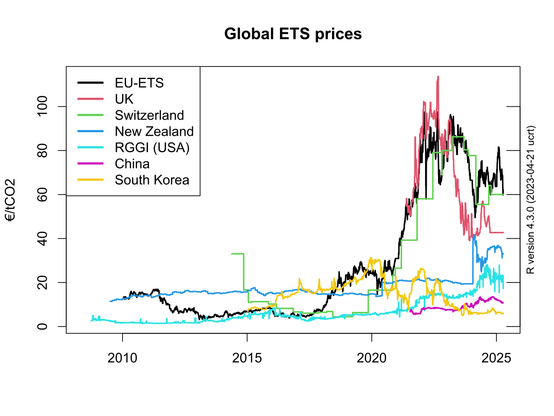
We had an emissions trading scheme[0] in 2012 meant to help in a transition to clean energy sources that was aggressively lobbied against by Australia's largest polluters and lasted only 2 years before being repealed by the incoming government by labeling it a "tax" that citizens would pay for. This led to a decade of policy stagnation[1] where we could've been transitioning away from fossil fuels.

So while energy density is definitely a factor, political lobbying is absolutely a factor.

[0] https://en.wikipedia.org/wiki/Carbon_Pollution_Reduction_Sch...

[1] https://www.ft.com/content/0a453f5c-e859-4300-9355-46822c451...

Carbon Pollution Reduction Scheme - Wikipedia

> by labeling it a "tax" that citizens would pay for.

Are the quotes here implying there wasn't a cost imposed on the public to artificially speed up a transition to green energy? Might as well be honest about it and say it's a "temporary sacrifice for the greater good" or something. Otherwise it's just another form of political spin.

It was an enforcement of paying a (small) portion of the externalities as a result of the use of fossil fuels.

The "tax" was to be paid by the largest polluters, hence their lobbying against it. It wasn't something the citizens had to pay for unless the largest polluters decided to raise their prices as a result of this "tax".

Asking polluters to decrease their profits, as it becomes increasingly obvious that their profits are based on making life worse for the entire planet for the future, I think, is not too grand an ask. "That's how it has always been" is not a reason not to act to improve "how it could be".

The government of the day did not and never used the word "tax". They essentially turned pollution into a commodity, which could be traded between companies who wanted to pollute more and rewarded companies who transitioned to clean energy. See the primary Wikipedia article on emissions trading schemes[0] for more information.

The political opposition continuously spun it as a "tax", in an attempt to stir outrage and win the next election, which they succeeded in[1]. The incoming government was and still is largely funded by fossil fuel companies, so they repealed the scheme.

[0] https://en.wikipedia.org/wiki/Carbon_emission_trading

[1] https://en.wikipedia.org/wiki/2013_Australian_federal_electi...

Carbon emission trading - Wikipedia