Iran war energy crisis is a renewable energy wake-up call

The Iran war is exposing how much the global economy still depends on fragile fossil fuel supplies. The conflict has virtually choked off the Strait of Hormuz, a vital shipping lane for a fifth of the world’s oil and liquefied natural gas. That's shaking up markets and pushing prices higher. Countries reliant on imported fossil fuels — from wealthy industrial economies to poorer developing nations — are facing major disruptions that can quickly ripple through utility bills, food prices, transport costs and electrical grids. Analysts say the crisis is a stark reminder that energy security is not just about stockpiles and shipping, but also about the lagging transition to renewable energy.


AP News

I don't understand how we're still using fossil fuels. I thought the only thing that would save us from the scourge is if renewables were cheaper, but even with solar being cheaper than everything else, we're still deploying fossil fuels.

Is it because of the interests of fossil fuel companies and their lobbying, or am I missing some economic factor?

Ultimately, the answer is fuel density. So, for long distance untethered travel, like planes. Beyond that, it's plastics production and chemical manufacturing.

We can switch to hydrogen for lots of stuff that requires carrying your fuel on your back, but some things get tougher because the density is just not the same as a hydrocarbon.

These are all surmountable (biodiesel, carbon capture->fuel cycles, bioreactors, etc), but they take time and money.

In the end, what will push us to get there are economic shocks. We're getting there, it's just painful.

Fuel density wouldn't be such an impactful attribute if the US military and geopolitical situation and strategy were different.

Fuel density is logistically important and the US geographical position means that density is more important to the US than other nations. In other words, if we forecast that we'll be fighting foreign wars, fuel transport is an logistical problem that optimises for density.

Fuel density matters to things like cars and semi-trucks. Right now you can’t build an electric version that can fully refuel in minutes. That makes fast, long-range travel impractical in an electric vehicle.

Me searching for the electric tanks. ¯ \ _ ༼ •́ ͜ ʖ •̀ ༽ _ / ¯

Edit: I found them :D

and I wonder which blown up tank would pollute the environment more
I don't really think that's really high up on military priorities list. But happy to be proven wrong on that.

If you're worried about the environment don't get into wars. If you're in a war, worry about winning.

Wars of the future will make heavy use of drones. They don't run on hydrocarbons.

They didn’t make it past the drones.
tanks must represent like 0.001% of fuel consumption lol Road uses like cars, trucks and buses is 47% of all oil, and clearly an enormous fraction of that can be converted to use electricity instead
I do not know if any such tanks are in production, but there where experimental electric tanks, just not with batteries, but with turbogenerators.

Great question! Turns out there are. The U.S. Military's Abrams Tank Is Going Hybrid [1]. I'm sure we'll get some comments saying why it's a terrible idea[2].

1. https://insideevs.com/news/784805/abrams-m1e3-hybrid-tank-vi...

2. https://news.ycombinator.com/item?id=47484044

https://insideevs.com/news/758625/byd-megawatt-charging-demo...

"It's called Megawatt charging because it delivers 1,000 kilowatts of electrical power at 1,000 volts, which is twice as powerful as the fastest chargers we have here in the United States."

BYD's 5-Minute EV Fast Charging: We Tried It. It's A Game-Changer

BYD's new Megawatt charging proves that 5-minute charging stops are possible. And China will get there first.

InsideEVs

Actually a few other HN threads have just discussed the latest Chinese electric cars that refuel in 5 minutes for a 250 miles range and which have a 500 miles range when fully charged.

That makes fast, long-range travel quite practical in an electric vehicle.

While this model greatly improves the charging speed, other electric cars introduced this year use sodium-ion batteries, which are heavier than lithium-ion batteries, but they have the advantage that in cold climates they do not lose either capacity or charging speed down to temperatures as low as minus 40 Celsius degrees, removing other limitation of electric cars.

So hydrocarbon fuels are likely to remain non-replaceable only in aircraft and spacecraft, where weight really matters.

However, hydrocarbon fuels can be synthesized from water and carbon dioxide, passing through syngas, by using solar energy, just not at a price competitive with fossil fuel.

No, that's fine, I get it that fossil fuels have incomparable density, but we're using them massively for stuff where density isn't that important. Anything inside a city, from transportation to homes to factories are already powered by electricity (or can be, e.g. cars), we're just inexplicably still using fossil fuels to create that electricity.

The US grid is still 57% coal and gas.

Slightly tangential, we bought a 2014 Nissan Leaf about 18 months ago, against howls of protest from parents-in-laws and brother- and sister-in-laws with all the regular electric car FUD you hear (can't drive interstate on a single tank, can't tow a trailer, will explode and burn your house down).

For our use-case, 95% of our trips are to the shops, to various kids sports, to school, to the bus/train station, visiting (local) family, and all are very short trips easily within the relatively short range of the Leaf: ~100km. We still have our existing cars, they just get used less in favour of the cheapest option for the job at hand.

Even with our son being newly able to drive independently (so essentially needing to have three cars, rather than two, on the go at any one time), over the 18 months of owning the Leaf we've saved about 25% of the purchase price of the Leaf in spending less on petrol (including the electricity cost to charge the Leaf - which gets charged using the solar panels during the day, but more commonly using cheaper grid electricity non-peak overnight - yes, likely primarily off fossil fuels but from what I've read is more energy efficient than using petrol to power the car).

My point being, analogous to the "right answer" being to only using energy-dense fuels when necessary, we use the cheaper electric vehicle option when applicable, and only burn the expensive stuff when the better option is unavailable.

P.S. Looking at buying a newer EV with longer range, so there are additional and more flexible "better options", plus coming up to having a daughter who is also able to drive unaccompanied (four cars? :grimacing face:)

I really don't understand how people offer "but that ten-hour trip I take once a year will be 40 minutes longer!" as criticism and completely ignore "my EV TCO will be half of an ICE".

Humans really do not like change, the problems you have now are swept under the rug but tiny new problems are made into massive, insurmountable ones.

> Humans really do not like change

This is definitely part of it. My personal opinion is that 'mechanical intelligence' is so intertwined with, cough, masculinity that EVs are a threat to these kinds of men at the very core of their being. There's so much 'identity' that people associate with the car they drive, the noise it makes, that they can take it apart and put it back together again despite its complexity.

The simplicity of the electric motor and the minimal servicing required of an electric car is potentially anathema to (toxic) masculinity. As is enforcing 'stopping driving for a rest and (literal) recharge'.

It's a super old school way of thinking, but aren't we in the midst of seeing exactly that bubbling up to the surface as far more entrenched in society than we thought it could be?

(May be overthinking this a bit, but the illogic from otherwise logical family members around EVs really twisted my mind into knots that I had to spend the time undoing)

> tiny new problems are made into massive, insurmountable ones

This is just cope. Clutching at the thinnest branches because that's the only thing on offer. It's the rationalisation of all of what I've mentioned above.

> that they can take it apart and put it back together again despite its complexity.

It's definitely not this, since that hasn't been true since ~2010 CAFE standards required ECUs + their array of feeder sensors, all usually factory-locked.

Also, counter to my own argument is that EVs can still be hacked with (although less 'mechanically') as per recent article and HN discussion:

http://techno-fandom.org/~hobbit/cars/ev/

https://news.ycombinator.com/item?id=47342185

Kona EV hacking

Header page for hacks and investigations of the Hyundai Kona electric vehicle

I will offer you a realistic answer - the uncertainty and need for planning are the killers.

An EV dropped my transportation fuel bills by 90% but even i will admit that an EV is a hassle. On any trip that exceeds the range of the car, we must identify EV chargers, then determine whether they are working and only then can we start counting the additional minutes.

In the winter, seeing the range of you car drop by 26% and not knowing where the next working charger is, is the #1 reason why we still have two cars. If i could eliminate one with access to better transit, it would be the EV, not the combustion car.

Sure, but this is just a temporary infrastructure issue that will be solved thoroughly as EVs become more popular. If you take long trips often, maybe it's not for you, but I personally only take trips longer than 200km or so once a year, if that, so I absolutely adore my EV and would never go back to ICE.

Legit question (and one that I need to answer for myself as well):

Would it be cheaper to keep the EV and rent a car for when you need to do longer trips? (also taking into account the additional hassle of renting a petrol/diesel car)

Only speaking for myself, I'd seriously consider renting a (combustion) car for an interstate driving holiday if it's a rare occurrence, like once a year or once every two years. It will become an exercise in accounting[0].

My silly-ish analogy is: I don't own a plane because I fly rarely enough that it's not worth buying a plane to allow me to fly wherever, whenever I want.

[0]: https://www.youtube.com/watch?v=VQPIdZvoV4g&t=137

Monty Python - The Machine that goes PING!

YouTube
Chevy Volt. Perfect car. I can consistently squeeze about 60 miles electric city driving, and 400+ on a trip. Soooo disappointed GM canceled the program. No one ever understood how great this car was…
The problem with the Volt is that it's a nerd's car, and they don't have enough political clout inside GM to have kept it going.

the short answer is that it depends.

I did the maths on my situation and it did not work out. It is currently cheaper to pay the $120 / month or so on insurance and maintenance for the second car as opposed to renting a car for the once a month that we actually use the second car.

The trouble is that renting a car is expensive and public transit is an even bigger hassle.

In Australia the answer is political lobbying, without a doubt.

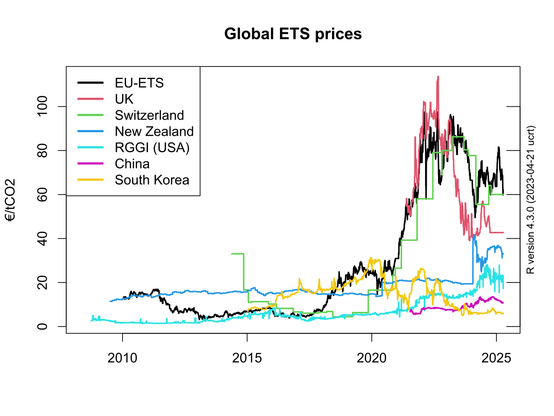
We had an emissions trading scheme[0] in 2012 meant to help in a transition to clean energy sources that was aggressively lobbied against by Australia's largest polluters and lasted only 2 years before being repealed by the incoming government by labeling it a "tax" that citizens would pay for. This led to a decade of policy stagnation[1] where we could've been transitioning away from fossil fuels.

So while energy density is definitely a factor, political lobbying is absolutely a factor.

[0] https://en.wikipedia.org/wiki/Carbon_Pollution_Reduction_Sch...

[1] https://www.ft.com/content/0a453f5c-e859-4300-9355-46822c451...

Carbon Pollution Reduction Scheme - Wikipedia

> by labeling it a "tax" that citizens would pay for.

Are the quotes here implying there wasn't a cost imposed on the public to artificially speed up a transition to green energy? Might as well be honest about it and say it's a "temporary sacrifice for the greater good" or something. Otherwise it's just another form of political spin.

It was an enforcement of paying a (small) portion of the externalities as a result of the use of fossil fuels.

The "tax" was to be paid by the largest polluters, hence their lobbying against it. It wasn't something the citizens had to pay for unless the largest polluters decided to raise their prices as a result of this "tax".

Asking polluters to decrease their profits, as it becomes increasingly obvious that their profits are based on making life worse for the entire planet for the future, I think, is not too grand an ask. "That's how it has always been" is not a reason not to act to improve "how it could be".

The government of the day did not and never used the word "tax". They essentially turned pollution into a commodity, which could be traded between companies who wanted to pollute more and rewarded companies who transitioned to clean energy. See the primary Wikipedia article on emissions trading schemes[0] for more information.

The political opposition continuously spun it as a "tax", in an attempt to stir outrage and win the next election, which they succeeded in[1]. The incoming government was and still is largely funded by fossil fuel companies, so they repealed the scheme.

[0] https://en.wikipedia.org/wiki/Carbon_emission_trading

[1] https://en.wikipedia.org/wiki/2013_Australian_federal_electi...

Carbon emission trading - Wikipedia

Aviation is a few percent of global emissions. All aviation.

It’s probably the hardest thing to replace but if we can’t we will be okay.

Long haul trucking and shipping and remote site power are probably the next hardest things, and maybe coal for metallurgy, but these are also small compared to emissions from electricity generation and routine car transit. The big sources can be completely converted.

Renewables require power storage. Batteries are large, heavy, expensive, and the power dense ones have absolutely horrendous failure modes.

There are other storage options, but they require even more space than batteries.

Oil and gasoline require very little space, have easy to handle failure modes, and aren’t that expensive to operate. Not expensive enough to justify changing nationwide logistics and support.

It’s also far cheaper to keep using fossil fuels for a year than build out entirely new infrastructure.

I'm not sure the failure modes are too significantly different. I think it's likely you may consider them 'easy to handle' is because there's been years to learn how to handle these failure modes (which is a positive, but for reasons not inherent to the power source itself).

It's always far cheaper to keep status quo X than move to new thing Y. Until it isn't. Especially if you don't take into account externalities. Increased instances of flooding, cyclones, and wildfires gets pretty expensive pretty quickly. Losing ground to competitors can be fatally expensive in the long term.

Such things require the ability and will to think and prepare long-term, and it feels as if humanity has been migrating in the opposite direction since the 70's.

Oil doesn’t make self-oxidizing metal fires. You can easily put out an oil or gas fire with water and it will stay out once cooled off. You have to just let lithium batteries burn and even if you get them extinguished, there’s no where to store, transport, or recycle them safely because they reignite without warning at any temperature.

Yes, there are mitigations, but that doesn’t change how fundamentally dangerous they are. Gas tanks do not spontaneously ignite if punctured. Gas is easily cleaned up. Batteries become permanently unsafe and can catastrophically fail at any time with no warning.

Time, production capacity, and materials. I’ve seen 1yr lead times on electric equipment to install charging stations. Copper supply issues with a huge rollout.

$150/barrel, much higher prices everywhere, less fertilizer, and less oil available could spur a faster turnover.

Fingers crossed.

We're not really adding much more fossil fuel capacity. 88% of new capacity under construction in the US is renewable. Of the fossil fuel capacity that is being added, it's overwhelmingly coal-to-gas conversions and peaker plants that help to deal with the variability in renewable generation.

It will take a long time before the fossil fuel capacity we've already built gets phased out, and of course certain developing nations are still adding dirtier fuel sources, but renewables getting cheap is working.

Ahh, interesting, I didn't realize the current mix is because of legacy plants, but I guess it makes sense that it wouldn't all be phased out immediately.

>> certain developing nations are still adding dirtier fuel sources

I'd look at this from a more nuanced viewpoint of certain nations still adding sovereign fuel sources.

Read: India / China and coal

In 2024 88% of China's new electricity generation also came from solar and wind. https://www.eia.gov/international/analysis/country/chn

India is further behind but improving rapidly. Its entire grid is still on track to be 42% renewable by 2030. The US is 42% today and expected to be 58% by the same time.

Developing countries use the cheapest source of energy, period. Today that's solar.

https://news.ycombinator.com/item?id=47308960

International - U.S. Energy Information Administration (EIA)

Energy Information Administration - EIA - Official Energy Statistics from the U.S. Government

> I don't understand how we're still using fossil fuels.

These fit an energy niche that can't be replaced with any one thing. China is just now investing in an electric military, for instance. Shipping will remain difficult to electrify entirely (which is surmountable, but certainly not in production). Coal and natural gas plants provide on-demand power that is not straightforward to guarantee with renewable sources. And there are many (likely almost all) grids that are simply not up to the task of transmitting energy that used to be transmitted by physically moving fossil fuels. Air flight has no renewable alternative as of today—though, I suppose we technically do have renewable forms of jet fuel, it's extremely expensive.

& of course we will need byproducts for the forseeable future for fertilizer, materials, chip production, etc etc.

It'll take a couple generations. Of course we should be paying poor countries to not use fossil fuels, but instead we're trying to force switching back to fossil fuels ourselves for no explicable reason (as an american obv).