“People who would plan an attack…”
Sure, perhaps it wouldn’t hold up a serious professional terrorist, but those are few and far between. It WILL deter the amateur lone wolf attacker who is looking for the target of least resistance. If it was easy to just walk onto a flight with a gun or bomb, maybe they would, but it is unlikely that an amateur would bother to make the attempt, assuming that the likelihood of failure would be high. So that eliminates 90% of the threat.
As for the other 10%, that’s an issue to be dealt with on a bigger level. I saw one analysis of 9/11 that determined that it wasn’t a failure of TSA, it was a governmental intelligence failure, who had many opportunities to flag these guys, and they never connected the dots, or even tried to. They even arrested one guy on an indirect charge (leaving the plot short by one man), and never connected him to a larger event. All parties needed to be more observant, and they blew it.
As for the history, you are right, we had it dialed in pretty good by the 90s, after dealing with a lot of terrorism in the 70s & 80s, and it was starting to work for us, although hijacking continued around the world. But it was not equally good, as 9/11 proved. Until 9/11, which was the first time that an airplane had been used as a deliberate weapon of mass destruction, and there four of them. Clearly, the appearance of security was an illusion.
If you compare the pre- and post- 9/11 security, they look similar on their faces. They had similar security lines, X-ray machines, etc. But pre-9/11 they used private, contracted security companies, and protocols were fairly loose. Even so, the 9/11 hijackers were forced to use utility knives as weapons, because they didn’t trust trying to smuggle bigger knives, or guns, past security.
The behavior of passengers was an issue as well. Prior to 9/11, passengers knew to sit tight, don’t rile up the hijackers, and eventually the authorities would work it out, one way or another. 9/11, and subsequent attacks like the shoe and underwear bomber, taught passengers that they were responsible for their own safety.
Post 9/11, besides passenger awareness, there was a new professional agency to be responsible for airline security lines, with much stronger protocols, which developed as new threats emerged, like those mentioned before. And the result was no hijackings in 25 years, an impressive record, considering the 20th century’s abysmal record.
You used the term “by my logic,” but here’s my actual logic:
I have made the argument that TSA’s primary objective is to discourage airplane violence when the amateur terrorist is still conceiving his plan, and the 90s, pre-9/11 security protocols seem to have done a good job of that during the 90s.
But then 9/11 happened, and proved that while those 90s protocols might discourage the amateur lone wolf, it won’t discourage the professional organized terrorist. Fighting that enemy requires a more comprehensive strategy combining airport security and intelligence agencies. That’s what would have prevented 9/11, and has prevented any further nonsense since.
So it seems like TSA and the enhanced and improved protocols have been very successful in reaching these twin objectives. It would be extremely counterproductive to get rid of them because you’re pissed off at MAGA, Trump, and ICE. Nobody hates them more than me, but TSA does an effective job in tough circumstances, and we should appreciate them and their work. They aren’t cops, they’re keeping our loved ones alive when traveling to see us, and I’m grateful for that.
 MicroWave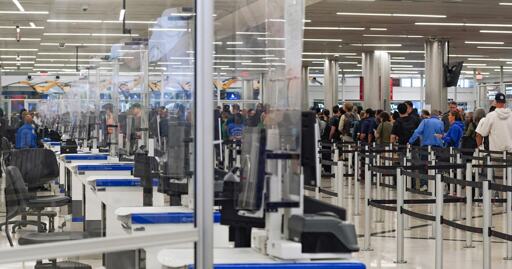
 circuscritic
 robocall
 Scott
Scott Midnight Wolf
 WideEyedStupid
 wonderingwanderer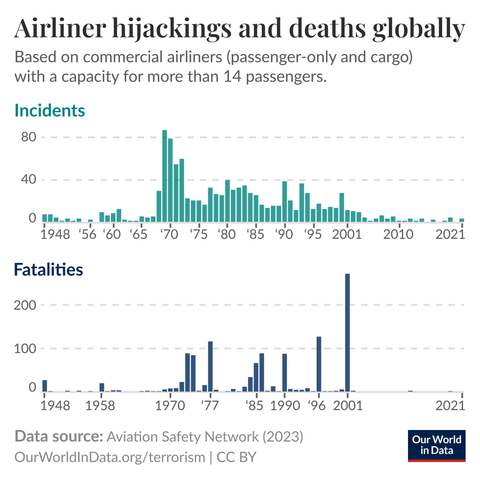
 hark
hark NutWrench
 JackbyDev