"The forest gardens were filled with plants that benefited humans, but they also continue to provide food for birds, bears, and insect pollinators, even after 150 years of neglect."

Notice how this debunks mainstream conservationism's dichotomy between "wild" land conserved for the environment's sake, and land developed for human use. Here, human activity improved the land's use both for humans AND the wider web of life we're part of. #ecology

https://www.science.org/content/article/pacific-northwest-s-forest-gardens-were-deliberately-planted-indigenous-people

Pacific Northwest's ‘forest gardens’ were deliberately planted by Indigenous people

Finding suggests humans have added value to forests in lasting ways

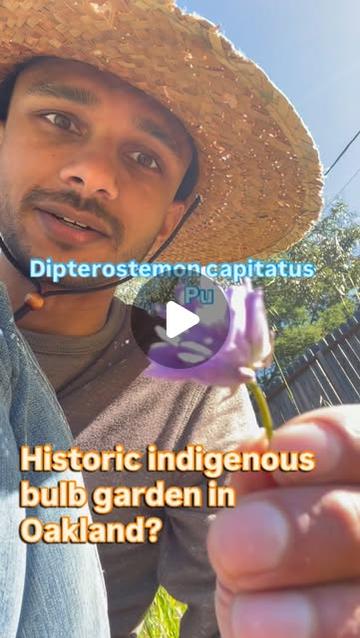
(with apologies for Insta link) on a similar theme, I enjoyed @/oakland.bio's video the other day about a possible historic Indigenous bulb garden in the East Bay hills.
https://www.instagram.com/reels/DVxV_prDje2/
Saumitra’s journal of Oakland ecology on Instagram: "Until just a few centuries ago, dozens of distinct societies of indigenous people lived on their own terms throughout the Bay Area. They spoke a variety of different languages, but it was typical for people to speak multiple languages fluently to communicate and socialize with their neighboring societies. They had food systems of thousands of species of native plants, algae, fungi, and animals so diverse and abundant that they didn’t consider starvation a common cause of death until colonizers destroyed their food systems (in addition to enslaving and mass-killing them) to replace them with Eurasian crops and livestock species. Present-day indigenous people in the Bay Area still practice their cultural traditions and ecological methods, but don’t have the freedom to do so on the vast majority of their homeland. All kinds of people, from agribusiness investors to landscape designers to permaculture homesteaders, continue to advance the colonization of this land by ignoring its unique life forms and replacing them with non-native species they think have special qualities the natives (whatever they think those are) simply lack. Like their forefathers before them, they pretend the indigenous life is “nothing,” they destroy it to replace it with species and patterns they recognize, and they think they’ve created “something” ort of “nothing,” a “healthy ecosystem” out of “empty land.” The few populations of native species that still exist are the last ones we have. They are unique to the place their ancestors have lived in for untold generations. Once they are gone, they are gone forever. One of the best things you can do for your local ecosystem is to learn your local native plants (Calscape.org is a great resource) and plant communities (get outside and use iNaturalist to observe and ID plants!) and grow your local native plant communities to create habitat for whatever native insects, fungi, etc are still surviving nearby. You can also volunteer for local habitat restoration efforts (this is probably more effective than guerilla re-wilding IF you have local restoration orgs in your area) #biodiversity #ecology #nativeplants #urbanecology #bayarea"

2,042 likes, 67 comments - oakland.bio on March 11, 2026: "Until just a few centuries ago, dozens of distinct societies of indigenous people lived on their own terms throughout the Bay Area. They spoke a variety of different languages, but it was typical for people to speak multiple languages fluently to communicate and socialize with their neighboring societies. They had food systems of thousands of species of native plants, algae, fungi, and animals so diverse and abundant that they didn’t consider starvation a common cause of death until colonizers destroyed their food systems (in addition to enslaving and mass-killing them) to replace them with Eurasian crops and livestock species. Present-day indigenous people in the Bay Area still practice their cultural traditions and ecological methods, but don’t have the freedom to do so on the vast majority of their homeland. All kinds of people, from agribusiness investors to landscape designers to permaculture homesteaders, continue to advance the colonization of this land by ignoring its unique life forms and replacing them with non-native species they think have special qualities the natives (whatever they think those are) simply lack. Like their forefathers before them, they pretend the indigenous life is “nothing,” they destroy it to replace it with species and patterns they recognize, and they think they’ve created “something” ort of “nothing,” a “healthy ecosystem” out of “empty land.” The few populations of native species that still exist are the last ones we have. They are unique to the place their ancestors have lived in for untold generations. Once they are gone, they are gone forever. One of the best things you can do for your local ecosystem is to learn your local native plants (Calscape.org is a great resource) and plant communities (get outside and use iNaturalist to observe and ID plants!) and grow your local native plant communities to create habitat for whatever native insects, fungi, etc are still surviving nearby. You can also volunteer for local habitat restoration efforts (this is probably more effective than guerilla re-wilding IF you have local restoration orgs in your area) #biodiversity #ecology #nativeplants #urbanecology #bayarea".

Instagram
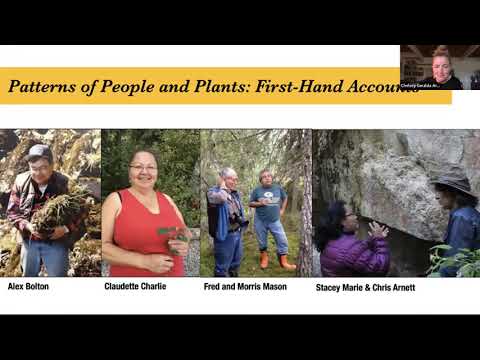
@scott Nice talk from a few years ago by Dr Chelsey Geralda Armstrong on the same work https://www.youtube.com/watch?v=ljQTIpitQZE
Dr Chelsey Geralda Armstrong - Documenting land-use legacies in Pacific Northwest of North America

YouTube