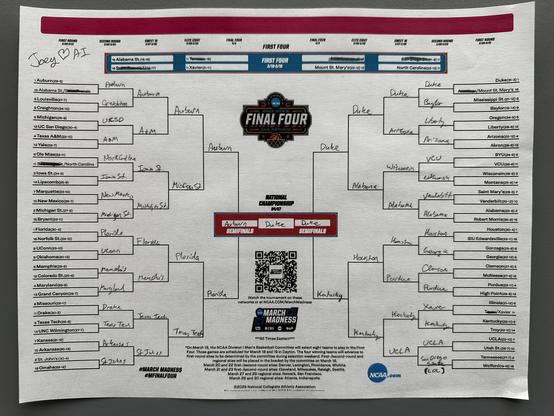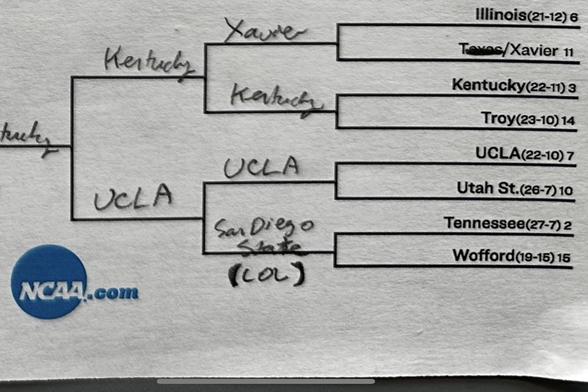
Once again I’ve outsourced my March Madness bracket to AI, and while I’m not quite going to say my bracket was busted from the start, I will say that for upset points, it has San Diego State winning tonight’s Tennessee/Wofford matchup. So I’d tune in if I were you…
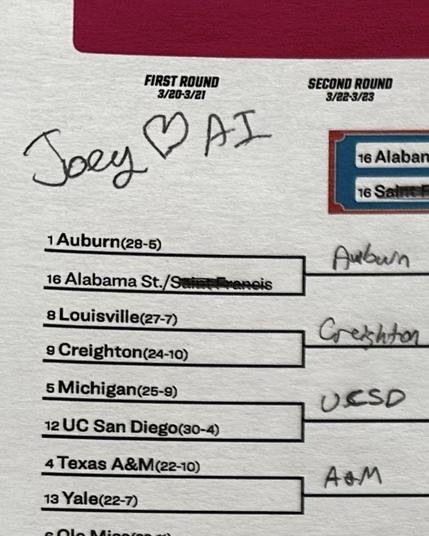
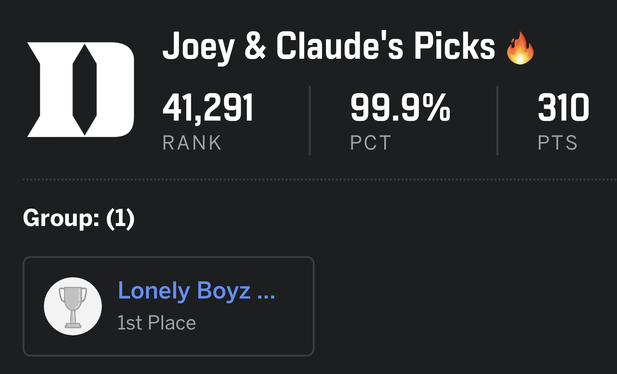
Just a data point in terms of model improvements: as ever, I had AI fill out my March Madness bracket this year. Last year it was a funny joke when ChatGPT hallucinated San Diego winning a game that it wasn't even competing in. This year... uh... not only is Claude winning the pool I have going with my friends, it's also ranked 41,291 out of 26.6 MILLION brackets submitted to ESPN. It even called the High Point upset over Wisconsin with startling conviction.
@joeycastillo Actual question: what makes you think Claude got this right instead of getting lucky? How did it get an edge there? (And a question we'd have a hard time answering: how consistent are its predictions, and how many of them are doing as well as this one?)
@xek Oh I think it's definitely lucky — March Madness is impossible to predict — but the analysis (linked) was spot on, and the confidence of "This is the bracket buster your friends won't see coming" struck me, especially since this game busted 25 million brackets in ESPN's tournament challenge. In the end while it missed three close matchups in round one, it did call both upsets it predicted (even if it didn't nail down just what the games would look like). https://gist.github.com/joeycastillo/75f366bad8d40d8072ef42b392eccecc
claudes-notes.md

GitHub Gist: instantly share code, notes, and snippets.

Gist
@xek I'll also add that this could all fall apart in the next two days, because yeah: it is luck, and all the analysis in the world can't predict the future. Personally I'm not making any grand thesis statement on LLM's being suitable for this or not, but for march madness I think it's fun. One of my friends builds his bracket based on which mascot would win in a fight; the stakes are pretty low here.