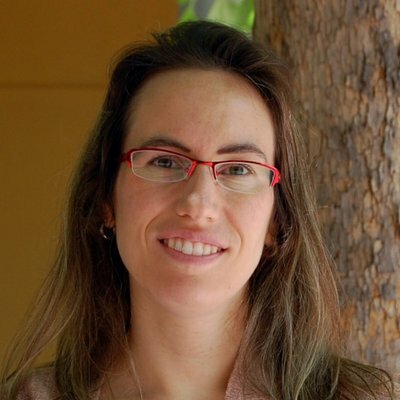
Paulette mentions in her lovely, heartfelt post (https://types.pl/@koronkebitch/116263964501595558) that she's in PL for the people. The same is true for me.

I'm teaching undergrad PL again starting in about a week, and I'm thinking that this time around, I want to use lecture time to feature PL people that I love. Maybe once a week, I could show someone's photo, say a bit about how I know them, and then read out loud to the class something written either by or about them that conveys a sense of who they are.

paulette d. koronkevich (@[email protected])

since blogs are trendy https://koronkevi.ch/posts/humanity.html
types.pl
Needless to say, there is no "learning outcome" associated with this activity. By all such standards, it's a waste of time. Oh well!
Anyway, now I have to decide who to talk about and what to read by or about them. They should be people I know personally, at least well enough to have had dinner with them at a conference, let's say. I'm open to suggestions!

@lindsey I do not it think it is a waste of time. Especially if you can match the person to the topic being taught, and a bonus if that person is from an underrepresented group!

Remember that the years when OPLSS had an all female line up, those years were both a statement that these people exist (compare to the usual suspects) and validation of those speakers tenure and ideas.

@jfdm I didn't say that it's a waste of time, only that it's a waste of time "by all such standards". I cannot, and do not want to, create a Specific, Measurable, Attainable, Related, and Time-bound learning outcome about love.

@lindsey oops! Missed that part about standards.

Regardless, good luck with this. I wholeheartedly support this endeavour!

@lindsey Damn the standards! I think it's a lovely idea, and students will see you think the time spent on the people are worth it.

A bioinformatics textbook I've used has half-page blurbs interspersed throughout the book with photos and biographies of some related researchers of the topics being covered.

@lindsey @jfdm I mean this entirely without euphemism: the only kind of "smart" about love is learning to be better at it and all the associated skills

which, of course, proceeds to behave far more like "research about people (and cats, and...) on their terms" than like undergrad study

good thing this isn't measurable, huh?

@lindsey @jfdm Is there a university police which checks whether you "create a Specific, Measurable, Attainable, Related, and Time-bound learning outcome" on every specific slide of every lecture?
@andrejbauer @jfdm I don't use slides, so that's vacuously true.
@lindsey @jfdm I just don't understand what the worry is here. Your idea is great, so what's stopping you?
@lindsey I love the idea. There's an interesting human story behind everything.
@lindsey You can probably pull this off much better than me, but... I taught a course on functional data structures (enriched version of core requirement) twice. The first time, I showed photos and told anecdotes, because I'd been an algorithms & complexity researcher for so long. I got slammed in the evaluations for "name-dropping". I took all that out the second time and it went much better (because the material really is marvellous).
@plragde Oof! That's unfortunate.
@plragde @lindsey ughhh that breaks my heart. the idea that the only reason we might want to share people's names and stories is for personal clout chasing 😭
@chrisamaphone @plragde Well, I mean, I do know someone who seems incapable of getting through a meeting without at some point dropping the name of some famous person he's worked with in his long career, and I have to say it gets pretty old after a while. So maybe whoever saw fit to complain on Prabhakar's evals had been subjected to a little too much of that kind of thing in other contexts and developed an allergic reaction to it.
@lindsey @chrisamaphone I think there are two significant differences between Lindsey's situation and mine. One is that she would be talking about the present, whereas I was talking about the past. The other is that I am more than a generation older, and have to work that much harder to develop any sort of rapport.
@lindsey @chrisamaphone I have pulled off historical anecdotes in other courses, but with stronger personalities and spicier stories (Turing, Russell, Gentzen, etc.). The one personal anecdote, about my seeing Church speak when I was a grad student, puts me in their situation, and so is more relatable.