The Man Who Went Shopping For Dining Chairs and Accidentally Bought Stonehenge.

On September 21, 1915, a British barrister named Cecil Chubb was given a very simple task by his wife, Mary. She sent him to a local auction in Salisbury with strict instructions: buy a nice set of dining chairs for their home.

But as Chubb sat in the auction house, he got distracted. "Lot 15" came up for sale, a 30-acre plot of land featuring a crumbling, dilapidated ring of ancient rocks.
@VisionaryVoid
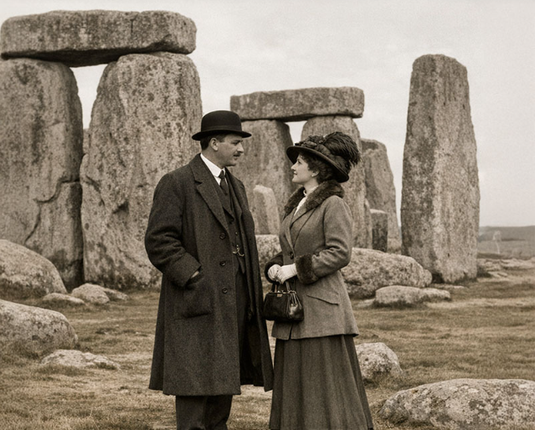

Three years later, tired of his wife’s complaints and realizing the immense historical weight of his impulse purchase, Chubb donated the entire monument to the British government.

He attached one strict condition: the public must always have access to it. Today, it stands protected forever, all because a husband couldn't stick to a shopping list. #globalmuseum

@globalmuseum

The public must always have access? How's that going?

I've only been once. Couldn't get near.

@OneInterestingFact @globalmuseum I visited and recommend the nearby Avebury Circle which doesn't (yet) have an entry fee or queue to see.
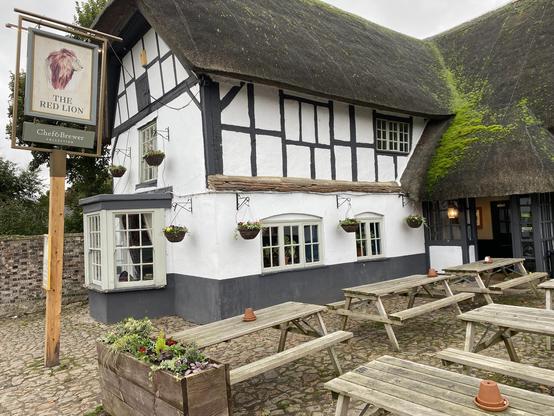
@MHowell @OneInterestingFact @globalmuseum Avebury: best henge in England. Even has a pub inside the ring.
@flipper @OneInterestingFact @globalmuseum
I visited that pub for a pint of cider, saw the well the pub was built around.

@MHowell
I've never visited that pub. The first time I went to Avebury we drove up from London in the middle of the night to see the dawn over the circle, so it was a little early. The second time I went from a wedding in Newbury to see it again and there wasn't time for a drink.

It looks very cool though.

@OneInterestingFact @globalmuseum

@flipper @MHowell @OneInterestingFact @globalmuseum I concur. Avebury is wonderful. As is Carnac in northwest France, if you happen to be there. (Lines and lines of standing stones)
@MHowell @OneInterestingFact @globalmuseum Rollrights is another good one but has a very different vibe. There's something incredibly ancient and unsettling about it beyond the odd Dr Who fan

@MHowell @OneInterestingFact @globalmuseum

It's very much worth the time. Take a half day at least and walk right around it to really get the scale of the place.
We met Mum & Dad there for lunch and a wander - which wasn't long before Mum's stroke and loss of mobility.

@MHowell @OneInterestingFact @globalmuseum Hard agree. I went in '03 and ate lunch sitting against a stone. Didn't bother with Stonehenge.

@OneInterestingFact @globalmuseum yeah it's very expensive. Better to look from the road at a distance. Only the 'druids' get access around the solstice, really.

But also, millions of people touching it over decades would mess it up.

@noodlemaz @OneInterestingFact @globalmuseum

You can book to go inside the Stonehenge circle. It's very, very popular so you need to book will in advance.

https://www.english-heritage.org.uk/visit/places/stonehenge/things-to-do/stone-circle-access-visits/

Stonehenge Stone Circle Experience

Find out about arranging a special pre-booked out-of-hours visit to the Stone Circle.

English Heritage
@geoffl @OneInterestingFact @globalmuseum I know, I live a England and I've been past plenty of times. It didn't used to have the fence around it so far back. You could see it quite well without paying or getting touch-close. Now it's extortionate.

@OneInterestingFact @globalmuseum

He didn't say the public must have access for free.

@geoffl @globalmuseum

It is a very long time since I was there but at the time the stones were fenced off and if you wanted in you had either to work for the government agency that looked after them or become a druid.
Is that what public access means?

@OneInterestingFact @globalmuseum

There didn't used to be any fence. I walked amongst the stones. But the stones were getting vandalised. people scratching their names into them, chipping bits off, painting crap on them, etc. I'm sure that wasn't what was meant by publicly accessible either but people are arseholes.

@OneInterestingFact @globalmuseum Depending on what was going on there were various levels of access at different times and during different festivals throughout the year.

@OneInterestingFact @globalmuseum

The number of visitors got so great that it eventually outweighed what was sustainable.

"In 1963, in an effort to minimise erosion, the inside of the circle was gravelled. By 1978 there were so many visitors that access to the stones had to be restricted."