 Chapter Chats with Caroline
Small Boat
28th Feb 2026Small Boat
Based on a true tragedy that took the lives of 27 migrants
save on Goodreads read an ExcerptAuthor:
Vincent Delecroix
Genre: True story, French lit, short stories/Novella
Tags:
Blog Post, Book Reviews, Short Stories/Novella, True story fictionShare:
Rating
3.5/5
Publication
March 24, 2025
by HopeRoad
Pages
122
Content Warning
N/A
About this Book
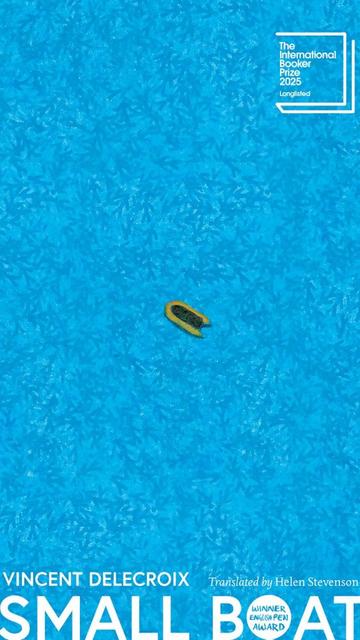
In November 2021, an inflatable dinghy carrying migrants from France to the United Kingdom capsized in the Channel causing the death of 27 people on board. Despite receiving numerous calls for help, the French authorities wrongly told the migrants they were in British waters and had to call the British authorities for help. By the time rescue vessels arrived on the scene, all but two of the migrants had died. The narrator of Delecroix’s fictional account of the events is the woman who took the calls. Accused of failing in her duty, she refuses to be held more responsible than others for this disaster. Why should she be more responsible than the sea, than the war, than the crises behind these tragedies? A shocking, moral tale of our times, Small Boat reminds us of the power of fiction to illuminate our darkest crimes.
Review
Small boat is based on a true story giving us a brief account of 27 lives lost in French waters. The story is not told to us from the pov of the victims onboard that small dinghy but instead from the pov of an operator of the coast guard responsible for saving lives at sea.
The book opens with an introduction by Jeremy Hardings giving us an account of the true tragedy that took place on the night of November 23/24 2021. Thereafter the book is divided into three parts: the first part is an impactful interrogation between a woman coastguard officer incharge of receiving that call of distress and a police officer. The second part is told to us from the POV of one of the survivors who made that distress call onboard that small dinghy, while the third part moves back to the coastguard woman and her reflection of the whole tragedy without showing signs of remorse, empathy, sympathy or accountability of the tragedy that took place that night.
Are we humans so bound by territorial boundaries, countries, conflicts, caste, religion, rich, poor , personal opinions, political beliefs or do we sometimes fail in our assessment of a situation? Had the operator sent out help and done her duty, would things be different? Should only the woman coastguard officer be in the firing line and not her colleagues? Are we humans so truly unable to sit quietly in one place and need to move as soon as we hear of better opportunities elsewhere? Had the woman coastguard officer shown remorse, empathy, sympathy of her misdeeds, would she be punished? Had she really left her soul behind when she was on duty or was she responsible of cradling every victim that went through the channel each night? Did she fail as a human or did the system fail her? This book does raise a lot of questions on human behaviour and how we behave so inhuman from time to time.
Now coming to the technicalities of the book. Despite the writing being so strong, impactful and thought provoking for me it felt a little bit slow paced, thick and repetitive. I totally understand the stream of conscious kind of writing but the repetition of similar words—empathy, sympathy, judgment, dehumanisation—made parts of the narrative feel unnecessarily dense while it also added some extra pages to the book that could have been avoided. However, the author does present his ideas and perspectives quite strongly.
Overall, while the books theme and intent are powerful, a better balance between its three parts and a tighter narrative would have made it a far more compelling read for me.
#BookReviews #bookReview #books #fiction #reading #TrueStory #writing