There has never been more freely available music online than there is today.

Also, the music industry is making more money than ever, with more than a decade of uninterrupted growth, driven almost entirely by online platforms.

Seems like the whole #PiracyCrusade scapegoating #P2P users was based on fallacious assumptions.

https://www.musicbusinessworldwide.com/global-recorded-music-revenues-hit-31-7bn-in-2025-up-6-4-yoy-users-of-paid-music-subscriptions-reach-837m/

Global recorded music revenues hit $31.7B in 2025, up 6.4% YoY; users of paid music subscriptions reach 837M

IFPI has published its new ‘Global Music Report 2026’ showing that global recorded music revenues grew by 6.4%

Music Business Worldwide
@aram Yup. The music (and movie) industry has always been terrified of technology that they don't control -- even when the 'threat' of piracy doesn't dent their profits one bit. IMO it's always been about controlling technology to prop up their outdated industrial age business model.
@aram And no one was surprised at all.

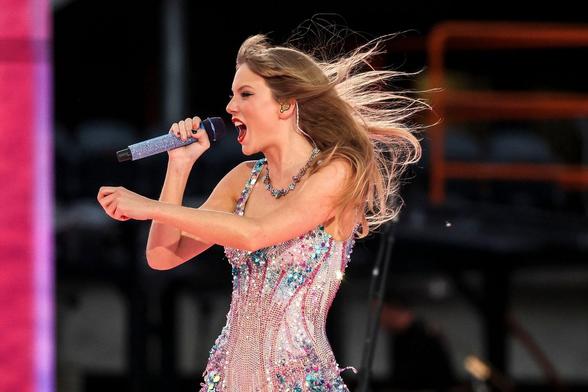
@aram I'm not into any sort of fandom, but I could furnish every current or would-be Swiftie I know with the entire discography of artist in the cover photo of that article — the richest performing artist in history — with negligible effort, using one long-ish shell command. Scraping the audio from YouTube isn't even hard. Yet not one of them would ever consider it.

People have always paid for music because they want to; now, people only pay for music because they want to. People pirate music because they can't afford it — so they wouldn't have bought it anyway, so no one lost anything — and then they end up paying for it, after they already have it, when they can. Literally every fan I know of any musician bought in their 20s and 30s every album and song they pirated in their teens and listened to more than once.

It was always and only every about control.

@deFractal @aram Exactly. Besides, the elimination of physical formats is also about that, not only profitability. There is an intersection of rising rents/house prices and reduced spaces at home where you can fit physical formats, but any subscription or license-to-listen model is invariably linked to that. Besides, any big numbers without binning or cohorts, make me extremely suspicious, because I cannot believe that in our turbocapitalist world "this tide floats all boats" in the same way.
@Illuminatus @deFractal The rising tide has not floated all boats! According to all available economic data, the superstar music economy is even more inequitable now than it was in the CD/FM era.
@aram @Illuminatus Yeah, the best nest step to solving that is probably to make it much easier for musicians to sell to listeners directly.