Waymo (@Waymo) on X

Our new safety data is in 📈 Over 170M miles through Dec 2025, the Waymo Driver was involved in 13x fewer serious injury or worse crashes than human drivers in those same cities. At our current scale, that means preventing a serious injury crash every 8 days—a real, positive

X (formerly Twitter)
Living in SF (and dad of a toddler), this seems like a no-brainer. I can't wait for fewer human drivers.

Anecdotally, both from riding in them and walking/driving next to/around them, this feels obvious. They never get distracted. Sure, they sometimes make mistakes, but the mistakes are never "I didn't see that". They see better than humans in all cases (where they operate). They react faster than humans.

The one case where they hit a child, it was because the child jumped in front of the car. And they showed that they hit the child at a lower speed than a human would have because of the reaction time.

I would rather be in an area where only Waymo's are allowed than an area where they are banned.

Waymo saved my life in LA.

When I visited LA, I rode in a Waymo going the speed limit in the right lane on a very busy street. The Waymo approached an intersection where it had the right of way, when suddenly a car ignored its stop sign and drove into the road.

In less than a second, the Waymo moved into the left lane and kept going. I didn't even realize what was happening until after it was over.

Most human drivers would've t-boned the car at 50+ km/h. Maybe they would've braked and reduced the impact, which would be the right move. A human swerving probably would've overshot into oncoming traffic. Only a robot could've safely swerved into another lane and avoid the crash entirely.

Unfortunately, the Waymo only supported Spotify and did not work with my YouTube Music subscription, so I was listening to an advertisement at the time of my near-death experience. 4.5 stars overall.

> Unfortunately, the Waymo only supported Spotify and did not work with my YouTube Music subscription, so I was listening to an advertisement at the time of my near-death experience. 4.5 stars overall.

This detail sent me, it's crazy that we can pay $25 to have a life saving robot take us across the city yet Spotify is going to blast ads at us the whole time for the sake of making an extra $0.18 (yes that's the actual number) per hour of listening time.

That's around 44.64 (0.18831) per month, no wonder ads are preferrable to companies over subscriptions! That's actually a lot for people that listen to music all day every day at work.

Google was famously really resistant to ads at first. They wanted to do a subscription service of some kind, but honestly ads just brought in so much more revenue even back then that it was a nigh-inevitable decision. It produces a crazy amount of economy.

I still loathe ads though.

Imagine your last thing in your mind being an ad about mongoDB.
I actually find those amusing because they just make me remember the 'web scale' meme.
It's kind of wild how you have so many ads targeted at devs in SF.
It’s like all the ads at airports clearly aimed at C-level execs.
And those in Brussels are all by American giants that want EU bureaucrats to know they take privacy seriously.
They know their market. :)
Thanks for that thought. Horrible.

> it's crazy that we can pay $25 to have a life saving robot take us across the city yet Spotify is going to blast ads at us the whole time for the sake of making an extra $0.18 (yes that's the actual number) per hour of listening time.

Oh, the self driving car business will get there, believe me. This is just the first iteration. Designed to get everybody on board with the idea.

I wonder if Waymo gets a cut. I also wonder if riding in a Waymo at the time signals that you're in a demographic that can afford a Waymo and thus get more expensive ads.

> I was listening to an advertisement at the time of my near-death experience.

You'll probably never forget that advertisement, which is an exciting business opportunity for Waymo.

They could partner with Spotify and other media content partners so that the Waymo can generate an adrenaline-rush near crash experience when a premium advertiser's ad is playing. /s (hopefully)

How ironic that an Alphabet company, Waymo, only works with a competitor streaming music service, Spotify, and not their own, YouTube Music. I guess that shows how separate they are.
In January YouTube music worked fine when I took Waymo in Menlo Park.
This was in September, so I'm happy to see the change!
That's good news, if I can't use the Youtube Music I've paid for in the Waymo then I'm not going to put up with Spotify Ads instead, better to sit in silence (or use my headphones and my own music)
Can you not steam arbitrary audio to it from your phone?
I think it's also a privacy thing; you have to go into the Waymo app and “connect” your YouTube Music account (even though both have the same @gmail.com address), because otherwise the terms of service of one do not allow sharing data with the other without user consent. (Contrary to popular perception Google is very finicky about privacy, at least privacy as defined as conforming to the terms of service.)
Couldn't it just be a Bluetooth audio device? That way you could play anything you want, be it from YouTube, Spotify or your own music collection.
We do support YouTube Music and actually supported that before Spotify. But we only do ad-supported on Spotify and iHeartRadio (also paid Spotify).

It looks like YouTube Music was only added in October? I took the ride in September.

https://support.google.com/waymo/answer/16623742?hl=en

How about some games to pass the time? Make some exclusives so I look forwards to a 20 minute cross-town drive!
why does the car need games? Just use your phone/tablet/laptop
Because those are the same games I have available while not in a Waymo and I can play them anytime/anywhere. By having Waymo exclusive games that save state between rides that aren't available outside the Waymo, it builds the "only in Waymo" excitement.
I hope you are misremembering. Swerving is most often the wrong choice, and I would be disappointed if Waymo were opting for that. By far the best option is to panic stop. Human or robot, physics is a harsh mistress and swerving is more likely to make you lose control and end up in a much more unforgiving wreck.
This depends a huge amount on car, driver and situation. It was the right advice for a learner driver in the 90s with no stability control, no experience and no side airbags, because if you’re going to hit something, hitting it front on is the least risky way. I’m not convinced it’s the right advice for a competent driver in a modern vehicle.

It is still standard advice today, as far as I know. Tires are better, stability control is better, but all else being equal you are still much more dynamically stable and have a lot more friction with the road when the car is stopping in a straight line than when swerving.

Also, in the case of someone running a stop sign, it is far from a sure bet they are going to hit their brakes at all, so by swerving you increase the odds that you will still hit them, but now it will be while you have exhausted all your adhesion on lateral control. So now instead of a front end collision with all the benefits of airbags and crumple zones, you are at a significant risk of rolling the car or spinning off the road and hitting something immovable with a part of your car lacking crumple zones.

The common mistake is people swerve and brake, which is a terrible combination - you should accelerate through a sudden manoeuvre, as it maintains control through it, much as you should accelerate through corners in general.
Thanks! Now I know why the Waymo didn't slow down.
Wunibald Kamm begs to differ. For his circle, it doesn't matter if the additional force that causes the friction to be insufficient is forward or backwards on top of the side force. In critical situations either use your friction for lateral xor longitudinal action, never both at the same time. Brake hard, but then sail through the curve. You want that vector to move along the circle and never leave it. As that is very difficult for an untrained driver, better switch hard between both modes.

True if we all drove unicycles - but in the real world, tyre wear is uneven, brake wear is uneven, loading is uneven, the surface is uneven, and those differential forces are what modern ABS seeks to control.

The key difference between braking and accelerating is that in the former case, independent, potentially differentially worn brakes, apply force unevenly, making the chance of a loss of traction on one or more wheels higher. With acceleration, that force is applied through a differential, meaning it will be far more likely to be appropriately distributed.

If you want to decelerate while swerving it can be done, but it should be done through engine braking - and the tricky bit there is matching revs as you drop the clutch back in, otherwise you have too much retarding force and overcome the coefficient of friction, resulting in a skid.

Easier for those of us who grew up with double de-clutching and no synchromeshes, but when you’re in a critical situation, it’s still an awful lot easier to apply acceleration.

What about other drivers in that lane? It would have to be 100% sure that any other drivers near it would have enough time to react as well.

Absolutely. I was recently driving on a motorway in Portugal when a boulder (giant chunk of granite, 10+ tonnes) fell off the back of a truck - right in front of us, in a heavily laden (7 pax and luggage) car. Immediate massive cloud of dust, I checked my blind spot, veered across two lanes, and continued our journey, unscathed. I looked in the rear view, to see the car behind us jump on the brakes instead of evading. They caught the boulder.

Nobody killed, according to the news, but several taken to hospital in critical condition.

Oh, I say unscathed but our tyre exploded the next day, as apparently we caught a fragment, and again, that’s not a “slam on the brakes” moment, but rather “trundle to a stop on the shoulder and walk to the conveniently nearby tyre shop”.

In theory, it depends. In practice, slamming on your brakes is the correct call 99% of the time. To a large extent that is because of the "competent driver" part. I'd expect 80%+ of drivers to consider themselves just that, whereas the truth is of course the opposite.

So, the correct advice is to say "brake, don't swerve", so that drivers internalize that their first thought and reaction in any emergency should be to brake. Teach them to actually brake—fully press on the pedal—while you're at it.

A slightly more nuanced advice would be "brake first, swerve as needed as a follow-up".

But I would never in good conscience be able to give anyone advice to swerve instead of braking.

It wasn't possible to stop at the speed the Waymo was moving at.

The Waymo didn't have the stop sign, the other driver did, at a three way intersection.

The other driver decided to suddenly enter the intersection, when the Waymo was like 5-10 meters away. This was after having stopped at the stop sign.

Either they weren't looking or intentionally trying to cause an accident. Swerving prevented the Waymo from crashing at 40 km/h into the driver's door.

For a human this advice is true. But what if a computer can near-instantly calculate a perfect swerve within the performance envelope of the car and driving conditions?

> swerving is more likely to make you lose control

Even if you're not a panicky human but a optimally regulated control system?

The optimally regulated system doesn't know the road conditions that well. When the road surface is more slippery, it has the most profound effect on lateral friction, way more than braking.
The Waymo driver can measure the speed and the acceleration of the offending car and calculate, within at most tens of ms, its range of likely future trajectories. And it can calculate its own likely trajectories under maximum braking. And it can track exactly where all obstacles are that would matter if it swerves. All at once. And it can execute that emergency lane change with the control input that is least likely to cause a loss of control and most likely to successfully avoid the other car. It even has processing power to spare to keep playing that Spotify ad!

> The optimally regulated system doesn't know the road conditions that well.

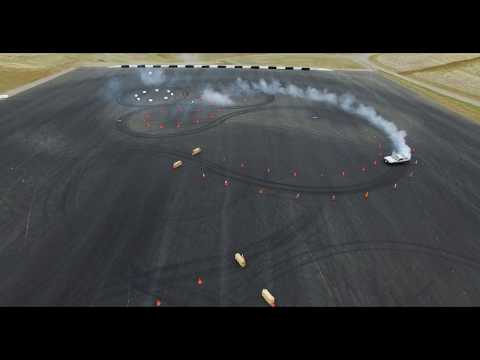
I'd like to introduce you to what autonomous cars were already able to do in 2018: https://www.youtube.com/watch?v=khX0UCqcR3M

MARTYKhana - Aerial View Uncut Footage

YouTube

Thankfully they've now shipped their own product, YouTube Music.

And Google Pay, imagine my surprise back in 2021 when I signed up for Waymo and realized I had to manually type in my credit card. No Google Pay??? C'mon y'all, you're Alphabet!

Google only hires the best of the best.
Next thing you know, they're going to add Alexa support before Assistant/Gemini. The PMs at Alphabet are famously incompetent. Another example from the archives: Google wrote the original official Twitter app for Android instead of letting Twitter do it themselves. It wasn't to help the Android platform because multiple third party Twitter apps for Android already existed.

> Only a robot could've safely swerved into another lane and avoid the crash entirely.

Do you drive a lot? I feel like humans take evasive actions like this all the time.

Some do and some more successful than others.

Yeah I have done similar evasive maneuvers a bunch of times. Also people run stop signs constantly, a competent defensively driving human may have just not started driving forward yet when they saw the other car driving towards the stop sign with some speed. I’m not sure of the exact timing in the story but I’ve waited at a stop sign when I saw another car driving towards the intersection many, many times, and a small percent of the time they don’t stop.

Which isn’t to say that the average driver wouldn’t have hit it, it’s just not obviously superhuman.

In this case, the other car didn't run the stop sign.

It waited at the stop sign like it was making a turn, then suddenly entered the intersection when the Waymo was 5-10 meters away, despite not having the right of way.

Maybe they were trying to commit suicide-by-Waymo?

I'd love to cycle more outdoors, but I'm always wary of the risks. How cool would it be if you could hire a waymo as a "team car" and have it follow you around? It could also carry extra equipment...and act as a ride home in case of emergencies.
Is this an independent study?
I've been observing their behavior in Atlanta for about the past year. Our roads here are fairly curvy, hilly, and lacking of expected markings, yet I haven't seen a driverless Waymo vehicle make a single odd move. One thing that brought a smile to my face was when I came to a 4-way stop at the same time as a Waymo vehicle at night & I flash my brights to tell the other vehicle to go ahead (southern hospitality) and I see the Waymo immediately begin its course through the intersection. I was so jolted that I began to tail it in order to pull up next to it to see if there was a human behind the wheel. Watching it drive down this slowly descending hilly road with intermittent speed humps and cars parked alongside the main right lane gave me a close up view of its slightly curving trajectory and braking behavior with regard to the humps. My thought on human or not was inconclusive until we reached a red light, and as I shot my eyes over and saw an empty driver seat, I smiled widely knowing that the software responds to brights flashed at 4-way stops (please don't tell me it doesn't and it just saw me indecisively not initiate at the stop). Thanks for reading