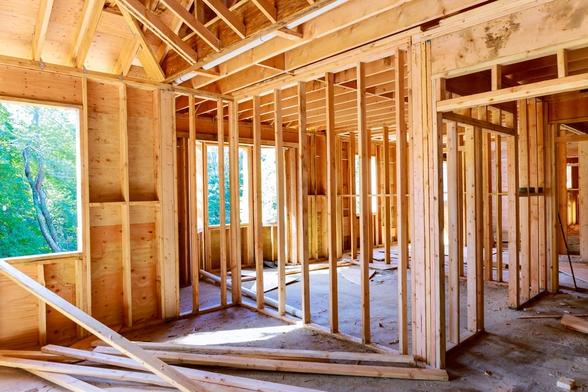
Austin’s Surge of New Housing Construction Drove Down Rents

After decades of explosive growth, Austin, Texas, in the 2010s was a victim of its own success. Lured by high-tech jobs and the city’s hip reputation, too many people were competing for too few homes. From 2010 to 2019, rents in Austin increased nearly 93%—more than in any other major American city. And home sale prices increased 82%, more than in any other metro area in Texas.

Its wild how the solution to housing costs is really just:

Build more housing. Keep law and order.

No it doesn’t need to be “affordable”. Yes rent control is a terrible idea.

Just build more housing.

Note: that the US already has plenty of housing and housing costs basically go up in areas of low crime relative to economic opportunity. If you build housing, but allow crime to rise, you have wasted everybody’s time.

New construction has already decelerated in Austin due to falling prices, which compresses already-near-zero margin on real estate development.

So yes, it really is "just build more housing." The problem is: why would you build more housing as prices fall?

Because home builders don't make money by buying and selling houses, they make money by building them and selling them.
This 1000x. Folks don’t get that the primary market != secondary market. Same as pre-IPO stock holder != IPO time buyer.

And... how is this relevant?

I'm not sure what you're trying to imply here. You should spell it out explicitly.

The difference is between buying and asset and producing an asset. Even if RAM costs are falling, it can still be profitable to produce more RAM, as long as the costs are far enough below the eventual sales price.

It's entirely different if you're buying the housing already built; there's no productive activity, you're just a rentier and do not benefit at all from falling housing prices.

The differences in interests between an asset holder and a productive builder are night and day.

> it can still be profitable to produce more RAM, as long as the costs are far enough below the eventual sales price.

Right... my point is that the costs are not far below the eventual sales price. That's why construction is slowing down.

And as mentioned several other times, it's actually not as simple as cost > sale price. It's margin > margin of alternative investments of similar scale and risk profile.

It was not clear that it was your point at all! Yes of course, gotta get your return on capital invested or the money goes elsewhere, probably into a REIT that invests in the existing assets and drives up prices even further. Because the demand for housing goes somewhere: either existing owners profit or the people building and alleviating the shortage profit.

Every single municipality in the US I'm familiar with has done everything they can to make it expensive to build and try to remove any profit margin from building. Which leads to capital moving towards piggybacking on the rentierism of the average homeowner, the people who control the policies that make it unaffordable to build.

How do you interpret "which compresses already-near-zero margin on real estate development" if not "the costs are already near the sale price?"

Not all new houses sell. Some become shadow inventory, some take 5+ years to sell. If you drive around new developments you can measure the fraction.

IIRC, Mountain House (near Tracy, CA) in the 2008-2010 crash was an example of a large new development that did not initially sell and was in serious danger of going zombie, and not having the new schools that had been promised to people moving in.

Dr Horton is the largest builder in the US. In q3 2025 they had a 21.8% gross margin.
As someone who is not versed in real estate, I don't see why your comment and parent couldn't both be true. Is Dr Horton building homes in Austin? Are the margins in Austin pulling down their average margin? That could explain high profit while dissuading new construction in Austin.
*I don't know the answers to either of these questions, but of you do, that could provide some "proof" for either side of the argument, depending on what the answers are.

> Is Dr Horton building homes in Austin?

Yes, a ton.

https://www.drhorton.com/texas/austin

> That could explain high profit while dissuading new construction in Austin.

Given they're still building a ton in Austin, there doesn't seem to be a dissuasion for building there. I do not have any idea about their average margin in the Austin market versus other markets though, but if that was a major decider on whether to build or not the answer is they're still choosing to build.

You can look at new housing starts to see there is indeed a dissuasion to building there. That's literally the very first observation in this thread: construction rates are already falling significantly.

Dropping a bit from being one of the highest rates in the country still puts it at one of the highest rates in the country.

Looking at this data:

https://constructioncoverage.com/research/cities-investing-m...

If housing starts in Austin drop 15% for 2026, as some places are estimating, that puts Austin from 32,294 to 27,453 new homes added. It changes its national rank in this dataset from #6 to...#6.

U.S. Cities Building the Most New Housing [2025 Edition]

Analyzing data from the U.S. Census Bureau and Zillow, researchers identified the U.S. metros and states that are building the most new homes.

Construction Coverage

… why would the relative ranking matter?

Your claim is that falling prices aren’t leading to less development.

That is both logically and empirically false.

The observation is simply that supply chases demand. As demand is satisfied, prices go down and supply creation slows down or even stops. It’s befuddling that you’re acting like this doesn’t apply here.

> why would the relative ranking matter?

Trying to compare competitiveness of various markets on where builders are going to invest their money building?

> It's margin > margin of alternative investments of similar scale and risk profile.

Homebuilders want to build homes. They'll build where its profitable for them to build. Lots of markets are facing downturns in new construction, but home builders are still choosing markets like Austin more than tons of other markets.

> Your claim is that falling prices aren’t leading to less development.

I never said such a thing, although I do think you're potentially thinking in too black and white on it. In fact, I think it was quite clear I was talking about comparing the Austin homebuilding market to other markets with my statement "Austin market versus other markets though".

> As demand is satisfied, prices go down and supply creation slows down or even stops

I think we're still far from demand actually being satiated in the Austin area. Its still the 6th most growing metro in the US, even with housing construction dropping an estimated 15% for 2026.

If builders were really heavily dissuaded from building in Austin, if margins were really that terrible compared to the rest of the country, why would it be the 6th largest spot of housing growth in the US? Shouldn't all those builders decide to invest elsewhere?

I agree, margins are probably less than they were or were projected to be compared to just a few years ago. And I agree that's probably one of the biggest drivers of new construction cooling a bit. But the questions I was answering were:

Is Dr Horton building homes in Austin?

Are the margins in Austin pulling down their average margin?

The answer to the first is obvious and easy. The answer to the second is more complicated, but if it was truly dragging down their average margin in any significant way wouldn't they have just stopped and invested in building in the higher margin areas?

Their gross margin is a lagging metric on houses they built 2/3 quarters ago, and applied for development permits ~4 quarters ago.

US homebuilder gross margins have been declining since 2023.

There is a difference but not in the way you think. Producing an asset is just buying other assets and labor. The difference with buying an asset is that a part of the assets you bought for production is illiquid for a term of the production. Generally you can only sell unfinished construction at a huge discount during most of the stages. So producing an asset is as same as buying an asset but with a lockout period, when you cannot sell.

But building cost > sale value is possible.

Or land ends up better value left as suburban house than developing up.

Or they build where sale cost - build cost is maximized. I.e. different city.

Governments need to build more housing. Make it bland so snobs can price discrimnate themselves to buy builders' homes. Why thrifts by the government home for value for money (and quality).

You think the government knows better how to identify land that is profitable than private builders? Why? Or is this one of those opinions based on "is OK for the state to pay for it because there's infinite money for my pet project"?

Because government has a unique pricing advantage, they get additional value from the houses they build in the form of all the positive externalities and property tax revenue. So projects that wouldn't be profitable for private builders might still be worth it to the government. So it should be both.

They're just gonna pay builders a sum anyway so it's not like they need to shoulder the full upfront cost anyway.

Do you have example of another area the government has higher profit margins than private industry? I can't. And if I was going to think a government would build housing, it would be in places that are cheap and I could mass house a bunch of people, not in hip expensive cities which is what people want when they talk about this.

But surely soviet style huge blocks of tiny t0 apartments all stuck together is a dream...

> Do you have example of another area the government has higher profit margins than private industry?

Public transit. Capturing enough money from fares is difficult, maybe impossible, but it's quite profitable if you can capture the value generated by the enabled economic activity and raised property values.

The same really goes for most infrastructure. There's a reason the government operates nearly all the roads. Also the fire departments and police stations

Likely the same for public schools and maybe universities. Having educated folks in your city increases productivity and revenues and incomes.

Yes and that reason is not because they are better at doing it profitably it's because they are commons that are wildly unprofitable to do well. If you let private industry build roads you'd have nice roads in cities and dirt in the rest of the country.

In this case what people want is the reverse. They want the government to build in Austin.

The government should be involved when market forces won't solve an issue, ie no market will make it profitable to send an ambulance to a town 3h away in the mountains. You don't need affordable housing in the center of Austin just because it's trendy though.

Government Pension Fund of Norway - Wikipedia

This is a government literally putting their money in private companies instead of using it themselves (for idk schools or infrastructure for their people instead of giving it to nvidia and tesla). It's the most literal illustration of "private" beats "public" investment. Not sure what point you tried to make.
Isn't the US example: Medicare/Medicaid? It has far less costs (i.e. more of the money spend ends up with patient care) and has a reasonably good reputation?

Because I grew up in the UK and there is a fuckton of government housing from 60s and 70s. It is ugly but it is housing people.

Government doesn't need to make a profit due to taxation.

[flagged]

> like the fine example of Grenfell tower

The Grenfell tower fire was caused by a renovation intended to improve thermal insulation.

The renovation project used an external thermal insulation system that failed to meet both the manufacturer's recommendation and building regulation requirements. The particular system was actually banned in the UK while it was installed.

Tell me why you believe this has anything to do with public housing.

Please don't introduce an isolated tragedy to engage in ideological battle.

Comments should get more thoughtful and substantive, not less, as a topic gets more divisive.

https://news.ycombinator.com/newsguidelines.html

Hacker News Guidelines

Hello https://cep.lse.ac.uk/_new/publications/abstract.asp?index=1...

UK public housing is widely known for being shit. Unsafe, puts all the poor people together in a block. There's bunch of crime, and your kids will be likely to stay stuck there or go to jail due to bad influences.

Social housing should be sprinkled around it has been found. So nice example of what I was saying.

Gangs of London and public housing

Novel spatial data on London street gangs between 1990 and 2015 are combined with local housing characteristics to produce a newly constructed data source that shows how social housing and its architectural design relates to gang presence and neighbourhood crime. High-rise public housing estates built in the post-World War II era are much more likely to host gangs than areas without social housing. To address concerns that social housing was built in already high-crime areas, localised high-rise construction is shown to be predicted from spatial patterns of WWII bomb damage that occurred in the 1940-41 Blitz. Bomb-induced high-rise construction significantly raises gang presence and criminality, with there being especially high juvenile crime rates in gang areas.

CEP

I would rather have more housing than less though. Government can build it at scale without worrying about profit.

And privately built appartment blocks are awful. One cracked in Sydney had to be evacuated. Concrete cancer and water ingress issues. It is concrete enshittification.

The question is not if, but who and how.

It's not necessarily prices falling here but the profitability of [demand] at [price]. Like if prices fall 10% but demand rises 20%, you would want to build more housing.

This is the beauty of the free market because it guarantees three things:

[1] Real estate is generally a good investment and will hold value or appreciate in the long term, because supply will adjust to demand shocks to rescue values

[2] If people want to live somewhere, houses will be built for them to live there

[3] Real estate developers and construction are solid, safe businesses with great unit economics because building may decrease prices, but may still increase demand

It's when you constrain and restrict a market that players have to adjust and then you get crazy scenarios

> Like if prices fall 10% but demand rises 20%

Not as a developer you wouldn't...

You already have razor thin margins. Prices going down 10% means you cannot get financing for your project.

Holding real estate is generally a good investment. Developing real estate actually is not.

> Real estate developers and construction are solid, safe businesses with great unit economics

No they are not lol

Can you define razor thin? Grocery stores have very small margins, as little as 1%.

Homebuilders make at least an order of magnitude more on a very expensive item.

Grocery stores don't require millions to billions of dollars of capital to execute each new transaction.

So it's not the margin itself but actually the spread between the margin and what investors could get by investing in alternatives. Real estate investment opportunities are often measured by their advantage (measured in fractions of a percentage, .2% advantage being considered solid) over 10 Year Treasuries or S&P 500 returns.

Real estate developers do often actually lose money, but the more salient boundary condition is whether they can get financing for a project, where they have to clear a bar well above the "just make >$0" bar.

> Grocery stores don't require millions to billions of dollars of capital to execute each new transaction.

Neither do homebuilders, because homes don't cost millions to billions to build (high end custom homes can cost millions, but that's not what we're talking about here).

> So it's not the margin itself but actually the spread between the margin and what investors could get by investing in alternatives. Real estate investment opportunities are often measured by their advantage (measured in fractions of a percentage, .2% advantage being considered solid) over 10 Year Treasuries or S&P 500 returns.

Okay? So they have an advantage over alternatives, which means higher profits. And a .2% advantage is not considered solid, or meaningful in any way without a lot of missing context.

> Real estate developers do often actually lose money, but the more salient boundary condition is whether they can get financing for a project, where they have to clear a bar well above the "just make >$0" bar.

Many companies often lose money, due to incompetence or bad luck. The industry as a whole has very healthy margins.

Even a small (~10 home) development, of which we need hundreds of thousands, will require millions in financing. And as the development gets smaller and requires less financing, the economics get a bit worse due to ~fixed cost of land acquisition, development, and infrastructure/utilities.

> Many companies often lose money, due to incompetence or bad luck

One of those signs of incompetence or bad luck is building a bunch of new supply into a market with falling prices, in which case you will find yourself not among those with healthy margins ;)

> Grocery stores have very small margins, as little as 1%.

Looking at the Kroger 2024 Annual report shows that they have 22.3% gross margin . they pay dividends, had a stock buy back, etc so its entirely possible that they had a very low margin but gross margin seems to be similar to a home builder.

Sales $ 147,123

Merchandise costs $113,720

Rent, Depreciation, Amortization $655

Gross profit $32,748

for a gross margin of 32.7/147 = 22%

The net margin of around 1.5% seems more relevant: the gross margin is just the revenue minus the cost of good sold plus cost of transportation. The net margin is the money you have left after paying things like Rent, employee wages, electricity, taxes, interest on debt.

If you live in a magical fairy world where supply and demand are fixed, sure. In the real world, prices going down 10% leads to a surge in demand, and so you can fill more of your units. This leads to either equal or increased revenue, for the same construction (flat cost), which actually yields higher margins. This is why developers are usually concerned with occupancy rates, and prices are more a concern for homeowners.

There are only really 3 scenarios where prices are low and demand is low:

[1] There is a dramatic surplus of supply, in which case if a developer is trying to build they've not done research and probably should not get financing

[2] There is some other factor (usually high crime) in which case again, developer should do their research, and the market is operating fine

[3] You are developing super early and operating within incentives offered by the city, usually tax abatements, which drive down the carrying cost and make it a better investment.

Also important to note that in scenario [3] a smart developer will slowly release inventory to restrict supply to meet demand, and as demand grows, release more inventory at the newly raised price, continuing to do so as long as the tax abatements advantage the strategy. This is common in successfully developed areas e.g. Jersey City, and is fine as long as broad scale collusion doesn't occur

> [1] Real estate is generally a good investment and will hold value or appreciate in the long term, because supply will adjust to demand shocks to rescue values

Real estate is NOT supposed to be a good "investment" and only became so because the government started propping it up with bank bankstops, zoning, NIMBY, redlining, etc. If your pricing is working correctly, real-estate should be close to zero-sum.

Austin, in particular, had several nasty bust cycles where real estate prices tanked after overbuilding which is precisely what kept the cost of living under control. Alas, that is a thing of the past after 2008 when everybody realized that the federal government will backstop the banks "Real estate number must always go up! Brrrrr!"

For nearly every homebuyer, a home is the largest purchase they will ever make and the bulk of their net worth. It needs to be a good long term investment that at least reasonably paces with inflation, otherwise you are losing money by buying a home and everyone has to rent and then you have feudalism with extra steps.

The good news is this is totally fine with keeping cost of living under control and overbuilding, because prices will go back up over time. Most people aren't going to own their home until the 30 year mark so it really is a much, much longer term investment than anything like overbuilding or other factors can reasonably affect.

The problem is really that people started seeing 2x-10x returns on homes and started treating that like the norm. That is not a 'good investment' that is a 'money printer,' and in most cases the government does not want to safeguard that behavior, but it's hard not to when those same people panic like crazy if their home only goes up 2% in value in a year or, god forbid, decreases in value for a year.

There is really no good solution to that mentality, if there really was one then Wall Street would have uncovered it ages ago to get more people into long term ETFs.

> a home is the largest purchase they will ever make and the bulk of their net worth

That's bad and a central part of the problem.

I accept that my car is depreciating in value every year I own it, and but I need a car so I buy one. I don't need it to be a good long term investment, despite it being a major purchase.

The entire mindset of treating a family's home as being an investment class rival to bonds and equities is a relatively new phenomenon, and one that's clearly been detrimental to many.

> > a home is the largest purchase they will ever make and the bulk of their net worth

> That's bad and a central part of the problem.

Why? Or to ask in a different way, how could it not be?

For nearly all regular working people, there is nothing they will ever buy that costs more in labor and materials than a home. So of course it will be the most expensive purchase most people ever make. How could it not be?

A home costs 10-20x more than a car, you are being incredibly disingenuous by boiling them both down to “major purchase.”

> It needs to be a good long term investment

No, it needs to be roughly zero sum but only over very long timescales. Anything else is a disaster.

If housing is a "good investment", it attracts rampant speculation and concentration of ownership to the capital class. You need regular wipeouts to force the speculators out of the market (doubly so if they are buying on leverage).

If housing is a "bad investment", people abandon the real estate and you get blight which becomes a self-perpetuating cycle downward.

Things need to be kept balanced in housing so that people can use it to be a place to live. We are currently in the middle of seeing the dysfunction that happens when being "shelter" is overshadowed by being an "investment".

It seems to me that the market will select for urban sprawl though which is a negative for society but has the highest margin. E.g. Houston suburbs, miles and miles of cheap to fab single family homes that turn it into a suburban hell scape where you have to drive everywhere.

I don't think the free market is giving the promises you say it is - supply isn't elastic for real estate if nobody's building because there's no margins. Demand can be anywhere really.

I like to look to Tokyo for an example. Small lots, extremely predictable regulations (that are still strict enough to ensure a safe living situation), fast approvals, mean it's much faster and easier to throw up an 8-10 story apartment than say downtown Austin, and so even today they keep doing it despite land in Tokyo being very expensive. And, no sprawl.

Why are you accrediting Houston to the free market rather than Tokyo?

Houston doesn't have zoning laws, Tokyo does.

Generally speaking, freer markets seem to lead to worse outcomes overall.

Have you seen Tokyo?
I've lived in Tokyo and Houston. Tokyo is infinitely more livable and the housing is still relatively affordable. In Houston even if you can get a new place it'll be clapboard garbage that's a one and a half hour drive from work.
Average home price in Tokyo is 1.5x that of Houston. Average wage in Houston is 1.5x that of Tokyo. So the data doesn't support your post unless you really really love sushi and arcades.

They can throw up 8-10 story apartments in Tokyo despite land being very expensive because they tear them down and rebuild them after 20-30 years. Also, Tokyo outside of a few areas isn't that tall, it is definitely dense, but 3-4 story tall building dense (those homes are also torn down and built anew ever 20-30 years, so construction buzzes in Tokyo).

It would be better if you considered new actual living capacity in Tokyo rather than just new constructions.

I believe the market in the US selects for urban sprawl because it's usually subsidized by the dense urban core. Suburban areas often don't generate enough tax revenue to support their own infrastructure and services.
There is the possibility that the government builds housing, since the government doesn't have to care about direct profits and can include the overall economic effects of affordable housing in its calculations. We don't expect much direct profits from roads either, but we keep building more and more of them.
That is a good idea that requires careful attention to make sure it has near-perfect execution. Because we do that, and they are called 'the projects'.
I'm under the impression that more supply=lower rents, even if execution is not perfect, but I'm not an economist.