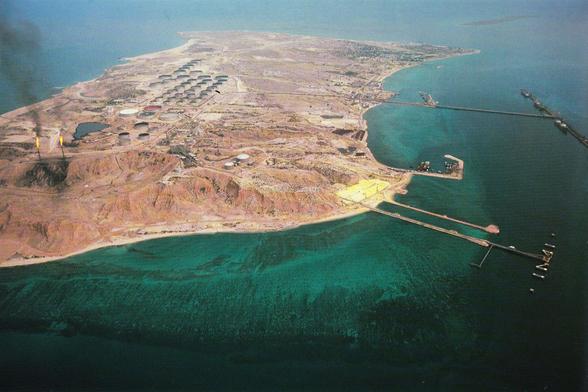
Learning about Kharg Island in the north of the Persian Gulf, 25–28 kilometres (16–17 miles) off the coast of Iran.

It’s only “around 8 kilometres (5 miles) long and 4–5 kilometres (2.5–3 miles) wide” but has provided “a sea port for the export of up to 90% of Iran’s oil products, as well as supplying storage for up to 30 million barrels (5 million cubic metres) of oil.”
https://en.wikipedia.org/wiki/Kharg_Island

…Talking of oil storage in the Gulf, here follows a transcript centred on the vulnerability of Iraq’s oil fields (link at the end):

“What happens when the bridge between the underground stocks [of oil] and the global market flow gets severed? That bridge is of course storage capacity.

JP Morgan had an analysis last week [early March] showing that many Middle Eastern oil producers are approaching a full storage situation…

…“Under current conditions [early March], Kuwait and the United Arab Emirates are already reported to be shutting down production, and Iraq may be closed.

When storage is full, no matter the mechanism, the entire system has to rapidly reduce production. That’s what happened in March, 2020 when oil prices turned negative, and here’s where this could get between interesting and catastrophic in a way that’s not getting much attention…

…“And I want to be clear, this is speculative, but I do think it’s plausible after conversations I [Nate Hagens] have had.

Iraq’s major oil fields are old. Many of them have been on continuous water injection for decades, a process where you pump water into the reservoir to maintain pressure and push oil towards the production wells.

And these are not technologies you can simply turn off and turn back on…

…“When you shut in a field like [Iraq’s], the pressure gradients drop and the oil water context shifts. Then gas dissolved in the oil can come out of the solution and potentially reduce the permeability of the rock itself.

And the concern from petroleum engineers I’ve talked with is shutting in a well of that type, that’s been on large scale water injection could cause reservoir damage that might be difficult or even impossible to fix in the future…

…“You might get some of that production back eventually, after months and significant investment.

In some cases you might not get that production back at all, and the time factor becomes extremely relevant. So Iraq, especially Iraq, may face two choices if the Strait of Hormuz stays closed.

Option one is a shut in, with the risk of reservoir damage and a slow expensive restart.

And I’ve heard [10 March] that flaring has stopped, in Iraq, suggesting that may be an option that’s unfolding…

…“And option two is emergency disposal of some type of dumping in the desert or into the Persian Gulf – burning crude in the country or anything that keeps pressures and flows from collapsing.

Each of those options is ugly with its own second and third order effects. So there’s an uncomfortable system logic here…

…“The shorter Iraq expects the Strait closure to last, the more rational the dump option may look because if Hormuz reopens in two or three weeks, dumping oil – as catastrophic as it would be ecologically and otherwise – might preserve the reservoirs, allowing production to resume quickly.

But shutting in by contrast risks permanent damage that matters even if the crisis is short…

…“I [Nate Hagens] am not an expert on this, but the lack of storage in a just-in-time oil system designed for continual flow and not interruption is a story that we should be watching.

And it’s not only Iraq, many other oil producers as well.

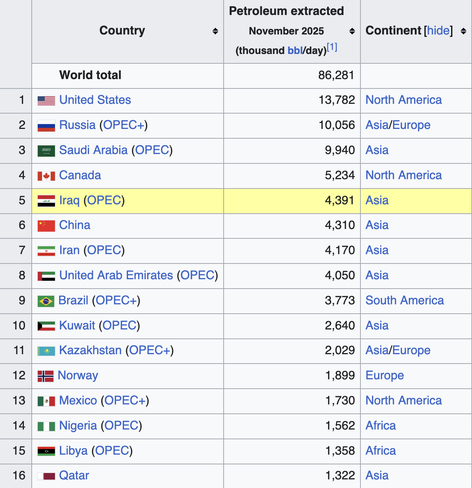
I’m highlighting Iraq because they’re closest to full storage, have old wells, and happen to be the second largest producer in OPEC.”

https://overcast.fm/+BTumXe5m9g

Wide Boundary News: The Iranian War, Rising Gas Prices, and the Single Point Failure | Frankly 130 — The Great Simplification with Nate Hagens

This week’s Frankly is another edition of Nate’s Wide Boundary News series, where he invites listeners to view the constant churn of headlines through a wider-boundary lens. In this installment, Nate addresses the U.S. and Israeli military offensive against Iran and traces the reverberating effects that extend far beyond the conflict itself, starting with what the closure of the Strait of Hormuz means for a civilization that routes a massive share of its physical economy through a single maritime corridor. Nate begins with the core misperception that oil registers as roughly 3% of GDP by cost, when in reality it underpins 100% of economic activity. Building off of that, he outlines a series of second- and third-order effects that rarely appear in headline coverage, including hidden dependencies on sulfur, liquefied natural gas, and nitrogen fertilizer that connect the Strait of Hormuz to mining operations, European energy security, and global food systems. He also explains the stock-and-flow imbalance…

…Me:

I’m reminded of Dick Cheney using George W Bush as a Republican Party puppet to plunder Iraq, and now the Republican Party is fucking the entire world up again. Is Trump really leading this war? Or in this case is he a sick fuck being played by more arch psychopaths?

Either way, the GOP are perhaps one of the most dangerous organisations on Earth

…The post above seems like a good place to append:

“Epstein was likely pumping his victims, including underage girls, with incapacitating drugs to facilitate abuse”

- - -

“You will not change [Trump]. He is who he is. Truth matters little to him. What’s right matters even less, and decency not at all. You can’t trust him to do the right thing. Not for one minute, not for one election, not for the sake of our country. You just can’t. He will not change and you know it.”
https://heathercoxrichardson.substack.com/p/march-18-2026?utm_medium=android&triedRedirect=true

March 18, 2026

I was intending to take tonight off, but there’s big news—I mean, aside from all the other big news—that I want to make sure gets attention.

Letters from an American