 🐀 Ix
🐀 Ix 

 PugJesus
Carthaginian elephant shekel, minted in Sicily, Italy, 215-212 BCE
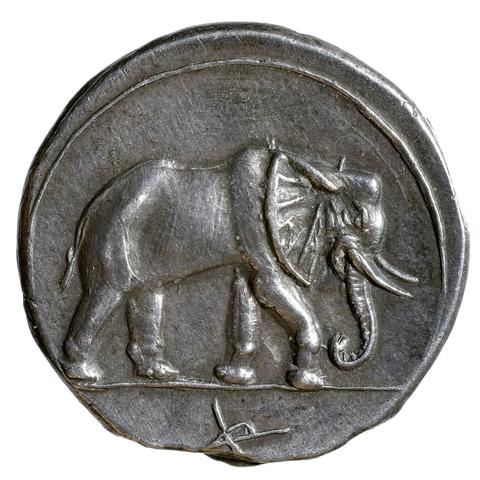
The design looks really badass, specially with the other side:
This is Melqart, a major Phoenician god. Patron deity of Tyre, ruler of the underworld, protector of the [over]world, he who symbolises death and rebirth. Interpretatio graeca associated him with Hercules / Herakles.
By the time this coin was minted, the Second Punic War (218~201 BCE) was just starting. Carthaginians troops advanced here and there, but inconclusively, as the Roman pushback war strong. Sicily was split between Roman (ex-Carthaginian) lands and the Greek kingdom of Syracuse. Syracuse allied itself with Carthage in 215 BCE, under the promise that they’d get the rest of the island after the war was over.
This might look an odd promise, since those lands used to be Carthaginian, but it makes sense: odds are they knew they wouldn’t be able to completely wipe Rome out. If Carthage won the war, at least it would have a strong ally at Rome’s backdoor, as a buffer state; might as well expand elsewhere, right? And if it lost… well, they’d lose those lands anyway. (That’s what happened — by 212 BCE the Roman siege of Syracuse was over, and the city sacked. And by 210 BCE the last non-Roman stronghold in the island was taken over. It was Akragas [modern Agrigento], where this coin was minted.)
In the light of all of that, the coin kind of looks like advertisement for war efforts, doesn’t it? I feel like both pictures in the shekel were carefully chosen, to remind Carthaginians of their iconic elephantry, about their origins as just a Tyrian colony, depicting a god associated with heroism and rebirth in their second war against Rome.
 Lvxferre [he/him]