I'm sure I've said it before, but I think it bears repeating: many of the societal problems that we face, which might superficially be regarded as something that we look to science to solve, are in fact not problems for natural sciences, but problems for social sciences and politics.

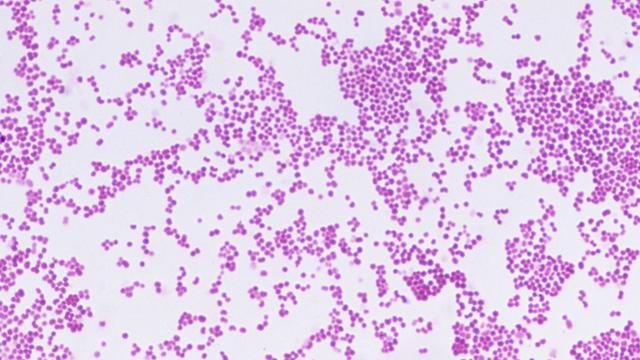
Looking at the horrible #meningitis B outbreak in Kent, the question to ask is not "how can science keep us safe from such things?" Scientists have already given us an effective vaccine against meningitis B.

1/2
The question to ask is "why did politicians decide not to give this vaccine to teenagers and young adults?"

https://news.sky.com/story/kent-meningitis-outbreak-a-cruel-reminder-young-people-are-most-at-risk-13520607

2/2

#Meningitis #MeningitisB #Vaccines

Kent meningitis outbreak a cruel reminder young people are most at risk

Contacts of the cases in Kent are being traced and offered antibiotics, reducing the risk that the current outbreak will grow. But for those made ill, it's horrific.

Sky
@statsguy
Where's the shareholder value in that tho?
@statsguy clearly the thinking was that it was cheaper to give antibiotics to a small cohort and inpatient treatment to a smaller number, than to increase the number of men B vaccines and vaccinate a larger number.
On paper, 1 or 2 deaths is worth the cost; whether it's still worth it, only Streeting can say.
@statsguy arguably, they could have chosen to give it to everyone, but like the COVID-19 vaccines they chose not to for reasons of cost/risk (but mostly cost). Perhaps if healthcare was entirely not-for-profit, globally, such issues would disappear.

Then there's the argument that it's not in the financial interests of the pharmaceutical companies to actually find cures. Expensive palliative medicines are much more profitable.

@dave I'm pretty sure the reason why it's not given to everyone is cost.

But the big problem I have with the way they do the cost effectiveness calculation for vaccines is that they take a narrow healthcare-system-only perspective.

So the cost of having to treat someone in hospital with meningitis would be included, but the cost of having to close a university campus wouldn't be.

And particularly for covid, the crazy thing is that time off work and sickness benefits are not considered

@dave I'm sure that if they took a wider societal perspective in the way they do the calculations then many vaccines that are currently considered not cost effective would suddenly become comfortably cost effective.
@dave Taking the healthcare-system-only perspective makes sense (in an evil kind of way) in the US if you're a health insurance company deciding whether to pay for vaccines. It makes absolutely no sense in the UK context and I have no idea why they do it.
@statsguy 100% agree. Helping people to avoid getting sick in the first place, through vaccinating and maintenance of basic standards of living and healthcare (e.g. dentistry), is a much better approach. We need to have a cradle-to-grave strategy for health, social care and employment that prioritises keeping people happy and healthy.
@statsguy this kind of thinking can be applied to almost every single problem we face. Climate change? Yep. Labour exploitation. Yep. Water pollution? Yep. On and on. Pick a problem and there's a socio-economic-political solution not being looked at or for.

@Talia Absolutely! In fact I think climate change is probably the best example of the phenomenon. The science was figured out donkey's years ago: pumping more CO2 into the atmosphere is going to cook us all. It's really not complicated.

Getting people to act on that knowledge is a whole other thing.

@statsguy so much this. a thousand times, this.

Not just getting people to act though, creating social and physical infrastructures that allow or even push them to action - that's what's needed. Right now, even if you want to do something, everything is stacked against you.

@Talia Totally. As a wise frog once said, it's not easy being green.

I'm currently looking very seriously at trading in my plug-in hybrid car for a fully-fledged EV, and I have discovered that not only is it expensive, but if I'm not careful I'll even get charged a punitive rate of vehicle excise duty.

It is mind boggling that road tax should be cheaper for a petrol vehicle than for an EV.

I'm in the fortunate position that I can afford to buy an EV, but I'm very aware that not everyone can

@Talia And don't get me started on the relative costs of flying vs travelling by train...
@statsguy I was going to mention that but didn't. Clearly we are on the same page.

@statsguy Indeed. I grew up in a family of scientists and academics, at a time when science was highly respected by the general public and SF was huge. I fully expected science to solve many problems.

Only later did I realize that human problems are a much greater impediment, and must be solved through education and philosophy. Science can't help those who refuse to use it. And the democratic republics that most people live in are filled with such people.