
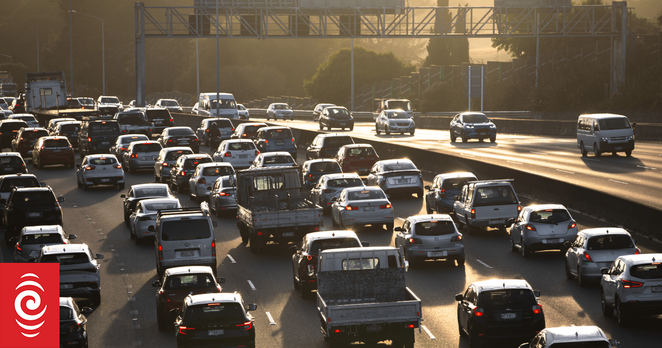
Running some numbers on what people are paying per km for petrol. Smaller vehicles are bad enough, but for this glut of monster trucks & SUVs it is severe. An understandable anxiety out there.

We are car-dependent due to living outside the city, but have an EV, so pay just a few bucks per 100km of electrons. Scrapping that Clean Car Rebate is looking esp silly rn. Let's hope memory and awareness of that is carried into the coming election, holding them to account.
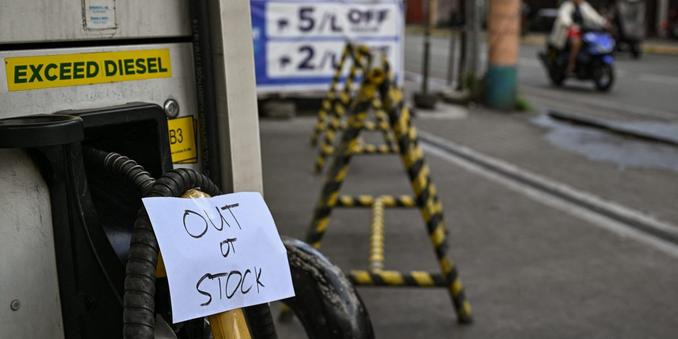
Some South Asian countries are far ahead on the prep here, urging WFH for those that can, to reduce fuel consumption. Spots in Europe too.

"Over the past week, authorities in Vietnam, Pakistan, Thailand and the Philippines issued a series of directives encouraging flexible work, including working from home, 4-day workweeks, and taking the stairs instead of an elevator. Officials in Europe have also urged people to stay home if they are able."

https://fortune.com/2026/03/12/iran-war-reviving-remote-work-fuel-shortages/

The Iran war is reviving remote work across the world — from Denmark to Vietnam

Asia and Europe are dealing with another oil and gas shortage, and are pushing for flexible work policies to save fuel.

Fortune
Cost of driving 15km in Auckland nearly double that of public transport - AT

The cost of driving 15km in or out of our biggest city has surged.

RNZ

@JulianOliver

What percentage of renewables is there in your country?

@CorioPsicologia It fluctuates reasonably wildly due to large dependence on hydro. Due to considerable rainfall recently, energy mix proportion of renewables at all time high:

"The quarterly energy report from the Ministry of Business, Innovation and Employment (MBIE), showed a record-high 96.4 percent of electricity generation coming from renewable sources from October to December 2025."

https://www.rnz.co.nz/news/national/589381/renewable-energy-generation-hits-new-high-gas-at-46-year-low

Other times not near as high, low to mid 80's.

Renewable energy generation hits new high, gas at 46-year low

Abundant rainfall at the country's hydro lakes has led to record levels of renewable energy generation.

RNZ

@JulianOliver

Woah! Your proportion of renewables is incredible!

So the problem with fuel crisis is more for the vehicles, not houses or business.

PD: Spain has 66%:
https://www.ree.es/es/sala-de-prensa/actualidad/nota-de-prensa/2025/03/la-produccion-renovable-crece-en-Espana-un-10-3-por-ciento-2024-alcanza-mayores-registros

La producción renovable crece en España un 10,3% en 2024 y alcanza sus mayores registros

España cerró 2024 con una generación renovable de 148.999 GWh (un 10,3% más que en el año anterior), que suponen el 56,8% del total del mix. Estos datos anuales, que son los mejores registrados por Red Eléctrica hasta la fecha, exhiben el alto grado de avance de la transición ecológica en nuestro país.

Red Eléctrica

@CorioPsicologia That is still high. A lot higher than when I lived in Spain, back in the noughts!

While unrelated to the oil supply crisis specifically, a lot of homes here rely on gas for water heating, & burn wood throughout the Winter. Further, our emissions footprint is still high due to animal agriculture, in particular methane/CH4e. Over 90% of animal products are exported.

PD: just found a site with live updates as to our energy mix https://www.transpower.co.nz/system-operator/live-system-and-market-data/consolidated-live-data

Consolidated live data

All live data and recent notices on one page.

Transpower

@JulianOliver most of those who got the monster trucks and SUVs should have experienced the wild gas prices swings due to the US foreign policy. Maybe get something a bit more fuel efficient if you still need a large car?

Even if in most of the US, a car is indispensable, how can people afford such vehicles even with great gas prices? American car culture is very hard to understand.

@JulianOliver

Been pretty concerned for years about how we don't just have car dependant suburbs baked into our psyches s normal, but increasing nonchalance of living rurally and commuting huge distances. Especially as relatively healthy retirees head for their happy holiday homes with little thought of healthcare services and how utterly inaccessible these will become if they can't drive.

@RedRobyn I agree to a point. In the same breath there are many advantages to reducing population load on cities, esp so far as housing and infrastructure for those dependent on living in or near cities for their livelihoods.

I grew up remote, yet have lived in big cities in several countries and no longer wish to live in a city. Happiest remote. But nor do I depend on being in cities for the work I do, so I free up load on the population centres living outside.

@JulianOliver
Much more a general systemic concern than a strictly personal response. For a lot of people remote is also about a what they can afford issue. Which is a lot to do with distorted property market and low wage economy problems.
@RedRobyn Agree. Rural gentrification is definitely a thing. 'Lifestyle block' development projects forming into gated communities in some cases, and edging out locals. One occasional upside to the trend is seeing previously denuded farmed land regenerated to native bush however.