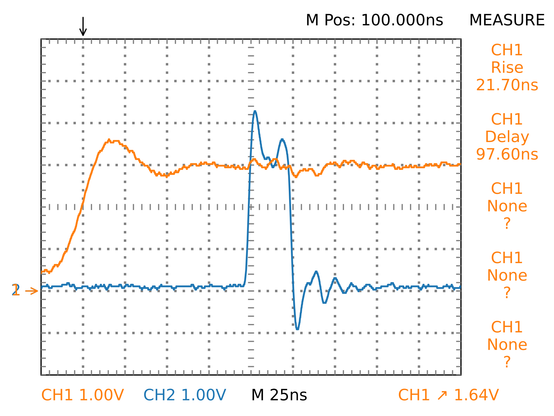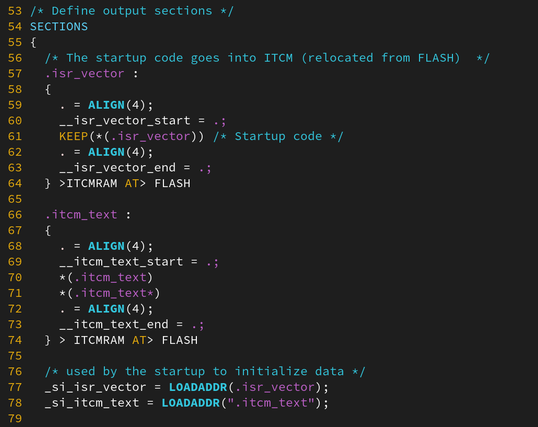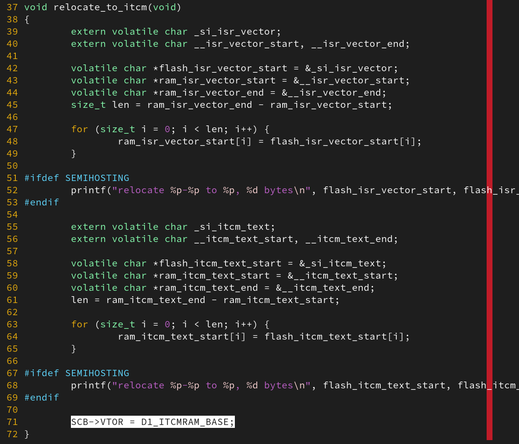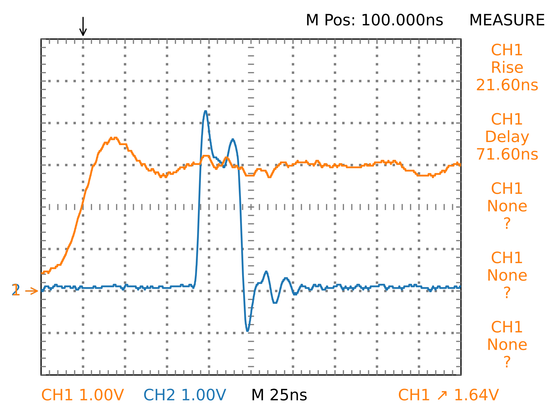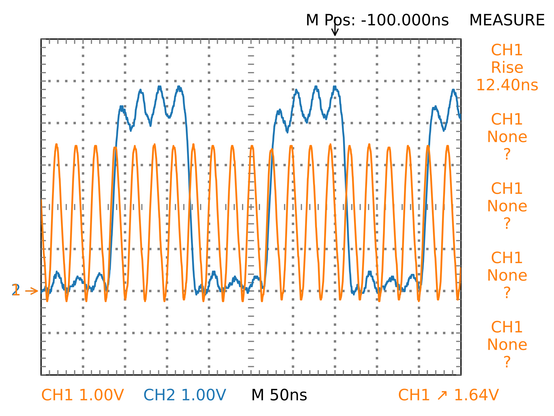
Optimizing IRQ latency on the STM32H743 @ 480 MHz, perhaps for NES ROM emulation... Best result so far: 100 nanoseconds input-to-output latency when the vector table and the IRQ handler are relocated to Tightly-Coupled Memory without making HAL calls. Not bad, but the GPIO controller (several buses away) looks like the real performance killer here. WARNING: buggy code, see correction https://mk.absturztau.be/notes/ajvb448y305b01i4. #electronics #STM32
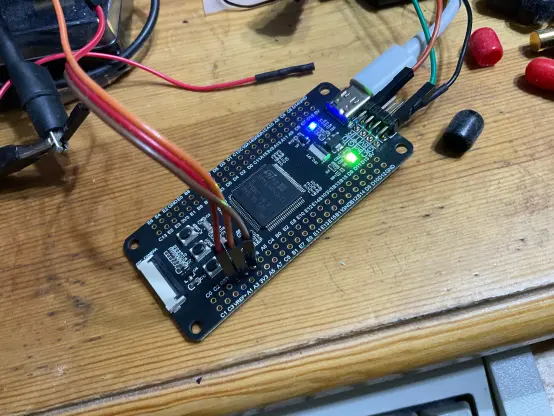
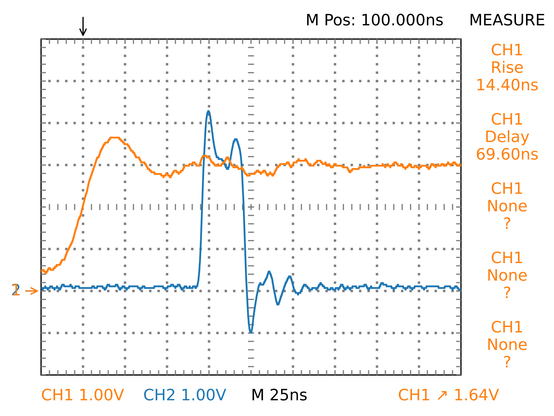
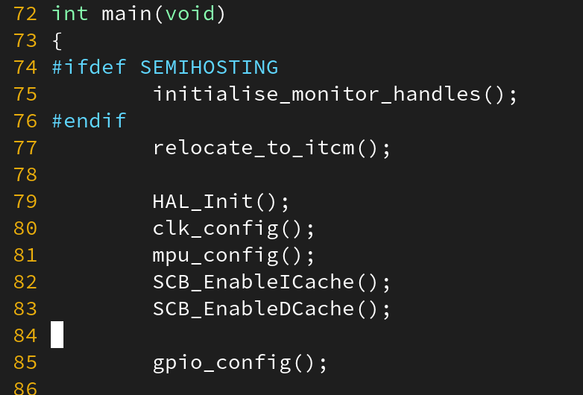
Keep optimizing IRQ latency on the STM32H743 @ 480 MHz. Just enabled i-cache and d-cache, and the IRQ latency dropped from 100 ns to 70 ns. 🚀 But cache shouldn't work like this. So my code is still touching slow memory somewhere. The stack perhaps, which is still in "normal" RAM. The slow Flash perhaps also makes it slower to abort main() if an instruction is stuck in a wait state. Need to check everything carefully... #electronics #STM32
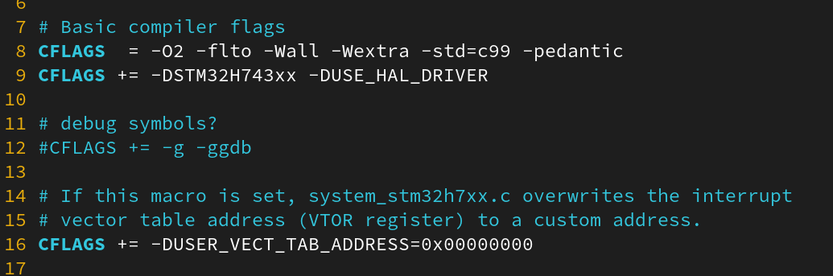
Keep optimizing IRQ latency on the STM32H743 @ 480 MHz. The 70 ns vs. 100 ns overhead mystery solved. I did not correctly relocate the vector table to Tightly-Coupled Memory properly, it was still in Flash. The STM32 HAL macro USER_VECT_TAB_ADDRESS is a flag, not a memory address! In fact, only several hardcoded addresses are available, a real user override is not provided (the name "user" is a lie). Solution: just change VTOR manually, don't trust the startup code. I'm now getting 70-ns IRQ without CPU cache. #electronics #STM32
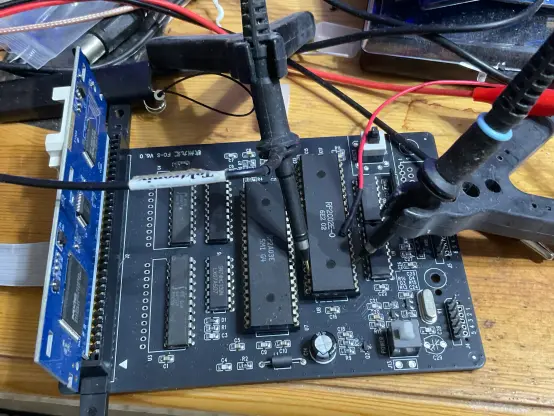
I do not understand how the NES system bus works, even after reading multiple tutorials. Only one way to find out... #electronics #NES #NESdev
@niconiconi boioioioing
@gsuberland @niconiconi well if that ain't a… ringing endorsement for proper bus termination and well-decoupled drivers!
@funkylab @gsuberland Can you do any meaningful signal integrity assessment without a localized high-quality test point? Here, the oscilloscope probe has extremely poor ground connection, at the opposite side of the PCB to the power supply, via the oscilloscope probe from another channel. So I won't make any statement about the PCB's signal integrity.