 Stefano Marinelli
Why I love FreeBSD
A personal reflection on my first encounter with FreeBSD in 2002, how it shaped the way I design and run systems, and why its philosophy, stability, and community still matter to me more than twenty years later.
Why I love FreeBSD
A personal reflection on my first encounter with FreeBSD in 2002, how it shaped the way I design and run systems, and why its philosophy, stability, and community still matter to me more than twenty years later.
For me, FreeBSD is like vinyl.
Under <https://bsd.network/@rubenerd/116226243100921299> @rubenerd I wrote:
"there's no universally-accepted single explanation for the enduring popularity"
It's OK to like it, or love it, and no-one can authoritatively tell you that you're wrong to do so.
I mean, they can tell you that you're wrong, but ultimately: it's about what pleases the listener.
I mean, what pleases the user.
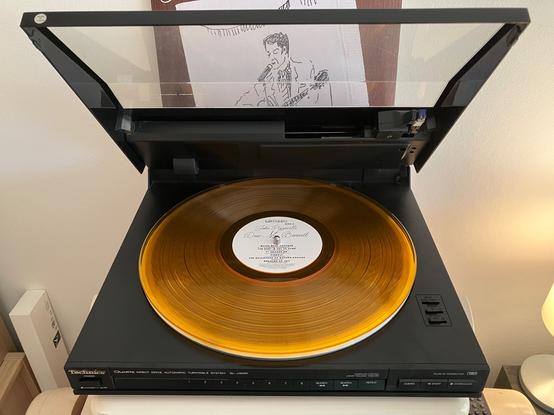
Attached: 1 image Dear Mr Bennett arrived! John Pizzarelli’s first vinyl LP release since 1987 :’) ♡ I love that mailing lists are still a thing. He emailed his fans late last year to preorder. I know some that only announce on Insta, etc.
@stefano I run Linux but it is because I have since the mid 1990s. I know darn well there is a much quicker way to say what makes FreeBSD attractive compared to a GNU/Linux.
It is nothing to do with GNU, in my opinion, except as a matter of taste. Some prefer more Unix-like tools, I prefer the more full-featured GNU tools.
But kernels...
Linux is an absolutely HORRIBLE kernel. It is simply atrocious. And the closely kernel-related infrastructure is even worse and getting worse.
@stefano I ran Slackware at first. It was in those days basically a BSD design with the primitive Linux kernel, still using handmade /dev directories, etc. So that was okay.
Then I ran Gentoo for 20 years. That still resisted a lot of the Linux impulses such as systemd.
Now I am running NixOS. I am perhaps the only person in the world to successfully get a /usr/local working on NixOS. It is LITERALLY THAT BAD. NixOS actually TRIES to make it impossible to set up a /usr/local.
@stefano There is actually at least one person on the NixOS steering committee who claims NixOS is not a Unix-like operating system, and that their job is not to provide me with a Unix-like platform but with a user experience.
(But it turns out you can get a /usr/local working on NixOS by having the init scripts recreate the core of the /usr/local for you based on the latest NixOS generation. The latest libc and such.)
@stefano As an aside: Outside the copyleft world, I do like to avoid LLVM and Clang. They aren’t on my system. The former is shapeshifting bloatware that destroyed the Pure language by changing underneath it. Anything closely associated with Apple and Google is going to be something you cannot rely on, in my opinion. Clang is lacking much of standard C, has no Ada or Fortran, etc.
I don’t trust CUPS to keep working, either. It will more and more be a ‘Mac-compatible-printers spooler’.
@stefano Here is something new for you to be upset about, though, which affects everyone, Linux, BSD, illumos alike. I have been upset about it for over 20 years.
Read ‘man 5 fonts-conf’ or whatever your equivalent is. Read it carefully under ‘FONT MATCHING’. What it says is that a font is not chosen as you wished, but instead RANDOMLY. You are only LUCKY if you get the font you wished.
And if you experiment long enough you will find this is true.
Fontconfig is unfixable and must be scrapped.
The HURD would have been very nice, but I gather Mach was not really suitable for the job. I have run Debian GNU/HURD and it wasn’t even reliable in a virtual machine, but it was nice.
There was a story a little while ago about Linus blowing his top over some people wanting PowerPC code in the kernel. And Linus considered bringing in big-endian code now unreasonable. I was like, ‘HE LETS PEOPLE COMMIT ENDIAN-SENSITIVE CODE INTO THE KERNEL?!’ But of course he does.
My Unix Users club at the time handed us out the first edition FreeBSD CDs that were withdrawn from sale because they still had some AT&T code in them. Those discs weren’t destroyed, they were handed out to people like me. But I never installed it. I was actually still running DOS on an old 286 then.
RE: https://masto.ai/@chemoelectric/116238827313991924
Who knows what code that was?
Presumably not kernel code, but rather library and/or commands code.
For instance, ex/vi was likely based on ed. And perhaps they still had the old nroff instead of groff. These are two examples that are too obviously fixable, however, because plainly good alternatives already existed.
I enjoyed and appreciated reading this post.
"I realized almost immediately that GNU/Linux and FreeBSD were so similar they were completely different."
This right here.
My initial impression with #FreeBSD in 2006 was quite similar. Of course, #Linux back then was a much different beast than what it has evolved (mutated?) into today.
Had I not pursued Linux system administration as a career, I *probably* would have stuck with FreeBSD.
We can make all the technical comparisons between the two OSes all day long but what drove my interest and enthusiasm are (1) the documentation and (2) the community.
@stefano He told me that the GPL was inferior, but to put this in context, we were teenagers in the late 1990s. We were looking for the big winner and the big loser, no nuance.
I love Linux as well as BSDs. In the past I have made experimental bare-metal installs of OpenBSD, FreeBSD and NetBSD for short bursts and I liked how different the OS administration was. I think it’s fantastic that there are two different UNIX-like OSes with their own philosophies coexisting.

 Graham Perrin
 Justin Teague
 nethack
 Barry Schwartz 🫖
 Zeki Çatav 🤔 ☕ 🕯️🎶
 Pete Orrall
 Arcticulate