 silence7
The Battle Over Solar on Farmland | Agrivoltaics is either a green revolution or a poison pill for good land. Depends which farmers you ask.
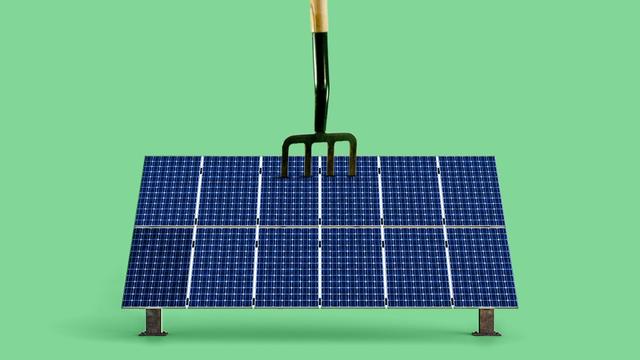
A significant number of crops can handle up to 30% shading and farms can install solar on frames above the crops. A few plants even do better with some shade (due to heat stress)
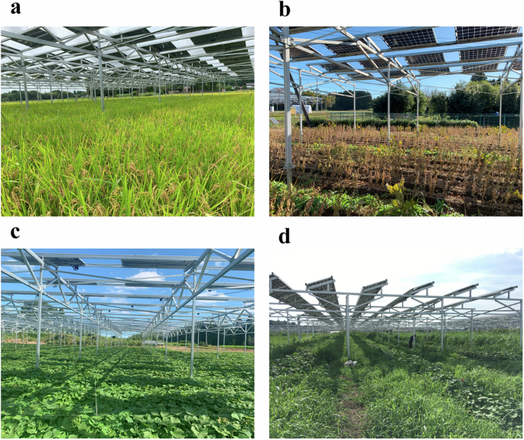
On-farm agrivoltaic impacts on main crop yield: the roles of shade avoidance, cultivation practices, and varieties - npj Sustainable Agriculture
Agrivoltaic systems, which integrate agricultural production with photovoltaic energy generation, have garnered attention for their dual-use potential. However, few studies have addressed yield variability of major staple crops, and their morphological and physiological traits in agrivoltaic systems. This study investigated yield performance and shade avoidance responses of three major Asian staple crops, rice, soybean, and sweet potato in agrivoltaic systems. We also assessed the influence of cultivation management practices, such as cultivar selection, weed control, and micronutrient fertilization, which have been overlooked in previous studies, using organically grown sweet potato. Field experiments for rice, soybean, and sweet potato were conducted in 2024, while organic sweet potato experiments in 2023–2024. Our findings revealed substantial inter- and intraspecific variation in yield responses to shading. Rice grain yield remained stable under 27% shading, whereas soybean seed yield decreased by 30% under 33% shading. Conventional sweet potato tuber yield decreased by 40% under 31% shading and further under 49% shading. Organic sweet potato tuber yield in different cultivars decreased by 26–51% in 2023 and 18–65% in 2024 under 40% shading. All crops exhibited shade avoidance responses in agrivoltaic systems, such as increased plant height and elevated shoot-to-root ratios. Among sweet potato cultivars, the degree of yield reduction was linked to the intensity of shade avoidance responses. In contrast, neither weed control timing nor micronutrient fertilization significantly affected yield. These findings underscore the importance of understanding crop- and cultivar- specific morphological and physiological responses to ensure stable production in agrivoltaic systems.
Not to mention as temperatures continue to climb, more will benefit from the shade because 30% shade will be closer to what the plants consider “normal/ideal”
 Hanrahan
some years ago an article here in Australia interviewing a sheep grazier who had solar a large solar farm, one of the things he said he’d not considered was in times of drought, the many acres of panels had water droplets in the morning condense on the panels and made drip lines of grass for the sheep, apparently enough extra growth it got him through a recent dry spell, that and shade for the sheep
That’s a great point as well…. I wish I had enough to make that big of a difference.