 Rxiv mechanobio
https://doi.org/doi:10.1007/s40120-026-00907-1
https://pubmed.ncbi.nlm.nih.gov/41820782/
#Dynamics #Adhesion #Cell
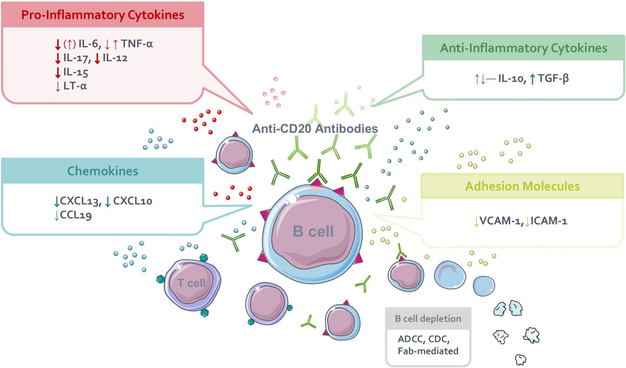
Impact of Anti-CD20 Therapies on Cytokine, Chemokine and Adhesion Molecule Dynamics in Multiple Sclerosis: A Narrative Review - Neurology and Therapy
Over the past two decades, anti-CD20 monoclonal antibodies have become a cornerstone in the management of B cell malignancies and autoimmune diseases, including multiple sclerosis (MS). Although their ability to induce profound depletion of peripheral B cells is well established, the broader spectrum of their immunomodulatory actions remains incompletely understood. This gap is clinically relevant, as treatment responses in MS do not consistently correlate with peripheral B cell counts. Moreover, tissue-resident B cells, particularly those within the central nervous system (CNS) and secondary lymphoid organs, as well as long-lived plasma cells, are largely unaffected by anti-CD20 therapy. These observations underscore the need to elucidate additional mechanisms contributing to therapeutic efficacy, including effects in antibody-mediated disorders such as neuromyelitis optica spectrum disorder (NMOSD). In this review, we focus on preclinical and clinical evidence concerning the effects of anti-CD20 therapies on soluble immunological mediators—cytokines, chemokines, and adhesion molecules—across MS. Emerging data suggest anti-CD20 treatments may restore the balance between pro-inflammatory and regulatory pathways, indirectly modulating other immune cell populations. However, available studies are constrained by small sample sizes, heterogeneous methods, and variable patient populations. Future systematic investigations are needed to clarify mechanisms of action, guide rational combination therapies, improve understanding of treatment response and side effects, and deepen insights into the underlying disease itself.