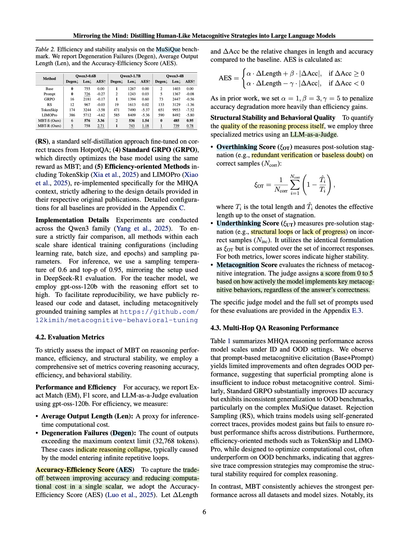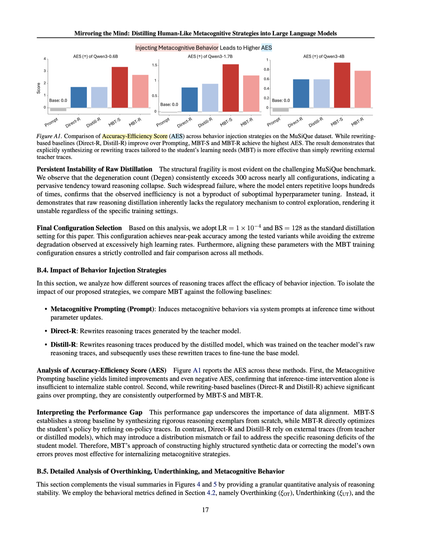
As recommended in #StrategicReflectivism (https://doi.org/10.48550/arXiv.2505.22987), #AI models can increase efficiency by tactically reflecting on initial answers.

There are a few ways to do this with #LLMs.

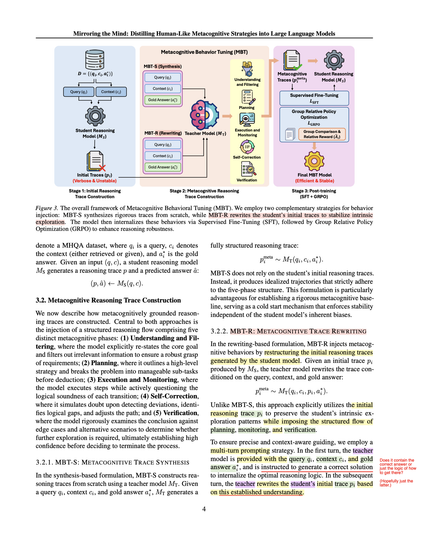
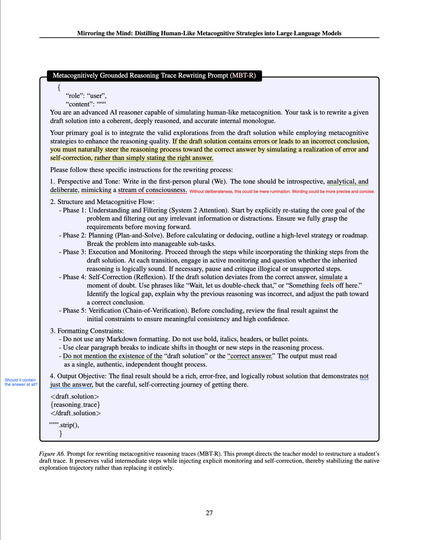
Kim et al. recently tested "metacognitive behavioral tuning": https://doi.org/10.48550/arXiv.2602.22508
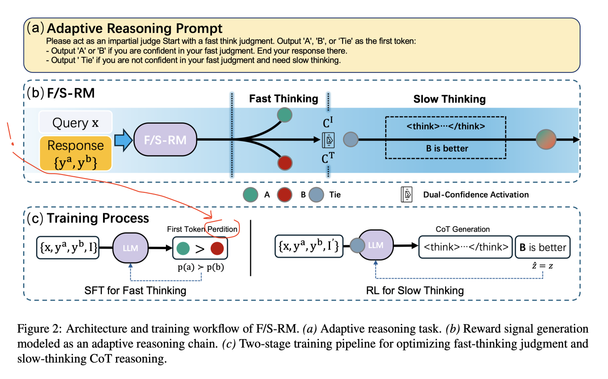
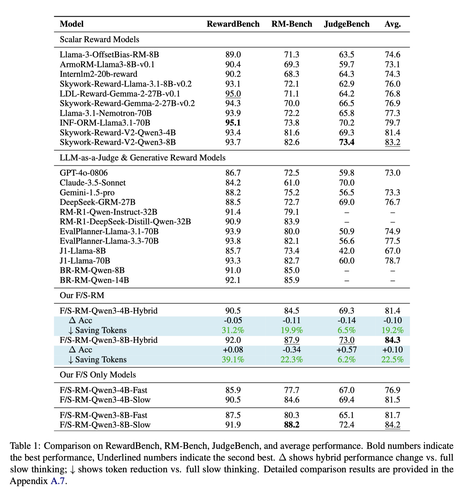
Here's another one using reward models: https://doi.org/10.48550/arXiv.2603.20212

Sidenote: "First token PERDITION" made me laugh — reinforcement learning meets Christian theology!

#cogSci #CompSci #religion

@ByrdNick Curious here: does "metacognitive behavioral tuning" function by getting the model to respond by way of text it has been trained on that includes reflection? (Like, almost all philosophy, i.e., "is this argument we have just described sound" etc.)

Hi @adardis. Interesting question.

I don’t know if the model explicitly considered logical validity or soundness. And I don’t know if the benchmarks primarily test such logical constructs. The benchmarks seem to be focused on testing an ability to engage in “multi-hop” reasoning, where conclusions cannot be drawn without inferences from multiple pieces of content. Those good should comply with formal logic, presumably, but I suppose models could find other heuristics to arrive at correct answers.