I wrote about the Republican Party’s historical trajectory:
From Abraham Lincoln to… Donald Trump. How the hell did we end up here?
Some thoughts from my new piece - an attempt to identify key moments and dynamics in the history of the modern Right:
🧵
https://steady.page/en/democracyamericana/posts/ca9ee28e-8da8-48a2-ac80-7a59ddcc1443
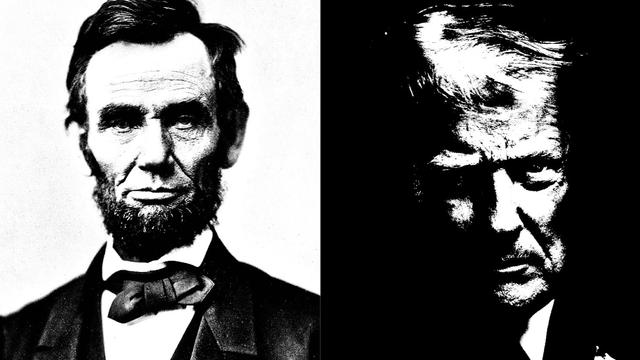
From Abraham Lincoln to… Donald Trump?
A history of the Republican Party – Part I: From anti-slavery origins to white conservative domination, 1850s to 1990
If we want to understand why the republic is on the brink, we must start with the fundamental reality of American politics today: The struggle over whether or not the country should actually be a pluralistic democracy maps onto the conflict between the two major parties.
Democracy itself has become a partisan issue. As of right now, the Democratic Party is the country’s sole (small-d) democratic party – while the GOP is firmly in the hands of an ethno-nationalist movement and oligarchic interests determined to impose their reactionary vision.
How the hell did we get here? This is not a total history of the GOP and the American Right since the 1850s, of course – but an attempt to identify some key moments and dynamics and come up with something that may serve as a framework for how to think about that crucial question.
It’s the story of how a party with anti-slavery origins first became a “big tent,” then came to be dominated by Modern Conservatism, and has since gone the way of the conservative movement: Taken over by extremists who had always been part of the rightwing coalition, but never so powerful.
Halfway through the 20th century, there was no “conservative” and no “liberal” political party in the United States. There was a Democratic Party and there was a Republican Party – but they existed as massively heterogeneous coalitions that each covered the whole ideological spectrum.
The 1960s civil rights legislation catalyzed and drastically accelerated a process of partisan realignment and ideological sorting that would fundamentally transform the political landscape and ultimately unite the forces opposing multiracial pluralism in the Republican Party.
The Republican Party became the new political home for a rightwing movement that referred to itself as “Modern Conservatism”: It brought together all those who generally rejected the emergence of the “New Deal” state and the implementation of egalitarian pluralism.
The balance of power within the GOP kept shifting to the right. This development was not inevitable; there were other paths available. It was actively accelerated by political elites and conservative activists who were determined to make the GOP into the parliamentary arm of the Right.
This rightward radicalization happened on different levels simultaneously: From the top, Republican leaders sought to “polarize” the electorate by appealing to the racial and cultural resentments of white voters - an approach Nixon’s advisors called the “southern strategy.”
At the same time, religious leaders worked hard to mobilize conservative Christians as foot soldiers for a crusade against “secular humanism,” and rightwing activists succeeded throughout the 1970s and 80s at activating a conservative base for massively impactful grassroots campaigns.
The establishment of the Heritage Foundation in 1973 also manifested how much the Right was gaining influence as a key force at the highest levels of Republican politics. From the start, Heritage defined itself as the vanguard of a conservative countermobilization - on a mission to pull the party to the right.
A similar rightwing insurgency was also happening on the local level: A far-right grassroots culture existed across the country that was defined by antisemitism, rabid anti-communism, white Christian nationalism, and conspiratorialism - fertile ground for a political culture of extremism.
By the early 1990s, the Republican Party had become a recognizably conservative party on an accelerating rightward trajectory, devoted to the interests and sensibilities of constituencies that were opposed to leveling hierarchies of race, gender, religion, and wealth.
Strategically, the Republican Party faced a dilemma: In a pluralizing society that was generally moving away from such a vision for the country, the GOP would either have to find a way to broaden its appeal – or be henceforth struggling to generate a democratic majority.
Republicans, however, were neither willing to widen their focus nor accepted the prospect of relinquishing power.
It was the hour of those on the radical rightwing flank of the party who favored a third option and identified democracy itself as the real problem.
All the energy within the GOP shifted towards those who were determined to transform the political system in a way that would allow them to hold on to power without majority support - even against the explicit desire of a growing numerical majority of the electorate.
They would soon be in charge of the GOP – convinced that if they couldn’t have some restricted version of democracy *and* white Christian patriarchal domination, then democracy simply needed to go.
The road from there leads to authoritarianism and the potential downfall of the republic.
This outcome was not inevitable. The anti-democratic tendencies that have come to dominate the GOP have pulled the party to the right for decades. But there were alternative paths available. Republican elites, in particular, had agency – but chose to go along with or actively further the rise of extremism.
 Thomas Zimmer
 Dan Yoder