 Ben Lockwood (broadly defined)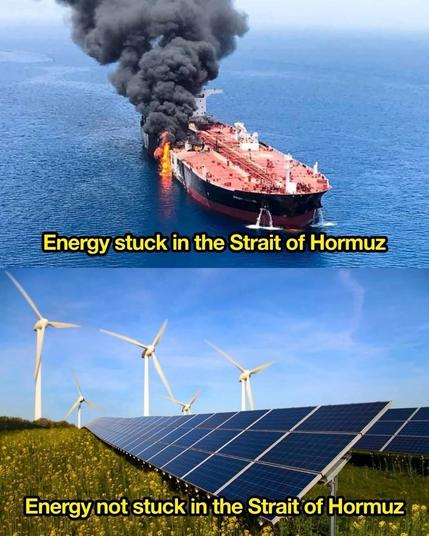
 Ati
Ati@benlockwood Yes it is a huge step forward. That said the latter is deeply stucked in chinese supply chain / dependency on rare earth minerals. Making it independent of dictatorships (mainly China) and Dunkelflaute proof at the same time ... would take a lot of time, money and effort ... that nobody really seems to be making at the moment.

@benlockwood I'm not being pedantic as issues I'm referring to are major. Renewables have their own problems, they ain't 1:1 substitute for big oil yet, and wouldn't be for a long time as everyone's busy hyping how cheap chinese solar panels are but almost nobody's busy building biogas plant every second village to survive that Dunkerflaute without that Hormuz stucked tanker really 💁♂️ So great renewable solutions science gave us, pity nobody's building holistic working system really. 🫣
 MatthewToadAgain
@ati1 @benlockwood Look at the proportion of electricity coming from fossil fuels in various countries.
Over the last year, only 28% of UK electricity came from fossil fuels, and another 7.5% from biomass.
Some other European nations use even less fossil fuels already.
Studies suggest that getting to 95%+ is feasible with only renewables and short term storage.
Sure, there's a problem with the last 5%. There are a number of solutions, all of them have problems.
But biomass isn't a viable answer. You get *hundreds* of times more usable energy from a field of solar panels than from a field of energy crops.
And solar panels don't have to compete with food; they can be put onto buildings, they can be combined with animal shelters, some crops, etc, and they can be put on low grade land. But even if they did, using biofuels will use **WAY** more land.
And, sadly, it already does, thanks to the use of biofuels in transport and (occasionally) electricity.
"Holistic solutions", sure. For electricity that means a mixture of renewable sources, grid interconnectors, dynamic demand, storage etc.
And it means being sensible about demand - gigawatts of datacenters to support a bubble that is bound to burst soon and is already losing money make no sense.
But energy crops are a non-starter. Genuine agricultural waste can only provide a tiny fraction of total energy demand.
That of course means we need to stop flying. It means heat pumps instead of gas boilers for home heating. And so on. Decarbonising electricity is arguably the easy bit.
@MatthewToadAgain @benlockwood I am totally pro transition to renewables. I am just complaining it is done way too slow, even in Europe and also in a stupid way sometimes like when we're trading one dependency on our enemies and evil dictatorships harming people (fossil fuels) for another one say when we're speeding up stansition not by innovation but by handing 100% PV panels production over to China. 🫣