 janusfox 🍅
Yay, the little budget reminder and weather e-ink display is finally chooching.
 ...Frosty! ❄️🦊
@janusfox I am curious to explore eInk displays for my Home Assistant panels. How challenging was that display to implement?
@frosty I'd say moderately challenging. No hardware experience is needed, that part just worked, and non-programmers will suffer a bit on the C++ microcontroller code.
 dimmfox
@frosty @janusfox there is this thing that was released recently:
https://www.seeedstudio.com/TRMNL-7-5-Inch-OG-DIY-Kit-p-6481.html
It's quite a reasonable price for such a large e ink panel and it's compatible with the fairly easy to use TRMNL firmware and software. You can either self host the controller on your own hardware or pay a one time 50$ activation fee to use their cloud thing. (You can also build it with different e-ink modules the docs specify the supported panels and boards).
It lets you to include standard web pages/html that gets rendered and the screenshot of that gets pushed to the display every few minutes. There is even an official one to do that from HA directly apparently: https://github.com/usetrmnl/trmnl-home-assistant
I ordered mine a while ago and can let you know how it goes once I receive it and play with it.

TRMNL 7.5" (OG) DIY Kit
The TRMNL 7.5" (OG) DIY Kit, co-developed by Seeed Studio and TRMNL, is a versatile e-ink development solution. It includes a 7.5-inch 800x480 monochrome e-ink display, XIAO ESP32-S3 PLUS driver board, 2000 mAh rechargeable battery, and 10cm FPC extension cable. Fully compatible with the TRMNL BYOD ecosystem, it unlocks over 375 plugins and 8 layouts for no-code dashboard building. Seamlessly integrate with Home Assistant to display real-time data like weather or energy use, or tap into Arduino’s thousands of projects. Perfect for DIY enthusiasts building e-ink dashboards, smart home interfaces, or creative digital signage—offering low-power efficiency and endless customization.
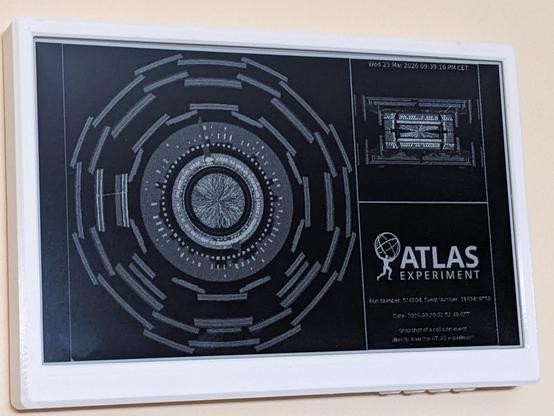
@janusfox @frosty I got it, setup the community self hosted server, printed a nice case and after hacking in an oversized battery it now lives on my wall. It's quite neat, you can just write a display in html with some convenience functions and organize it into playlists that you can control through the server software. The device then wakes up on a set schedule, the server generates the bitmap and the screen displays it and goes to sleep.The documentation is a bit all over the place, but once you enable the official ruby renderer and use the actual 2 bits of grey depth the panel has instead of just raw dithering, it becomes quite pleasant.
For 45$ this is an absolute steal for the panel alone lmao.