 Jonathan Emmesedi
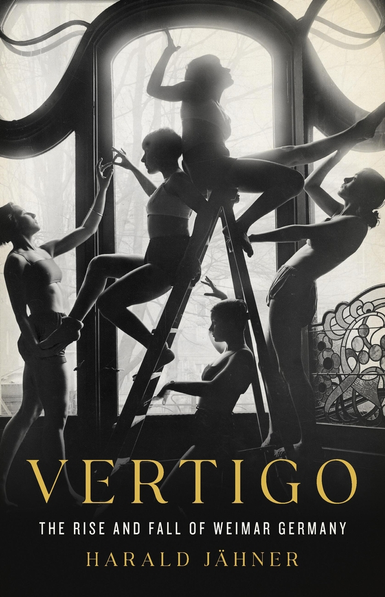
I've recently read "Vertigo: The Rise and Fall of Weimar Germany" by Harald Jähner.
Specialists with a good knowledge of the political history of interwar Germany will probably agree with the criticisms of leading historian Richard Evans in his 29/11/ 24 TLS review, in which he notes the failure of the book to address important aspects of the republic's politics such as the nature of the constitution.
Evans goes on to criticise "Vertigo" as being overly focused on Berlin and its culture of modernity and its neglect of rural and small town Germany.
For a cultural history, though, this emphasis on Berlin is justified, because that metropolis was offering novel aspirations, norms, and ways of living for the country as a whole, even if the reaction to that agenda in much of rural Germany was one of suspicion, resentment, and finally hatred. One rural commentator Jähner quotes noted with bitterness the exodus of women to the city, "the mass grave of the German people", attracted as they were by "greed, by pleasure seeking, by hollow noise in every area of life, by noisy oriental Jewish nonsense in state politics, department stores and theatres."
I would guess that the these seductive possibilities were made known throughout the German speaking world by the mostly Berlin based media of cinema and the illustrated press. Even if the overwhelming majority of Germans neither actively participated in the new forms of art and entertainment flowering in Berlin nor experimented with new metropolitan practices and presentations in sex and gender, the very existence of this new culture could not do other than transform cultures beyond the metropolis, even if only by introducing within them a self-conscious note of antiurban antimodernity.
Jähner, a journalist, has a good feel for both aspects of everyday life that might pass unnoticed by too many historians, such as the yoyo craze of 1932, and also for the disparate and sometimes internally contradictory emotions, moods, and feelings underlying the republic's culture.
Although "Vertigo" is neither comprehensive nor unquestionable in its treatment of Weimar Germany , it is a rich and thoroughly readable resource for non-Germanists like me, and notable for its determination to treat the culture of the republic as worthy of examination and perhaps celebration in its own right, as opposed to being merely an interlude leading to the advent of the Third Reich.
#Books #History #Germany #WeimarRepublic #Vertigo #20thCentury #InterwarHistory #Modernity #HaraldJähner #CulturalHistory
 Thomas