 lumpenproletariat
the trouble with anarchism is all that liberty

Genuine question because my understanding of anarchism is cursory, but how does anarchism prevent ‘might makes right’ from being the prevailing ideology? If there is no system of laws, how do we protect against rapists and murderers? Does it require everyone to be armed to the teeth at all times just to protect themselves?
Also, how does anarchism ensure we can regulate food safety and medicine? Is the expectation that everyone produce their own food? How do we protect ourselves against the 1%? They have far more resources than the rest of us, so couldn’t they basically muscle their way to the top and cement themselves there, with no hope of being toppled without some sort of systemic change?
How does anarchism prevent ‘might makes right’ from being the prevailing ideology?
How does the world currently prevent that? It doesn’t, the largest states do as they wish to the smaller ones, and internally the states do what they wish to the citizens. Under anarchism you would defend your community and your communities would defend each other. You can see this in action in places like the Chiapas were communities defend themselves from the state and cartels.
If there is no system of laws
Anarchism is not a world devoid of rules, in fact it’s all about rules. Except these are rules mutually-agreed upon by members of the community rather than dictated by politicians with no interest in the well-being of the community.
how do we protect against rapists and murderers? Does it require everyone to be armed to the teeth at all times just to protect themselves?
How do you protect against rapists and murderers? How do you today, do you ring the cops and wait 30 minutes? Under anarchism the community would ensure its own defence, you and your neighbours and everyone else would be empowered to protect yourselves, and you would want to because its your community. At present you must wait for the bastards to show up and maybe do something to help, if not make the situation actively worse.
Also, how does anarchism ensure we can regulate food safety and medicine?
Why would you want to produce unsafe foods and medicines, there is no profit motive to cut-corners and you are only hurting yourselves.
Is the expectation that everyone produce their own food?
The expectation is communities would produce resources for themselves, and co-operate with neighbouring communities to share what’s needed.
How do we protect ourselves against the 1%? They have far more resources than the rest of us, so couldn’t they basically muscle their way to the top and cement themselves there, with no hope of being toppled without some sort of systemic change?
How do you protect yourselves against the 1% today? You don’t.
Under anarchism, you actively fight them.
So by that sentiment the world is as it should exist under anarchism. The strongest groups overpowered the lesser groups amd this is where it sits.
Thats the thing. We walked out of the forest under this “system” and kingships, gangs, fiefdoms, and religious conclaves was all we got out of it. What makes you think, particularly in the current climate, that humanity has changed at all enough to not do the exact same thing again.
No, that’s not anarchism, it’s kleptocracy, by definition.
Anarchism means more rules, more intimate regulation of public works, not less. For power to spread out, you have to work to prevent its concentration, or you are just catalyzing a transitional moment in history.
What makes me think we can overcome the sociopathy is that culture has progressed along with our knowledge of the mind, and that the spirit of liberty never dies. A minority are authoritarian, even if it’s a large minority. We do have to counteract the immense amount of propaganda and ideology, however.
Ok, so how do these “more rules” come into existence without some centralized body?
Who gets to decide that? It might seem romantic to say that “everybody does”, but how would that go practically?
Like who, comes up with those? Who will explain those rules to others? And most importantly, who will make sure others follow them properly?
Because if everyone gets to decide that on their own if they want to follow a rule or not, then you might as well have no rules since everyone will just do whatever they want.
Like who, comes up with those? Who will explain those rules to others? And most importantly, who will make sure others follow them properly?
Rules are decided on at community-level. That could mean a village comes together to collectively decide on rules for their community, which the entire village can participate in. Once everyone is happy with the rules, and with the methods of enforcement chosen, the entire village will be familiar with them, and can then explain those rules to others. They may also federate with other villages and agree to follow a larger set of rules or standards.
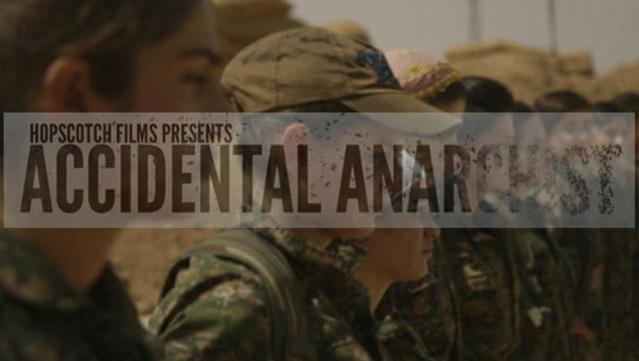
You can see a form of this style of society in practice in Rojava (there’s also this video for an even more in-depth look at how different aspects of Rojava function).
All youre doing is making government community level.
What even is a community, 5 people 10, 20 , 100. What is the maximum, couldnt you just say modern nation states are just “communities” of millions. Who decides when a ‘community’ is to big amd how it should be divided. What happens when a community gets so big they either have to implememt population controls or take neighboring community lands. What happens when 2 communities living next to each other develop radically different cultural paths that inately conflict with each other.
Weve already been through this. For thousands of years we lived like this and barely survived. The moment 2 or more communities decide to work together and impose their will on the lands around them its over for everyone else, whatever the motivation.
More people working together equals more power its that simple. And as soon as times get rough it becomes obvious to everyone, painfully for some and excitingly for others. Simply put, its not scalable and will collapse as soon as any community get larger and more hungry than the others.
Bear in mind Rojava, which operates at the commune level, has a population of 4.6 million people of different ethnic and religious backgrounds, with no known major internal conflicts.
couldnt you just say modern nation states are just “communities” of millions.
Modern nation states have top-down governments, which allows for corruption which is very difficult to eliminate. The Federated Anarchist model has bottom-up systems of governance, where power is far more distributed and thus far more difficult for any corruption to be wide-reaching, and far easier to eliminate.
Who decides when a ‘community’ is to big amd how it should be divided.
The community itself can decide that. If the constituents feel it’s getting too big, they can form a separate community council that still confers and federates with the original community.
What happens when a community gets so big they either have to implememt population controls
They don’t need to implement population controls, they just create more councils that all federate with each other.
or take neighboring community lands.
In a society of mutual aid, there is no real incentive to take other land. Any excess food or resources can be freely given to their neighbors who need it, as they can expect the same treatment in return. Mutual aid creates interdependent connections that reinforce good-will and cooperation.
Weve already been through this. For thousands of years we lived like this and barely survived.
None of those societies from thousands of years ago built inter-dependant federations of mutual aid to eliminate resource scarcity, they were top-down monarchies with kings who could arbitrarily declare war over any old thing like ego, resources, maintaining power, etc.
The times horizontally structured societies were tried in recent history, none of them were destroyed by internal conflict, they were always instead targeted and destroyed by external states with centralized exploitative power structures. Only Rojava and the Zapatistas survive, and just like before, Rojava is under extreme threat from Turkey and the new Syrian regime, both of which are centralized state governments who are imposing that force on others without public support from their populace, which is what top-down governments allow.
The moment 2 or more communities decide to work together and impose their will on the lands around them its over for everyone else, whatever the motivation.
There would be very little incentive to do that, but if it did happen, the other communities around them who are under threat of this could band together with all of the other communities they federate with in self-defense, similar to how the northern states banded together against the southern slave owning states in the US Civil war.
Simply put, its not scalable and will collapse as soon as any community get larger and more hungry than the others.
This shows a fundamental lack of knowledge of how Anarchism functions and avoids those issues. You speak very authoritatively on this subject for someone who I can only suspect has done very little research on it.
They don’t need to implement population controls, they just create more councils that all federate with each other.
And who is in those councils? Elected officials?
And when there are too many councils? Do they create a council for councils?
What you are describing is exactly the same as what we currently have. It isn’t a top down government. We’ve had these councils much longer than we have had governments. But those governments have sprung up naturally because of those councils. And the same will happen if we try to go back.
The only difference between what we now have and what you describe is that you only account for a small percentage of the population that currently exists. Try doing the same for our current population.
And who is in those councils? Elected officials?
No, just more citizens of that community. As an example, imagine instead of different districts of a city just electing some non-recallable representative to make decisions for them in a city council, that instead different neighborhoods got together for meetings to collectively debate on what their part of the city needs, and then once that’s decided by consensus, they can then elect a recallable delegate (distinct from a representative) to bring exactly those needs to the wider city council of delegates, who then organize solutions to those problems.
There is a fundamental difference between our current systems of centralized representative democracies and bottom-up federated communities of delegates. The latter is far less effected by corruption, and prevents a top-down government that can dictate to the people without their explicit consent.
 lmdnw
lmdnw ProdigalFrog