 lumpenproletariat
the trouble with anarchism is all that liberty

I’m going to get some sleep, if anyone else is curious about anarchism the AFAQ often has answers for many of your common questions.
https://theanarchistlibrary.org/library/the-anarchist-faq-editorial-collective-an-anarchist-faq-full
Also people can always ask their questions in good faith in any of the
communities to have the chance for follow up questions.

# [email protected] [/c/[email protected]] [https://slrpnk.net/api/v3/image_proxy?url=https%3A%2F%2Fimg.shields.io%2Flemmy%2Fanarchism%2540slrpnk.net%3Flogo%3Dlemmy%26amp%253Blabel%3DTotal%2BSubscribers]https://lemmy.ca/post/5635462 A community about anarchy. anarchism, social ecology, and communalism for SLRPNK! Solarpunk anarchists unite! Feel free to ask questions here. We aspire to make this space a safe space. SLRPNK.net [http://SLRPNK.net]’s basic rules apply here, but generally don’t be a dick and don’t be an authoritarian. # Anarchism Anarchism is a social and political theory and practice that works for a free society without domination and hierarchy. # Social Ecology Social Ecology, developed from green anarchism, is the idea that our ecological problems have their ultimate roots in our social problems. This is because the domination of nature and our ecology by humanity has its ultimate roots in the domination humanity by humans. Therefore, the solutions to our ecological problems are found by addressing our social and ecological problems simultaneously. # Libraries * The Anarchist Library [https://theanarchistlibrary.org/] * Libcom.org [https://libcom.org/] * The Communalist Library [https://communalistlibrary.carrd.co/] * Syndicalism.org [https://syndicalism.org/] * Marxists Internet Archive [https://www.marxists.org/] # Audiobooks - General audiobooks - LibriVox [http://librivox.org/] Public domain book collection where you can find audiobooks from old communist, socialist, and anarchist authors. - Anarchist audiobooks - Resonance: An Anarchist Audio Distro [http://resonanceaudiodistro.org/] - AudibleAnarchist [https://www.youtube.com/channel/UCaO1QA8QL99_eb0XhJI2Fyw] - Audio Anarchy [https://audioanarchy.org/] - Black Flag [https://globalvillagemessenger.podbean.com/]Audiobooks [https://www.youtube.com/channel/UCTBDdy-w44i2hLDJlknSlnQ] - Revolutionary Audiobooks [https://www.youtube.com/channel/UCxdNKjXTAXMisK2j8hmQUdg] - Socialist Audiobooks - Audible Socialism [https://www.youtube.com/channel/UCvfeZJmLFo2o90A0v3ce2_Q] - Marxism Audio Books from the Marxists Internet Archive [https://www.marxists.org/audiobooks/index.htm] - Theory Audiobooks [https://www.youtube.com/channel/UCLuOU7ExpyrupHu35sIqgnQ] - Leftist Theory Audiobooks [https://www.youtube.com/c/LeftistTheoryAudiobooks/videos] - Cosmonaut Magazine [https://www.youtube.com/channel/UCatJOQSmGA-2sPLsXrZoa8w] - Social Ecology Audiobooks - r/communalists Audiobooks [https://archive.org/details/@transfinite_fecundity] # Quotes > Poetry and imagination must be integrated with science and technology, for we have evolved beyond an innocence that can be nourished exclusively by myths and dreams. ~ Murray Bookchin [https://en.wikipedia.org/wiki/Murray_Bookchin], The Ecology of Freedom [https://en.wikipedia.org/wiki/The_Ecology_of_Freedom] > People want to treat ‘we’ll figure it out by working to get there’ as some sort of rhetorical evasion instead of being a fundamental expression of trust in the power of conscious collective effort. ~Anonymous, but quoted by Mariame Kaba [https://en.wikipedia.org/wiki/Mariame_Kaba], We Do This 'Til We Free Us > The end justifies the means. But what if there never is an end? All we have is means. ~Ursula K. Le Guin [https://en.wikipedia.org/wiki/Ursula_K._Le_Guin], The Lathe of Heaven [https://en.wikipedia.org/wiki/The_Lathe_of_Heaven] > The assumption that what currently exists must necessarily exist is the acid that corrodes all visionary thinking. ~Murray Bookchin, “A Politics for the Twenty-First Century” > There can be no separation of the revolutionary process from the revolutionary goal. A society based on self-administration must be achieved by means of self-administration. ~Murray Bookchin, Post Scarcity Anarchism [https://theanarchistlibrary.org/library/murray-bookchin-post-scarcity-anarchism-book] > In modern times humans have become a wolf not only to humans, but to all nature. ~Abdullah Öcalan [https://en.wikipedia.org/wiki/Abdullah_%C3%96calan] > The ecological question is fundamentally solved as the system is repressed and a socialist social system develops. That does not mean you cannot do something for the environment right away. On the contrary, it is necessary to combine the fight for the environment with the struggle for a general social revolution… ~Abdullah Öcalan > Social ecology advances a message that calls not only for a society free of hierarchy and hierarchical sensibilities, but for an ethics that places humanity in the natural world as an agent for rendering evolution social and natural fully self-conscious. ~ Murray Bookchin # Network * [email protected] [/c/[email protected]] [https://slrpnk.net/c/anarchism] * [email protected] [/c/[email protected]] [https://lemmy.dbzer0.com/c/anarchism] * [email protected] [/c/[email protected]] [https://lemmy.fmhy.ml/c/anarchism] * [email protected] [/c/[email protected]] [https://feddit.org/c/anarchismus]
I would only really recommend [email protected].
Slrpnk is largely inactive, and has a post celebrating Chomsky .
And .ml is well .ml, not a good place for anarchists.
Who said nothing would change?
We currently live in a top-down system, where a handful of rich influential people decide everything. Anarchism is a bottom-up system where the people directly decide everything.
The only way it would be better under anarchy is that you would no longer be shouldering the moral burden of participating.
In a democracy you need to come to terms with the fact that things are shitty. I held my nose and voted for Harris because YES she would have still allowed Israel to continue their campaign of terror against Gaza, but there’s a laundry list of terrible things that have happened under Trump that absolutely would not have under Harris.
To be an anti-democracy anarchist is to hide your head in the sand. To stand at the trolley switch without touching it, trying to convince yourself that the blood is not on your hands. Trying to pretend like we can sequester off pieces of this one planet into containers that do not impact each other.
It’s a great ideology for teenagers explore. To see things in extremes and think more abstractly without getting bigger down with the details of reality.
What extra sources of threats do you imagine with a people led system vs a ruling class led system?
The exact same threats exist.
Genuine question because my understanding of anarchism is cursory, but how does anarchism prevent ‘might makes right’ from being the prevailing ideology? If there is no system of laws, how do we protect against rapists and murderers? Does it require everyone to be armed to the teeth at all times just to protect themselves?
Also, how does anarchism ensure we can regulate food safety and medicine? Is the expectation that everyone produce their own food? How do we protect ourselves against the 1%? They have far more resources than the rest of us, so couldn’t they basically muscle their way to the top and cement themselves there, with no hope of being toppled without some sort of systemic change?
How does anarchism prevent ‘might makes right’ from being the prevailing ideology?
How does the world currently prevent that? It doesn’t, the largest states do as they wish to the smaller ones, and internally the states do what they wish to the citizens. Under anarchism you would defend your community and your communities would defend each other. You can see this in action in places like the Chiapas were communities defend themselves from the state and cartels.
If there is no system of laws
Anarchism is not a world devoid of rules, in fact it’s all about rules. Except these are rules mutually-agreed upon by members of the community rather than dictated by politicians with no interest in the well-being of the community.
how do we protect against rapists and murderers? Does it require everyone to be armed to the teeth at all times just to protect themselves?
How do you protect against rapists and murderers? How do you today, do you ring the cops and wait 30 minutes? Under anarchism the community would ensure its own defence, you and your neighbours and everyone else would be empowered to protect yourselves, and you would want to because its your community. At present you must wait for the bastards to show up and maybe do something to help, if not make the situation actively worse.
Also, how does anarchism ensure we can regulate food safety and medicine?
Why would you want to produce unsafe foods and medicines, there is no profit motive to cut-corners and you are only hurting yourselves.
Is the expectation that everyone produce their own food?
The expectation is communities would produce resources for themselves, and co-operate with neighbouring communities to share what’s needed.
How do we protect ourselves against the 1%? They have far more resources than the rest of us, so couldn’t they basically muscle their way to the top and cement themselves there, with no hope of being toppled without some sort of systemic change?
How do you protect yourselves against the 1% today? You don’t.
Under anarchism, you actively fight them.
So by that sentiment the world is as it should exist under anarchism. The strongest groups overpowered the lesser groups amd this is where it sits.
Thats the thing. We walked out of the forest under this “system” and kingships, gangs, fiefdoms, and religious conclaves was all we got out of it. What makes you think, particularly in the current climate, that humanity has changed at all enough to not do the exact same thing again.
@Zexks @Deceptichum that’s the real kicker, we just have to constantly try to build a better world even if it’s hopeless.
Humans have proven themselves to be as good as they are awful. It’s a never ending struggle against dark people. But we don’t choose the light because it’s gonna win, we choose it because it’s the light.
You can choose to act as one of 3 things.
The bad guys
The cattle
The good guys
If you don’t choose, you’re choosing cattle. No shame in that.
No, that’s not anarchism, it’s kleptocracy, by definition.
Anarchism means more rules, more intimate regulation of public works, not less. For power to spread out, you have to work to prevent its concentration, or you are just catalyzing a transitional moment in history.
What makes me think we can overcome the sociopathy is that culture has progressed along with our knowledge of the mind, and that the spirit of liberty never dies. A minority are authoritarian, even if it’s a large minority. We do have to counteract the immense amount of propaganda and ideology, however.
Ok, so how do these “more rules” come into existence without some centralized body?
Who gets to decide that? It might seem romantic to say that “everybody does”, but how would that go practically?
Like who, comes up with those? Who will explain those rules to others? And most importantly, who will make sure others follow them properly?
Because if everyone gets to decide that on their own if they want to follow a rule or not, then you might as well have no rules since everyone will just do whatever they want.
Like who, comes up with those? Who will explain those rules to others? And most importantly, who will make sure others follow them properly?
Rules are decided on at community-level. That could mean a village comes together to collectively decide on rules for their community, which the entire village can participate in. Once everyone is happy with the rules, and with the methods of enforcement chosen, the entire village will be familiar with them, and can then explain those rules to others. They may also federate with other villages and agree to follow a larger set of rules or standards.
You can see a form of this style of society in practice in Rojava (there’s also this video for an even more in-depth look at how different aspects of Rojava function).

All youre doing is making government community level.
What even is a community, 5 people 10, 20 , 100. What is the maximum, couldnt you just say modern nation states are just “communities” of millions. Who decides when a ‘community’ is to big amd how it should be divided. What happens when a community gets so big they either have to implememt population controls or take neighboring community lands. What happens when 2 communities living next to each other develop radically different cultural paths that inately conflict with each other.
Weve already been through this. For thousands of years we lived like this and barely survived. The moment 2 or more communities decide to work together and impose their will on the lands around them its over for everyone else, whatever the motivation.
More people working together equals more power its that simple. And as soon as times get rough it becomes obvious to everyone, painfully for some and excitingly for others. Simply put, its not scalable and will collapse as soon as any community get larger and more hungry than the others.
Bear in mind Rojava, which operates at the commune level, has a population of 4.6 million people of different ethnic and religious backgrounds, with no known major internal conflicts.
couldnt you just say modern nation states are just “communities” of millions.
Modern nation states have top-down governments, which allows for corruption which is very difficult to eliminate. The Federated Anarchist model has bottom-up systems of governance, where power is far more distributed and thus far more difficult for any corruption to be wide-reaching, and far easier to eliminate.
Who decides when a ‘community’ is to big amd how it should be divided.
The community itself can decide that. If the constituents feel it’s getting too big, they can form a separate community council that still confers and federates with the original community.
What happens when a community gets so big they either have to implememt population controls
They don’t need to implement population controls, they just create more councils that all federate with each other.
or take neighboring community lands.
In a society of mutual aid, there is no real incentive to take other land. Any excess food or resources can be freely given to their neighbors who need it, as they can expect the same treatment in return. Mutual aid creates interdependent connections that reinforce good-will and cooperation.
Weve already been through this. For thousands of years we lived like this and barely survived.
None of those societies from thousands of years ago built inter-dependant federations of mutual aid to eliminate resource scarcity, they were top-down monarchies with kings who could arbitrarily declare war over any old thing like ego, resources, maintaining power, etc.
The times horizontally structured societies were tried in recent history, none of them were destroyed by internal conflict, they were always instead targeted and destroyed by external states with centralized exploitative power structures. Only Rojava and the Zapatistas survive, and just like before, Rojava is under extreme threat from Turkey and the new Syrian regime, both of which are centralized state governments who are imposing that force on others without public support from their populace, which is what top-down governments allow.
The moment 2 or more communities decide to work together and impose their will on the lands around them its over for everyone else, whatever the motivation.
There would be very little incentive to do that, but if it did happen, the other communities around them who are under threat of this could band together with all of the other communities they federate with in self-defense, similar to how the northern states banded together against the southern slave owning states in the US Civil war.
Simply put, its not scalable and will collapse as soon as any community get larger and more hungry than the others.
This shows a fundamental lack of knowledge of how Anarchism functions and avoids those issues. You speak very authoritatively on this subject for someone who I can only suspect has done very little research on it.
They don’t need to implement population controls, they just create more councils that all federate with each other.
And who is in those councils? Elected officials?
And when there are too many councils? Do they create a council for councils?
What you are describing is exactly the same as what we currently have. It isn’t a top down government. We’ve had these councils much longer than we have had governments. But those governments have sprung up naturally because of those councils. And the same will happen if we try to go back.
The only difference between what we now have and what you describe is that you only account for a small percentage of the population that currently exists. Try doing the same for our current population.
And who is in those councils? Elected officials?
No, just more citizens of that community. As an example, imagine instead of different districts of a city just electing some non-recallable representative to make decisions for them in a city council, that instead different neighborhoods got together for meetings to collectively debate on what their part of the city needs, and then once that’s decided by consensus, they can then elect a recallable delegate (distinct from a representative) to bring exactly those needs to the wider city council of delegates, who then organize solutions to those problems.
There is a fundamental difference between our current systems of centralized representative democracies and bottom-up federated communities of delegates. The latter is far less effected by corruption, and prevents a top-down government that can dictate to the people without their explicit consent.
I think you’re giving Rojava way more credit as an “anarchist society” than it deserves.
First off, it’s not actually stateless. Rojava has an administration, courts, taxes, and a military. The Syrian Democratic Forces are literally the armed force that controls the territory. That’s basically a monopoly of violence, which is one of the defining traits of a state. It’s decentralized compared to most countries, sure, but it’s still governance.
Second, its survival hasn’t exactly been a pure test of anarchism. It survived largely because it was backed by the US coalition during the fight against Islamic State. Without that support it probably would’ve been crushed years ago by Turkey, ISIS, or the Syrian government. So it’s hard to claim it proves anarchism works when its security depended on external state militaries.
On the corruption point, decentralization doesn’t magically eliminate corruption. It just spreads it out. Instead of one big corrupt structure you get a bunch of smaller ones. Historically that often turns into local strongmen, militias, or patronage networks. Distributed power doesn’t automatically equal clean governance.
The bigger issue though is coordination. Splitting communities whenever they get big sounds nice, but modern societies require huge coordination systems: infrastructure, power grids, supply chains, water systems, environmental regulation, etc. At some point you need mechanisms to coordinate decisions across thousands of groups, and those mechanisms almost always turn hierarchical because hierarchy is efficient for large-scale organization.
And mutual aid doesn’t remove incentives for conflict either. Scarcity still exists. People still compete for water, land, energy, and strategic resources. Cooperation works great inside trusted groups, but once resources get tight the incentives change.
The part that actually reinforces my concern is the “external states destroy them” argument. If decentralized societies consistently lose to centralized ones, that suggests centralized coordination has real advantages in defense and large-scale organization. That’s basically the same evolutionary pressure that produced states in the first place.
At the end of the day I’m not saying decentralized governance can’t work at smaller scales. It clearly can. But once you start federating large numbers of communities together for defense, infrastructure, and dispute resolution, you end up recreating most of the same structures states evolved to solve those problems. You can call them councils or federations instead of ministries, but functionally they’re doing the same job.
You’re right that Rojava is not Anarchist, but it was at least inspired by Anarchist theory (Murray Bookchin), and does act as a good example of at least the concept of federations of smaller communities working together, which is why I reference it.
Without that support it probably would’ve been crushed years ago
The US did abandon it years ago, but it was able to successfully hold the land it had, and even spread further on its own despite constant attacks from Turkey. Only very recently due a renewed effort from the new Syrian government (which allied with Western powers) combined with much stronger attacks from Turkey have they lost land.
decentralization doesn’t magically eliminate corruption.
I never claimed it did. But it does make corruption far more difficult take hold, and far more limited in its area of influence. Instead of bribing a handful of the people who hold the keys to power, you’d then have to bribe an entire community to effectively corrupt them. Any individual delegate elected to some position who does become corrupt can be immediately recalled by the community if the corrupt delegate no longer adequately performs the duties assigned by that community.
Historically that often turns into local strongmen, militias, or patronage networks.
This usually occurs due to an initial imbalance of power or control of limited resources that is able to be exploited. If every citizen was militarily capable (such as in Switzerland), and each community and person helped each other with mutual aid, resource scarcity would be so reduced that it would be difficult for a strongman to convince others to join him (what would he realistically be able to offer as reward compelling enough to start shooting their neighbors, when they already have their needs met?), especially if the local populace was not significantly weaker militarily than the strongman and their goons.
Right now under centralized democracies, there often already are unelected militias (police forces) which operate on behalf of strongmen (wealthy elites and their interests, under the supposed control of corrupted politicians who are in the pockets of the elites). The elites pay almost no taxes, while the middle class and poor take up all the slack, which effectively becomes an unfair patronage network.
At some point you need mechanisms to coordinate decisions across thousands of groups
Which was effectively done in Catalonia, with many committees of delegates from various groups, all of which worked together pretty damn well from all accounts. If you want to read how all of that was done and and how well it performed in practice, then I highly recommend reading Sam Dolgoff’s The Anarchist Collectives Workers’ Self-Management in the Spanish Revolution, 1936–1939.
And mutual aid doesn’t remove incentives for conflict either. Scarcity still exists. People still compete for water, land, energy, and strategic resources.
The entire point of building a society atop the principles of Mutual Aid and Anarcho-Communist principles is to effectively eliminate the artificial resource scarcity we currently live under. We currently have the technical capability to provide to virtually everyone on the planet enough food, water, and housing right now, even without a star trek replicator, we just don’t mostly because of profit incentive, and because a subjugated populace is often more conducive to the interests of the elites.
If decentralized societies consistently lose to centralized ones, that suggests centralized coordination has real advantages in defense and large-scale organization.
Many centralized states also consistently lose to other centralized states. The Axis powers were all centralized, but lost to the allies. They didn’t lose because they were centralized, they lost because they couldn’t support the logistics required to win due to circumstances unrelated to their form of government. The same was true of the decentralized societies, they didn’t lose due to some flaw in their choice of societal structure, they lost because literally every other state in the world saw them as a threat to their hold on power.
The tankies betrayed them and crushed them because they were ultimately seeking to become dictators, not liberators, and thus a genuine anarchist revolution is a threat to their hold on power.
The centralized capitalist countries are just as concerned of their hold on power, and the elites are especially concerned with perpetuating capitalism above all else, so they most certainly aren’t going to assist a movement that is explicitly against the interests of the capitalist elite.
Had an Anarchist revolution occurred in the US due to the great depression (instead of FDR putting a cap on it with labor reforms), then the Anarchists in Spain could’ve had a powerful ally to supply them logistically, and they could’ve won, similar to how the USSR was able to logistically help tankie revolutions into succeeding.
You can call them councils or federations instead of ministries, but functionally they’re doing the same job.
A bottom-up federation of recallable delegates is fundamentally different in practice to a hierarchical centralized representative democracy.
I think we’re actually circling the same issue but drawing different conclusions from it.
You say Rojava is just an example of federated communities working together, which is fine, but the important part is that it only works because it has state-like structures. It has an administration, courts, and a military command structure. Once you have those, you’re already outside anarchism and into decentralized governance.
That’s kind of the point I’m making. Once enough communities federate together to handle things like defense, infrastructure, logistics, etc., you inevitably recreate the same coordination structures states evolved to solve those problems. They might be called councils instead of ministries, but they’re doing the same job.
The corruption argument also doesn’t really work the way you’re framing it. You say someone would have to bribe an entire community instead of a few officials, but that assumes communities behave as a unified rational actor. In reality local politics can be just as corruptible. Social pressure, patronage, intimidation, and local alliances still exist. Decentralization often just spreads power across many smaller political arenas instead of eliminating corruption entirely.
On the “everyone is armed like Switzerland” point, Switzerland actually works because it’s a highly organized state with centralized institutions and logistics. The militia exists inside a coordinated national structure. Without that coordination, widespread armament alone doesn’t produce stability.
The scarcity point also seems a bit optimistic. Even if we solved basic food and housing, scarcity doesn’t disappear. Water rights, strategic land, energy infrastructure, and transportation networks still create conflicts between groups. Mutual aid works great inside trusted networks, but it doesn’t automatically resolve competing priorities between communities.
And on the “they only lost because outside states crushed them” argument — that actually reinforces the structural issue. If decentralized societies consistently require centralized allies to survive against centralized opponents, that suggests centralized coordination has real advantages in defense and large-scale organization.
I’m not saying decentralized governance can’t work or that councils are a bad idea. Local governance often works better than distant centralized control. I’m just skeptical that a system made entirely of federated local councils can scale indefinitely without recreating the same coordination structures states developed.
So I guess the question I keep coming back to is this:
If two communities strongly disagree over something critical — say water access, land use, or infrastructure — and neither side is willing to back down, who ultimately enforces the final decision?
If decentralized societies consistently require centralized allies to survive against centralized opponents
That’s not what I meant.
They don’t require centralized allies, nor do they necessarily require strategic allies at all depending on the circumstances.
The point I was making was if the US had undergone a Catalonia style anarchist revolution nationwide in the 1930’s, It then would’ve been able to render aid to Catalonia, which had much less productive capacity pre-revolution, and thus could not out-logistic the 4-on-1 battle they faced. As an aside, an Anarchist US would not be dependent upon outside help to defend itself militarily from Mexico or Canada, had they wished to intervene. Nor would any other nation have been able to interfere due to the logistics of landing an invasion force and holding all that territory, or competing against the industrial capacity of the US.
I was also pointing out that in the specific scenarios where this style of organization was attempted but destroyed, they were destroyed due to their specific circumstances, not due to any aspects of it being decentralized. You appear unfamiliar with the details of both the Spanish Civil War and the Ukrainian Black Army which would make that apparent, otherwise you would not be making such blanket statements.
It would be like if I pointed to Germany losing in WWI or France quickly falling at the start of WWII purely due to both having a centralized governments. That would be an absurd statement because each lost for a multitude of reasons including logistics, war fatigue, tactics, the specific defense treaties they had signed before hand, etc.
Mutual aid works great inside trusted networks
What research are you referencing when making that statement? What is or is not a trusted network?
Even if we solved basic food and housing, scarcity doesn’t disappear. Water rights, strategic land, energy infrastructure, and transportation networks still create conflicts between groups.
If there were large Anarchist territories, the places with abundance could transfer that excess to the places that need it, or people could easily move away from places with scarce resources to places with them, as they would not be land-locked to their particular area due to poverty. A large mutual aid network really does solve the problem of scarcity. If you want to see that depicted in a very realistic and sensible matter, I implore you to read The Dispossessed by Ursula LeGuin.
I’m not saying decentralized governance can’t work or that councils are a bad idea. Local governance often works better than distant centralized control. I’m just skeptical that a system made entirely of federated local councils can scale indefinitely without recreating the same coordination structures states developed.
I don’t mean this as an insult or to demean you in any way, but I think that without you personally wanting to do more research into this area to go beyond the surface level idea or theory, you will likely always remain skeptical of it regardless of its efficacy. This is a natural response, as you’re already quite familiar with how our current systems operate, and they’re quite old, so they seem quite viable just by their very nature of being the current default.
I’ve proved some research material in my previous comments, and I could provide more if you’re interested, but ultimately I don’t think any of my arguments will be terribly convincing without the real-world context to back it up, which is out there, but I realistically cannot provide all of that in a comment chain.
I’m not sure anarchism could work as well on paper as it would in real life. I think close examples are when a country loses it’s hierarchical structure and the void is typically filled with extremists or the most violent and well armed individuals who than instate a new hierarchy. The people have a chance to establish an anarchist society, but are never able to or incapable of doing so.
If you look at governing systems like these as organisms. Anarchism is too weak to defend against stronger power struggles and will always be consumed from within and without by a larger status quo, just because human nature is to establish systems and group together. Eventually that grows so much conflicts on ideals on how the opposing systems should operate arise, one sees the other as counter to their ways and conflict eventually ensues.
Even in Anarchism there are different ideals on how it should be achieved. With those nuance differences that would eventually come to some immovable beliefs that would cause larger systems to develop to overpower differences.
A lot of people don’t want to govern themselves or be involved in the complexity of making community decisions. They’d rather have someone else do that and eventually that someone else becomes a leader and that path leads to a hierarchy.
I think the age of simplicity that Anarchism brings is left in the past of our evolutionary progress of organized systems. Great idea, but proven it will never hold because it’s more of a transitional state that will eventually grow into complexity it’s principles can’t answer anymore.
I’m fairly certain the anti-anarchism rhetoric instilled into people is a result of long seated anti-intellectualism propaganda and policies.
Some of the biggest proponents of anarchy I have met were professors.
In our current world, the rich and powerful have a vested interest in keeping the population uninformed. Think of how hard they tried to bury communism and socialism. Anarchy, the idea of self-governing, leaves them with no wealth, no power, and nothing to contribute.
The part where people with better material positions consolidate power and influence, and exercise that power over the meek.
Or the part where greedy fucks “make their own decisions” that don’t factor in externalities or the impact they have to the common good. Resulting in things like the destruction of our natural environment and ecosystem.
That’s not anarchy, it’s chaos. You’re maybe thinking of warlordism, aka ‘ancap’ or market libertarianism?
Anarchy is a lot of work for its participants. If you aren’t outsourcing management decisions about your life, neighbourhood, region, etc., you have to collaborate in making those decisions. If power is allowed to concentrate, your self-determined governing system collapses and anarchy, by definition, is lost. It’s a life of constant renegotiation.
Rojava is illustrative, as it’s established in a self-conscious anarchic process, and by all reports it’s great in many ways but a lot of daily effort, and is under direct assault currently.
Is a system that requires a highly engaged populace to avoid organically devolving into chaos tenable? Seems even more perilous when considering the inevitable influence of hostile entities trying to encourage that decline.
Don’t get me wrong, I have no idea what to do here. I’m just hoping our current decline is slow enough that I can live out the next 20 years or so peacefully and then off myself while I still have the faculties to do so.
That’s consensus you are talking about, and it is indeed a myth, at scale.
Every consensus run organization I have seen chokes up at some point due to a failure of psychology. Statistically, something like more than 10% of the population are guaranteed to be a problem for cohesion, for various reasons. Many are just contrarians and self-identifying as an outsider requires social sabotage. Some are cruel, stupid, or violent. Many are “dark triad” and dangerously deceptive.
So any functional and sustainable system has to acknowledge that fact and plan around never having consensus. There are many approaches to this, and anarchism can work without everyone in lockstep, and still get things done and maintain principles.
Your statement suggests you think that anarchism is hands-off laissez-faire, it’s the opposite. Self governance is DIY and thus constant maintenance of rules and arrangements and goals, and solving problems mutually. An endless hands-on meeting, at least until we are able to automate such things.
See, self-governance involves mutual self-defense, and violence by poison is a mutual problem which requires a lot of coordination to solve, so people will be motivated to get it resolved quickly; dumping might be a very dangerous decision. Anarchism doesn’t let you be a lone wolf, you have to deal with groups of equals and mutual dependence everywhere you go.
See, self-governance involves mutual self-defense, and violence by poison is a mutual problem which requires a lot of coordination to solve, so people will be motivated to get it resolved quickly; dumping might be a very dangerous decision.
I’ve got some very bad news for you about the intransigence of human beings.
Yeah… I guess it’s just a bigger topic than I have time to tackle right now.
Enforcement would range from relentless requests to stop, and maybe blockade of some kinds, to sanction and exclusion. Self defence rules would be well agreed upon and might be physical. There is always a limit where coercion is necessary, anarchists just want it waaaay over there.
Justice discussions are harder than most, but we have a lot of rights documents to draw from.
Exclusion from a well organized community you live in or next to would make life very challenging.
Identifying dark triad individuals and redirecting them to other non-destructive tasks would help a lot.
It kinda just sounds like reinventing government piecemeal though. You get that, right? That’s why I abandoned anarchism. It either requires that you ignore the complications of material reality in favor of vague ideology, or bit by bit you wind up creating a system which doesn’t really look like anarchism anymore.
Anarchism isn’t really a coherent societal system. It’s an ideal by which you measure how “over there” the coercion is.
You may have been told that anarchism is no government, because ideology keeps us believing that government requires a ruling class, that social hierarchies are necessary.
But it is more government, ironically. It just doesn’t rely on persisting structural hierarchies. This means that DiY self-governance is a lot of work, with little room for lone wolves.
I think that a functional sustainable anarchy that can defend itself and maintain a reasonable amount of compromise without losing its essence will require a whole lot of sociopolitical automation to support all that autonomy.
No, not really, I’ve perused anarchist literature. I didn’t have to be told anything.
You’re right though, DIY self governance is a lot of work. And the more people you interact with, the less you believe that a significant portion of people are willing to put in that work. They will offload that effort onto others in the vast majority of cases. Representative democracies provide a framework to do so. Eliminating representative democracy doesn’t suddenly imbue the average person with the will to engage locally to fill the void, it just makes them more likely to offload that effort to whoever has the will to become a demagogue (i.e. charismatic assholes). It devolves into “anarcho”-capitalism.
I’m not against the principles of anarchism, to the contrary I see it as the desirable end goal. I just don’t think it’s a useful contemporary framework, I don’t think we’re getting there in our lifetime (barring some kind of transhumanist functional immortality that breaks the timeframe of “lifetime”). The sociopolitical automation you seek isn’t just going to pop up in a power vacuum, it’s going to require a long, incremental process. As Agent K said, “A person is smart, people are dumb, panicky, dangerous animals”.
Society progresses in generational steps. You don’t steer it like a speedboat, you steer it like an aircraft carrier. Unfortunately we don’t get to be the anarchic generation, the best we can do is nudge society in that general direction, and raise children to carry on the Work.
In my opinion anarchists limits the power a single person can wield in way that lets every person a roughly equal amount of power and influence on the world. So while bad actors would be able to do shitty things, they only have the power of one person and not the power of say, a big corporation, billions of dollars or politcal office with nearly unlimited decision making power to do shitty things. And from what we can see innour current world, bad actors are attracted to positions of powers as much as moths are attracted to electrical light.
And tbh, your examples of problems are on much lower scale than for example wars and climate change. I would rather deal with those decently petty problems instead, wouldnt you?
Except the majority of people will cede their share of the power to those who promise short-term gains. In theory, if people were perfectly rational, they would understand the full scope of their actions and act accordingly. They aren’t, though, so they don’t. They just wanna watch TV and play video games and let someone else worry about complicated stuff.
All power ultimately comes down to monopolization of coercion. People will be violent and vindictive. People will pollute if their personal benefit exceeds their personal consequences. They will offload those worries onto someone else, and bad actors will fill that void in a heartbeat. You don’t move forward by pretending people will spontaneously fill that gap of their own volition, you move forward by curating a system that makes the better choice the easy choice long enough to make the easy choice the right choice.
The part where I don’t get to make decisions for others.
Not really looking forward to the clash that happens when the 2/3s consensus system of Johnsonville upriver comes into conflict with the majority consensus system of Tablesville downriver over the matter of what level of water treatment is necessary before dumping.
Why would Johnsonville as a group wish to continue poisoning Tablesville’s water supply if the Tablesville community makes it clear to them that they are being harmed by Johnsonville’s lack of adequate treatment? Johnsonville would likely be receiving mutual aid from Tablesville due to their close proximity, so it’d be really weird of them to willfully screw over their downstream neighbors whom they often exchange help or supplies with?
It would make sense why Johnsonville would want to skimp on water treatment under a capitalist society, as perhaps there are some corporations that don’t want to deal with treating their waste water, so they lobby the local government to allow it. Profit motive can often overcome cooperative goodwill and empathy for others.
But in an anarchist society where there is no profit motive? Not saying it’d be impossible (perhaps Johnsonville is weirdly anti-science for some reason and won’t listen to reason?), but it’d be a damn sight less likely than the same scenario under Capitalism.
Why would Johnsonville as a group wish to continue poisoning Tablesville’s water supply if the Tablesville community makes it clear to them that they are being harmed by Johnsonville’s lack of adequate treatment?
Easy. They don’t believe it. They think Tablesville is exaggerating. They think Tablesville is confusing what is causing the polluted water. They think that pollution isn’t that bad. They think that their need to spend more time with their kids in their very short and mortal lives is worth more than Tablesville’s need to reside on a very specific piece of land that Johnsonville can’t even see the point in inhabiting. They don’t care about Tablesville. Take your pick.
Johnsonville would likely be receiving mutual aid from Tablesville due to their close proximity, so it’d be really weird of them to willfully screw over their downstream neighbors whom they often exchange help or supplies with?
That presumes that the level of mutual aid is substantial and bidirectional. If Johnsonville is in a good position and largely helps, rather than is helped, while Tablesville is a barren little scrap of swamp, what need does Johnsonville have of Tablesville’s good will?
It would make sense why Johnsonville would want to skimp on water treatment under a capitalist society, as perhaps there are some corporations that don’t want to deal with treating their waste water, so they lobby the local government to allow it. Profit motive can often overcome cooperative goodwill and empathy for others.
Bruh, people will put other lives at risk to end a job - not a capitalist job, but everything from volunteer work to self-improvement - a fucking hour early.
You don’t need capitalism to provide a motive for overcoming goodwill and empathy.
But in an anarchist society where there is no profit motive? Not saying it’d be impossible (perhaps Johnsonville is weirdly anti-science for some reason and won’t listen to reason?), but it’d be a damn sight less likely than the same scenario under Capitalism.
You could make that argument, but that presumes that this is a binary choice between anarchism (in this distinctly non-enforcement sense rather than libertarian socialist sense) and anarcho-capitalism, and that’s not the case.
A democratic socialist state has the obligation to enforce the laws made by common agreement upon all members of the polity, even those that disagree. Even a libertarian socialist polity has that same obligation, it just has more layers of decentralization which prolongs how long a problem must linger at low-level resolution before the central polity comes in.
Easy. They don’t believe it. They think Tablesville is exaggerating. They think Tablesville is confusing what is causing the polluted water. They think that pollution isn’t that bad.They don’t care about Tablesville. Take your pick.
So that’s assuming that Johnsville is naturally deeply uneducated, unwilling to listen to any evidence presented, won’t test their own waste treatment output, or are majority sociopathic (lacking empathy for others), or a combination of all the above.
I could see perhaps a very insular and small religious fundamentalist town perhaps being capable of totally ignoring the problem, but any larger settlement tends to attract more education amongst the population. Our current system usually puts the sociopaths in leadership positions which can then override a community’s wishes, but under an Anarchist system it would be highly unusual that the majority care so little about others to the point of not wanting to help whatsoever.
They think that their need to spend more time with their kids in their very short and mortal lives is worth more than Tablesville’s need to reside on a very specific piece of land that Johnsonville can’t even see the point in inhabiting.
In an Anarchist society, people would only really need to contribute about 2 to 3 months of work per year to have a functioning society that is able to provide everyone’s basic needs for free. That would leave 10 to 9 months out of the year as completely free time for everyone to do with as they please, which would make it even more difficult to justify not spending a little extra time to treat your waste water properly for the sake not actively poisoning others.
If Johnsonville is in a good position and largely helps, rather than is helped, while Tablesville is a barren little scrap of swamp, what need does Johnsonville have of Tablesville’s good will?
If they become so uncooperative and hostile to their neighbors, than they could receive negative perception or treatment from other federating communities near them, which would probably go a long way to encouraging them to just treat their waste water better.
Bruh, people will put other lives at risk to end a job - not a capitalist job, but everything from volunteer work to self-improvement - a fucking hour early.
People are desperate to stop working an hour early because our current society gives them virtually no free time to enjoy life, to rest properly, or to not worry about needing to make ends meat just to survive and not become homeless. Most of their waking hours they are exploited with the majority of their effort going to the benefit of a few undeserving folk.
Would they be so desperate not to help if they were now afforded most of the year to themselves? I think many would find meaning in helping out in some of their spare time, since it is not longer exploitative or coerced.
You don’t need capitalism to provide a motive for overcoming goodwill and empathy.
It’s doing the heavily lifting for most of society.
A democratic socialist state has the obligation to enforce the laws made by common agreement upon all members of the polity, even those that disagree.
A society of self governing communes could still federate with each other, and with that federation agree to some standards to become a part of that federation, such as adequate waste water treatment.
So that’s assuming that Johnsville is naturally deeply uneducated, unwilling to listen to any evidence presented, won’t test their own waste treatment output, or are majority sociopathic (lacking empathy for others), or a combination of all the above.
No, man, people are very capable of being blinkered without needing to be uneducated or sociopathic.
I could see perhaps a very insular and small religious fundamentalist town perhaps being capable of totally ignoring the problem, but any larger settlement tends to attract more education amongst the population. Our current system usually puts the sociopaths in leadership positions which can then override a community’s wishes, but under an Anarchist system it would be highly unusual that the majority care so little about others to the point of not wanting to help whatsoever.
… would it? Man, every one of us on here chooses our own comfort and entertainment over the lives of others every day of our lives. What makes you think we’d act differently under an anarchist system?
Have you ever been involved in local government? Genuine question.
In an Anarchist society, people would only really need to contribute about 2 to 3 months of work per year to have a functioning society that is able to provide everyone’s basic needs for free.
That’s extremely questionable, especially if you get into issues of distribution/access, that what people regard as basic needs change, etc.
That would leave 10 to 9 months out of the year as completely free time for everyone to do with as they please, which would make it even more difficult to justify not spending a little extra time to treat your waste water properly for the sake not actively poisoning others.
Fuck, people have ample free time now and choose to poison others rather than take on a little extra burden.
If they become so uncooperative and hostile to their neighbors, than they could receive negative perception or treatment from other federating communities near them, which would probably go a long way to encouraging them to just treat their waste water better.
And if it’s just towards Tablesville? What incentive does everyone else have to get involved and degrade their own quality of life and their own relationships with people in Johnsonville for the sake of Tablesville? What makes you think that prejudices won’t cause people to agree with Johnsonville? People tend to make decisions based on their pre-existing relationships; if Johnsonville is a ‘giver’ and adamant on this point, the natural tendency will be for many of those Johnsonville ‘gives’ to to side with them on the issue from an emotional standpoint.
People are desperate to stop working an hour early because our current society gives them virtually no free time to enjoy life, to rest properly, or to not worry about needing to make ends meat just to survive and not become homeless. Most of their waking hours they are exploited with the majority of their effort going to the benefit of a few undeserving folk.
Do you understand just how little it would take to live at a lowered standard of living for most people?
We work ourselves like dogs and normalize it because previous standards aren’t good enough. What was idyllic in 90 AD is torture in 1990 AD. And this is good! It encourages society to ever move onward, to not be satisfied with what it has.
… but the reason why people are overworked is not because society ‘gives’ us too little to not work ourselves to death; it’s because people value things other than free time. I grew up in a poor area, in a poor family - “People are hard-put upon” and “People are not working simply to keep themselves full, clothed, and with a roof over their head” are not mutually exclusive.
Would they be so desperate not to help if they were now afforded most of the year to themselves? I think many would find meaning in helping out in some of their spare time, since it is not longer exploitative or coerced.
Many find meaning now in helping out in their spare time, yet still will shirk other work - or even cut corners during their volunteer work, as I previously pointed out - to the detriment of others. We are creatures with very limited lifespans, and every hour becomes precious when considered.
A society of self governing communes could still federate with each other, and with that federation agree to some standards to become a part of that federation, such as adequate waste water treatment.
So how does it enforce that?
I think a big issue here is that you’re operating under the assumption that humanity as a whole is incredibly selfish, uncaring, and unable to operate cooperatively without a centralized force that is able to adequately threaten people to cooperate against their natural instincts. If that is your base assumption, then you will have to conclude that Anarchism isn’t viable because it doesn’t have enough threats or sticks to keep people from reverting to some base-level of antagonism, laziness, or self interest.
Where on the other end, due to the evidence I’ve seen of how humans organized in egalitarian societies as the norm until around 8000 years ago (from compelling evidence put forward in David Graeber’s and David Wengrow’s The Dawn of Everything), as well as the success of the Anarchist Society in Catalonia during the Spanish Civil war, I believe that humans would demonstrate their true nature is cooperation and egalitarianism if finally provided a society that does not actively incentivize our worst traits like our current one does.
We work ourselves like dogs and normalize it because previous standards aren’t good enough. What was idyllic in 90 AD is torture in 1990 AD. And this is good! It encourages society to ever move onward, to not be satisfied with what it has.
Most people in the US are barely able to afford basic food, housing, and transportation. They are working harder now than they did in the 1970’s without any meaningful wage growth since that period, despite their actual productive capacity increasing tremendously since that time.
You really think most would choose to continue struggling with bills, or to be two paychecks away from homelessness vs. a society where all of your basic material concerns are guaranteed as a human right?
And you realize those people can choose to do whatever they want with the those 9 months of free time? They can still choose to become doctors, or engineers, or scientists, or to create the things that give meaning to their lives? They just won’t have the threat of homelessness weighing above their heads if they don’t instead choose to work for someone else to make them richer.
We are creatures with very limited lifespans, and every hour becomes precious when considered.
All the more reason to question the utility of capitalism, if only a minority are able to achieve the fruits of all the time spent doing things we’d rather not be doing, if every hour is so to be considered.
… but the reason why people are overworked is not because society ‘gives’ us too little to not work ourselves to death; it’s because people value things other than free time.
If you truly believe that, then our entire worldviews are completely incompatible. I don’t mean this as an insult, but from my perspective your judgements on why people work so hard are quite detached from reality.
I think a big issue here is that you’re operating under the assumption that humanity as a whole is incredibly selfish, uncaring, and unable to operate cooperatively without a centralized force that is able to adequately threaten people to cooperate against their natural instincts. If that is your base assumption, then you will have to conclude that Anarchism isn’t viable because it doesn’t have enough threats or sticks to keep people from reverting to some base-level of antagonism, laziness, or self interest.
No, man, I’m assuming that humanity as a whole operates as it has since the beginning of recorded history - with limited resources, including limited time, energy, motivation, and perspective. Unless your proposal for anarchism is radically transhumanist, you aren’t going to get rid of that issue. This isn’t a question about “What if people don’t care about each other???”; this entire scenario presumes that the polities in question are functioning along anarchist lines. The question that is being brought here is, “Do you really expect people to value those they don’t know over those they personally know and care about, themselves included?"
And if your answer is ‘yes’, I invite you to talk to some parents sometime.
Where on the other end, due to the evidence I’ve seen of how humans organized in egalitarian societies as the norm until around 8000 years ago (from compelling evidence put forward in David Graeber’s and David Wengrow’s The Dawn of Everything), as well as the success of the Anarchist Society in Catalonia during the Spanish Civil war, I believe that humans would demonstrate their true nature is cooperation and egalitarianism if finally provided a society that does not actively incentivize our worst traits like our current one does.
Other than my own extreme issues with The Dawn of Everything, which would lead to a much broader discussion…
Anarchist Catalonia is a prime example of what I mean in multiple ways.
First off, it was not shy about enforcement. In the least.
Second, it was commonly observed that regionalism of the sort described was a problem that caused severe issues for them.
Third, many of its structures were oriented around war necessity; I don’t know if you would find the same willingness of people to submit to seizure and arbitrary justice if literal warfare was not a stone’s throw away.
Most people in the US are barely able to afford basic food, housing, and transportation.
… have you ever actually lived in the USA?
They are working harder now than they did in the 1970’s without any meaningful wage growth since that period, despite their actual productive capacity increasing tremendously since that time.
That’s true. Wages have been largely stagnant, in terms of buying power and relative income distribution, since the 1970s. But in the 1970s, most people weren’t barely able to afford subsistence-level living. In the 1970s, most people struggled because, as in the modern day, they want more. And as I said, they are not incorrect in wanting this, and it is good that they want this, but it is an issue you have to think about when considering a complete reorganization of society.
You really think most would choose to continue struggling with bills, or to be two paychecks away from homelessness vs. a society where all of your basic material concerns are guaranteed as a human right?
That’s not even vaguely relevant to the question I proposed. The issue of whether they prefer a socialist system or a capitalist one is not relevant. The issue being disputed is the idea that provision for one’s basic needs is enough to stop one from desiring more, with you saying, and I quote:
People are desperate to stop working an hour early because our current society gives them virtually no free time to enjoy life, to rest properly, or to not worry about needing to make ends meat just to survive and not become homeless. Most of their waking hours they are exploited with the majority of their effort going to the benefit of a few undeserving folk.
And you realize those people can choose to do whatever they want with the those 9 months of free time? They can still choose to become doctors, or engineers, or scientists, or to create the things that give meaning to their lives? They just won’t have the threat of homelessness weighing above their heads if they don’t instead choose to work for someone else to make them richer.
A-fucking-gain, I’m not at all disputing whether people prefer a socialist system to a capitalist one, assuming they weren’t pig-brained morons. That’s not the issue being disputed here. The issue being disputed here is the notion that people will no longer want more, more comfort, more success, more free time as in the core example used that you responded to, in an anarchist system.
All the more reason to question the utility of capitalism, if only a minority are able to achieve the fruits of all the time spent doing things we’d rather not be doing, if every hour is so to be considered.
I’m not a fucking capitalist. I largely tend towards democratic socialism. My issue being raised here is fundamentally one of conflict resolution, not economic orientation.
If you truly believe that, then our entire worldviews are completely incompatible. I don’t mean this as an insult, but from my perspective your judgements on why people work so hard are quite detached from reality.
Man, I’ve fucking lived on flour and water for days at a time. My area of specialization is an era when people worked more hours for fewer material gains and in much more endangered scenarios.
People work more because they want more, because it’s normalized to want more. Housing crisis aside, people by and large spend their money on things that are not strictly needed, but nonetheless, they desire - and should be entitled to. At no point do I dispute they’re being exploited - my point is only that it is not their needs being unfulfilled which drive most people; it is a desire for more than their basic needs, which would not go away if they stopped being exploited.
… have you ever actually lived in the USA?
You think most people wouldn’t become homeless if they spent less time working?
The issue being disputed is the idea that provision for one’s basic needs is enough to stop one from desiring more
That is not the argument I was making. People can still desire more even under an Anarchist society, the difference is that anything more they want they either have to make themselves, make it collectively under a worker cooperative, or trade with another person with something they acquired by their own means or as the fruit of a cooperative effort.
You can still create computers, build fancy chairs, make a cooperative factory to produce a desired good, etc, but you just wouldn’t be able to hang food, housing, and healthcare over somebody else to effectively force them to do that stuff for you. Under an anarchist society, you could only convince someone to work with you on something if they felt it was a democratic endeavor where they had an equal say and an equal reward as you or anyone else who helps you gets.
That ensures that no one can effectively exploit anyone else, or create a power imbalance with a hierarchy. Everyone gets access to the same baseline for a happy life, and 9 months our of the year to do with as they please, whether that be to improve their house, make jewelry, paint, write, or spend time with their friends or family, they can personally decide what they want to spend that time doing, instead of laboring all year for just those basics.
You think most people wouldn’t become homeless if they spent less time working?
I did specify ‘housing crisis aside’, but yes. 40% of Americans own their own paid off home; most renting households still spend around 33% of income on rent. 67% of income, then, is spent on things other than not becoming homeless - do you want to speculate on what amount of that is actually necessary?
That is not the argument I was making. People can still desire more even under an Anarchist society, the difference is that anything more they want they either have to make themselves, make it collectively under a worker cooperative, or trade with another person with something they acquired by their own means or as the fruit of a cooperative effort.
But I never disputed any of that. The entire point originally raised was that people would still desire to do less work even if they had their needs fulfilled.
That ensures that no one can effectively exploit anyone else, or create a power imbalance with a hierarchy.
How does that follow? Some endeavors are more profitable than others. Hierarchies can be set up even without material differences (which, as we’ve established, certainly are not eradicated). Exploitation is often predicated not on material differences, but social manipulation, and result in material differences.

 punkisundead [they/them]
 Signtist
 rockerface🇺🇦
 ProdigalFrog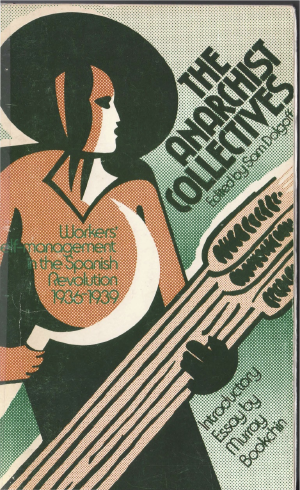
 peoplebeproblems
 UltraGiGaGigantic
 agamemnonymous
 PugJesus