 Tom Lyon ✅
A personal history about #AppleTalk and #SunMicrosystems
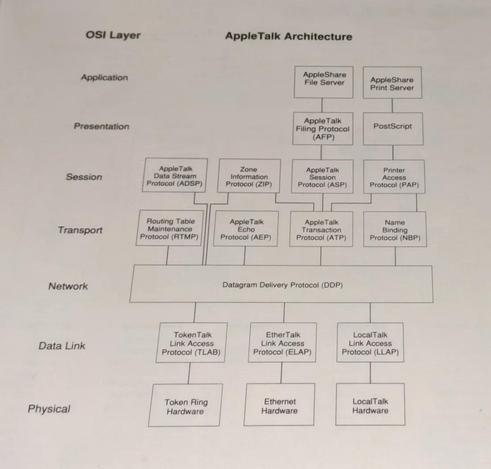
A personal history about #AppleTalk and #SunMicrosystems
@aka_pugs Cool! I remember AppleTalk cabling seeming to be simpler than Ethernet, which had only thicknet and vampire taps at the time. But AppleTalk connectors proved to be a weak point. If the network was flaky, you had to go around and reseat all the connectors. Eventually we got little clips that held the connectors together. It helped a bit.
To this day I still use AFP to move files among Macs on my home network. That will eventually stop working though.
@brouhaha @aka_pugs I guess where I was in the mid 1980s (Stanford) had already invested in thicknet, so we didn’t see much thinnet around. We only dabbled with AppleTalk, but the Mac’s could only talk to each other, and getting the Macs on ethernet didn’t happen until later. Oh yeah, PhoneNet… that’s why Farallon was familiar. That helped with the cables and connections, but still, the Mac’s didn’t connect to anything else.
IIRC a PhoneNet terminator was an RJ-11 connector with a resistor. ☺️
@stuartmarks @brouhaha @aka_pugs Interesting, the first Localtalk to Ethernet gateway was developed by Bill Croft at Stanford in 1985 – he was working at the Medical Center, though. His design, which used the original 68000-based Sun CPU board (also developed at Stanford), was used as the basis for commercial gateways such at the Kinetics FastPath.
https://bitsavers.org/bits/Stanford/SEAGATE/seagate-info.pdf
https://en.wikipedia.org/wiki/FastPath
https://groups.google.com/g/net.micro.mac/c/ne_cUxk7heU/m/y5mmPZ6YhPAJ
@stuartmarks @me_ @brouhaha @aka_pugs
I need to dig out all of the SUMEX-AIM Seagate appletalk-ehternet stuff I researched. It started out as a SCC board glued onto a SUN CPU. Code was cross-compiled with the MIT 68K cross-compiler.
This all used to be on the sumex-aim ftp site along with their large for the time mac archive. I don't know if anyone mirrored it.
https://ccmp.vtda.org/pipermail/cctalk/2014-December/001911.html
@bitsavers @stuartmarks @brouhaha @aka_pugs Some of the stuff is already on bitsavers :) – it would be great if you could find additional things. More than ten years ago, I managed to run the SUMEX compiler on 4.3BSD/VAX in simh.
https://www.classiccmp.org/pipermail/cctalk/2014-December/001925.html
https://bitsavers.org/bits/Stanford/SEAGATE/
@me_ @stuartmarks @brouhaha @aka_pugs
maybe what I was thinking of was all of the discussions about it on info-mac
I had totally forgotten you had dug into this a decade ago until I saw the ccmp message thread just now
@alderson @brouhaha @aka_pugs Ok you’re really testing my memory now! I remember steam tunnels. I vaguely recall Len (Bosack), Sandy (Lerner), and Ralph (Gorin?) but more from LOTS than anything else. But I don’t think I ever heard anything about them running thicknet through the steam tunnels!
I did interact with Ralph a little bit. I seem to remember calling him at 3am when LOTS had crashed and didn’t come back up, and his number was on this list of numbers to call when that happened…
 Stuart Marks
 🇺🇦 haxadecimal 🚫👑
 Michael Engel
 bitsavers.org
 Rich Alderson